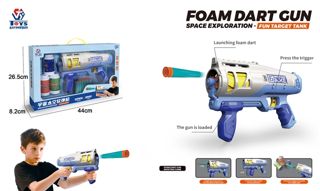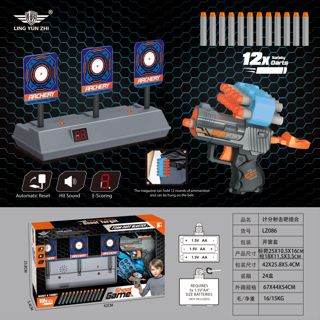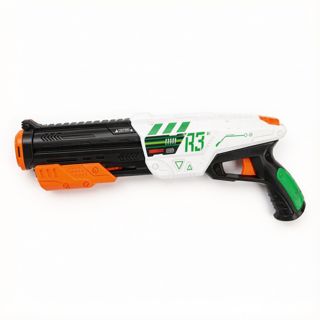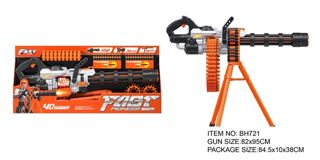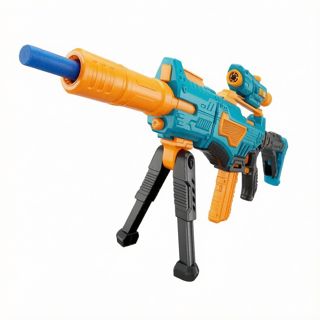
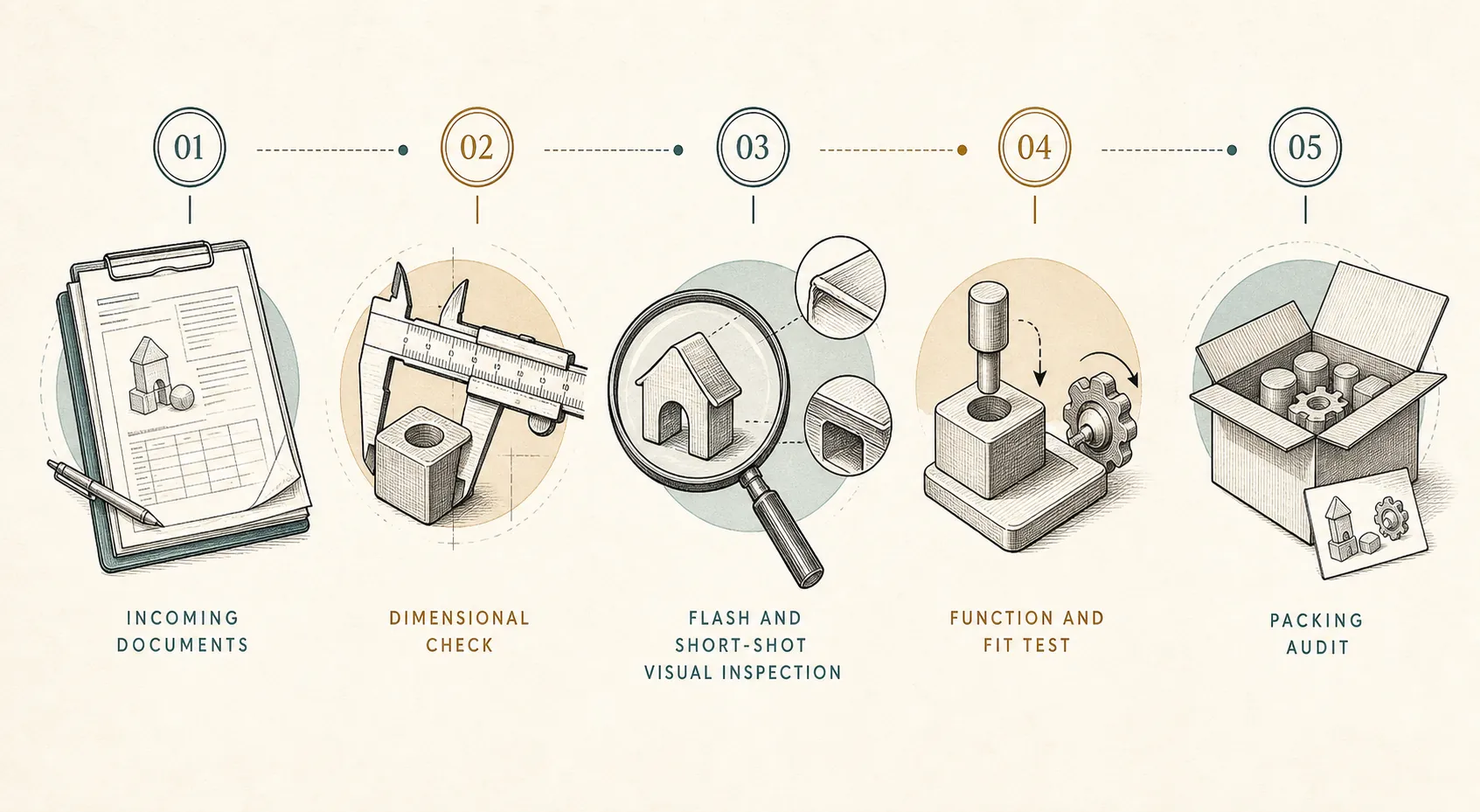
Retail availability does not establish suitability for a school setting. Before you commit to any wholesale order of foam dart blasters or target sets for a school activity, you need the institution's explicit written approval of the activity and a control plan that names the exact model, supervision ratio, and safety measures. This framework walks you through eight gates—from institutional sign-off to inspection and tooling terms—so you can buy with confidence rather than on the assumption that "if it's sold in stores, it's fine."
Key Takeaways
- Purchase only after the institution explicitly approves the activity and control plan—verbal assent or "we've used these before" is not documentation.
- Age grading on the catalog must match the school's actual age range; a mismatch (e.g., a grade 8+ set used with 6-year-olds) is a hard stop.
- Every certificate must map to a specific lot and destination market; a UKCA certificate does not cover a VOC test, and mismatched paperwork is not paperwork.
- The sealed golden sample, not a photo or Fair booth sample, is the production standard for color, fit, flash, and function.
- Your PO must include an inspection plan with defect classes and sampling method—an AQL number comes from that plan, not from a catalog sentence.
Step 1: Get the Institution's Written Approval Before Anything Else
The first gate is not about the toy—it's about the school. Ask the school or district for a signed activity plan that names the specific SKU you intend to supply, the adult-to-student supervision ratio, and the control measures: shooting distance, backdrop material, and who retrieves the darts. Without this document on file, you have no basis to proceed, regardless of how popular the item is in retail.
Retail availability only tells you a product cleared a store's buyer—not that a school's risk committee or district policy allows projectile play indoors. A school might have a blanket prohibition on any projectile toy, or require eyewear and a locked storage cabinet. You need the actual policy, not a guess.
Supplier question: "Can you provide documentation or a statement that this model has been used in school programs, and can you share any school-facing safety guidance you have?"
Step 2: Map Local and Market Requirements to the Specific Lot
For each target SKU, identify the destination market—US, EU, UK, Mexico, etc.—and list which certificates apply to that market and that specific lot. Do not accept one certificate covering multiple unrelated tests; a UKCA certificate and a VOC file on an electric bubble machine are different papers, and mixing them is a compliance failure. Map each file to the lot number and the test it covers.
If you sell into the EU, remember that packaging rules (PPWR) set requirements for packaging manufacturing, composition, and recyclability—this applies to the box as much as the product. For the US, the toy safety framework includes specific provisions for certain categories; a teether, for example, is not tested as an ordinary plastic toy. Confirm your target set's intended use and its applicable standard.
Supplier question: "Which certificate covers which test for this specific lot and destination market? Please map each file to the lot number."
Step 3: Verify Age Grading Against the School's Age Range
Age grading must reflect developmental ability and safety—small parts, magnets, complexity—not just the marketing sweet spot. A set labeled "8+" might have small dart components that are a choking hazard for younger students. Check the catalog's stated age grade for each SKU and compare it to the school's age range. If the school serves 5-year-olds and the set is 8+, stop. Do not proceed to purchase.
The age grade affects much more than a label: small parts, magnets, sound levels, battery compartments, and warning requirements all depend on it. State the requested age grade at the RFQ stage so the supplier quotes and tests to the right specification.
Supplier question: "What is the age grade on the catalog for SKU [X], and does it match the school's age range?"
Step 4: Request the Sealed Golden Sample for Each SKU
The sealed golden sample on the QC shelf is the argument that ends a colour fight—not emails, and not photos. Before bulk production, request the golden sample for each SKU, labeled with the tool number and revision. Compare bulk against that physical piece for colour, fit, flash, and function. Buyers who approve only a photo pay for it on the second lot.
Beware the Fair booth sample: it is often a hero unit, and Fair lighting lies. Refuse to take a Fair photo as the production standard. The revision card—not the photo—is what matters.
Supplier question: "Can you provide the sealed golden sample for SKU [X] with the tool number and revision card, and will bulk be compared to that physical piece?"
Step 5: Define the Inspection Plan on the PO
Your purchase order must specify the inspection plan: defect classes (critical, major, minor), the sampling method, and the pass/fail criteria. Do not rely on a catalog sentence for an AQL number—that number comes from the agreed inspection plan on the PO, not from a brochure. If the supplier quotes an AQL, make sure it's written into the PO and that both parties sign off before production.
The inspection plan is your gate for quality. Without it, you have no basis to reject a lot or demand rework.
Supplier question: "What are the defect classes and sampling method in your standard inspection plan? Can we attach that plan to the PO?"
Step 6: Isolate and Rework Failed Lots
If a lot fails inspection, quarantine it, record the defect class, and release it only after rework and re-inspection. Never ship a failed lot. This is a floor discipline, not a policy document: isolate, record, rework, release. Your PO should state who pays for rework and what the timeline is.
Supplier question: "If a lot fails inspection, what is your rework process, and who covers the cost?"
Step 7: Confirm Tooling Ownership and Storage Terms in Writing
If the SKU requires a mold or custom tooling, the contract must state the fee, who owns the tool, the storage period, and what happens if the tool sits idle. A verbal handshake is not a policy. One buyer paid a tooling fee and later discovered the contract had not frozen storage years or release conditions—a costly mistake. Get it in writing before you pay.
Supplier question: "For the tooling on SKU [X], what are the fee, ownership terms, storage period, and what happens if the tool sits idle for [Y] months?"
Step 8: Prepare the School-Facing Control Plan
The final gate is the control plan you present to the school. It should cover supervised indoor use, eyewear requirement, locked storage out of reach, and non-projectile alternatives if the school rejects projectiles altogether. Present this plan to the institution for explicit approval before you confirm the order. If the school says no to projectiles, have a backup—a non-projectile target game or a different activity—ready to offer.
Supplier question: "What is the MOQ for SKU [X], and does it change if we order a mixed palette of target sets?"
Worked Example (Illustrative, Not a Real Shipment)
Imagine a U.S. elementary school (grades 3–5, ages 8–10) wants to buy 120 units of a foam dart blaster target set for a gym activity. The supplier's catalog lists the set as age 8+, which matches—good. The school's policy requires a written activity plan and supervised use with safety glasses. You obtain the plan, name the SKU, and specify a 1:10 adult-to-student ratio. The supplier sends a golden sample; you compare it to the catalog photo and note a colour mismatch on the target. You reject the sample and ask for a corrected one. The PO includes an inspection plan with critical/major/minor defect classes and a sampling method agreed between you and the supplier. On arrival, the first lot passes inspection. But the school later revises its policy to ban any projectile toys, so you switch to a non-projectile alternative—a manual target game from the same supplier. The tooling contract for the original set is in place, but since the tool will sit idle, the contract specifies a storage fee and release conditions. That's the framework working end-to-end.
What to Ask Suppliers
Use these questions at the relevant gates. They are designed to surface the information you need to pass each checkpoint.
1. "Can you provide the sealed golden sample for SKU [X] with the tool number and revision card, and will bulk be compared to that physical piece?"
2. "Which certificate covers which test for this specific lot and destination market? Please map each file to the lot number."
3. "What is the age grade on the catalog for SKU [X], and does it match the school's age range?"
4. "What are the defect classes and sampling method in your standard inspection plan? Can we attach that plan to the PO?"
5. "For the tooling on SKU [X], what are the fee, ownership terms, storage period, and what happens if the tool sits idle for [Y] months?"
6. "What is the MOQ for SKU [X], and does it change if we order a mixed palette of target sets?"
Gate Checklist: What to Verify at Each Step
| Institutional approval | Signed activity plan naming the exact SKU, supervision ratio, and control measures—not verbal assent. |
|---|---|
| Certificate-to-lot mapping | Each certificate tied to a specific lot and destination market; no mismatched paperwork. |
| Age grading | Catalog age grade matches the school's age range; if not, stop. |
| Golden sample | Physical sealed sample with tool number and revision card; bulk compared to it, not to photos. |
| Inspection plan | PO specifies defect classes, sampling method, and pass/fail criteria; AQL comes from the PO. |
| Failed lot handling | Quarantine, record defect class, rework, re-inspect—never ship a failed lot. |
| Tooling terms | Contract states fee, ownership, storage period, and idle-tool clause. |
| Control plan | Supervision, eyewear, locked storage, and non-projectile alternatives approved by the school. |
FAQ
Can I trust a toy's retail availability as proof it's safe for school use?
No. Retail availability does not establish school suitability. A school may have policies against projectiles or require specific control measures, so you need the institution's explicit approval.
What if the school's age range is younger than the catalog's age grade?
Stop. If the catalog labels a set 8+ and the school serves 5-year-olds, do not purchase. Age grading must reflect developmental ability and safety, not marketing.
How do I know which certificate covers which test?
Ask the supplier to map each certificate to the specific lot and destination market. A UKCA certificate, for example, does not cover a VOC test. Mismatched paperwork is not paperwork.
What should I do if a lot fails inspection?
Quarantine the lot, record the defect class, and release it only after rework and re-inspection. Never ship a failed lot.
How do I handle tooling ownership for custom target sets?
Get a written contract that states the fee, who owns the tool, the storage period, and what happens if the tool sits idle. A verbal handshake is not a policy.
What if the school rejects projectile toys?
Have a non-projectile alternative ready, such as a manual target game. Present the control plan with that alternative to the school for approval before confirming the order.
Sources
Request a Quote
Ready to source target sets for a school or youth program? Use this framework to vet suppliers and get the documentation you need. When you're ready, request a quote and ask for the golden sample and inspection plan up front.