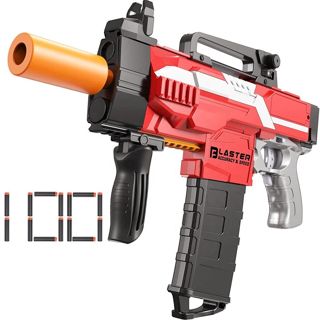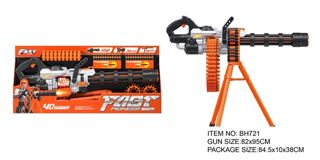

Hold new artwork on any 6+, 8+, or 14+ SKU until the retailer's age-label rule and your own product evidence agree on the same age grade. The commercial trigger is a retailer-side age policy layered on top of existing CPSC and EU toy requirements, not a change to ASTM F963 itself. In practice, your 6+ and 8+ listings need documented edge, point, and small-parts evidence, your 14+ listings need to survive a real marketing review, and any SKU you plan to re-age from 8+ to 14+ needs a product change, not a sticker change.
The distinction that decides most sourcing calls: a 14+ label removes third-party testing and Children's Product Certificate obligations only when the product genuinely is not designed or intended primarily for children 12 or younger. If your packaging, listing images, or product name still say "kids", the label is a claim you cannot defend. Buyers who treat the age number as artwork are the ones who get stuck with containers they cannot list.
Key Takeaways
- Freeze packaging and listing artwork on every 6+, 8+, and 14+ SKU until the retailer rule and the product's technical file point to the same age grade. Re-aging is an engineering and marketing decision, not a print decision.
- Third-party testing and a Children's Product Certificate sit with products intended primarily for children 12 or younger, so a 13+ or 14+ SKU can still fall under ASTM F963 while sitting outside the CPC requirement.
- Toys for children under 8 carry specific hazardous edge, point, and puncture requirements that must hold before and after use-and-abuse testing, which is why 6+ and 8+ SKUs need the deepest evidence file.
- Age grading is tied to small-parts risk and must be assessed on the actual product configuration, including detachable accessories and packaging components, not the catalogue photo.
- Split your open inventory into "relabel or re-document" and "sell through as-is" before you place the next production order, because packaging is a controlled field that changes with the SKU.
What actually took effect
The verifiable change is commercial, not regulatory: retailers are tightening how they read the age number on a toy package, and that sits on top of rules already in force. ASTM F963 is a mandatory consumer product safety standard for children's toys under Section 106 of the CPSIA, codified at 16 CFR part 1250, with 16 CFR 1250.2 identifying which Commission-accepted edition is mandatory. That is the framework you have always been testing against.
The scope boundaries matter more than the headline. Under the CPSC's definition, a toy is an object designed, manufactured, or marketed as a plaything for children under 14, subject to listed exclusions. Testing and certification requirements, however, only reach products designed or intended primarily for children 12 or younger. So there is a real band, roughly 13+ and 14+ play products, that can be inside the toy standard but outside third-party testing and the CPC.
On the EU side, the toy-safety framework covers products designed or intended for use in play by children under 14 years of age, subject to listed exclusions. CE marking and the EU Declaration of Conformity belong to that conformity process and must be matched to the product scope and the current consolidated text. The General Product Safety Regulation 2023/988 is a separate legal instrument from the Toy Safety Directive. Do not merge them into one deadline or one checklist.
Timeline caveat, stated plainly: the retailer-specific age policy that prompted this review is a commercial requirement communicated through buyer and vendor channels, and the official text does not confirm a single cross-market application date. Do not let a supplier tell you a retailer rule is "now law" in every market. Treat regulatory dates in three states only: entered into force where an official instrument says so, applicable to this category only where the official text confirms it, and otherwise unknown.
Who is responsible for what
Manufacturers own the technical file. The product configuration, age grade, material, and standard edition named in the test report must match the SKU you are buying. A report that does not identify the configuration, age grade, and standard edition is not evidence. The resin grade, colour, and additive package should be named in the BOM, because "ABS" or "PP" alone is not enough for repeatable production.
Authorised representatives and importers own the market-facing identification. Importer, manufacturer, and product-identification information should be mapped to the relevant market role before anything is published or printed. In the EU, the CE marking and Declaration of Conformity belong to the conformity process and must be matched to the actual product scope. In the US, the CPC is based on test results and identifies the applicable rules and responsible parties; it is product-specific and is not a blanket factory certificate.
Distributors and retailers own the shelf decision, which is where the age label stops being paperwork. Tracking information should be permanent and support product identification where applicable, and packaging, product markings, and lot control should be reviewed together. If a distributor relabels or repacks, the age claim on the new packaging is theirs to defend.
One caution that costs buyers real money: never treat a standard page, guidance document, or audit framework as proof that a specific factory or SKU is certified. Certificates attach to products and configurations, not to supplier logos.
What the procurement process must change
Start with a SKU-level age reconciliation, not a supplier email. Pull every 6+, 8+, and 14+ item and record four fields against each: the age grade on the artwork, the age grade in the test report, the age grade in the listing metadata, and the age grade implied by the product's play pattern and marketing images. Any mismatch is a stop-work flag on new artwork.
Then rewrite the RFQ so the age grade is a controlled specification. Put these sentences in your next RFQ: "Confirm the age grade and the exact standard edition named in the test report for this configuration. Confirm whether this configuration requires third-party testing and a CPC for the US market. Confirm whether the packaging carries any functional sharp-edge or sharp-point labelling statement. Confirm the tracking label format and permanence." A supplier who cannot answer these in writing is not ready for a retailer age review.
Verify with golden samples, not catalogue images. Detachable accessories, projectile components, and packaging parts need the same review discipline as the main body, because small-parts risk follows the actual configuration. Request the sample in the exact retail packaging you intend to ship, and photograph the age statement, warning text, and tracking label at the same time.
Treat packaging as inventory with a version number. Packaging wording and product markings are controlled fields that change with the SKU, which means every artwork revision creates obsolete stock. Before you approve new dielines, count how many units of old packaging exist, how many months of sell-through they represent, and whether the old age statement is still defensible for the channel it ships to.
Finally, decide the relabeling limit explicitly. If a product is intended for children 12 or younger, changing the printed age to 14+ does not remove testing or CPC obligations, because the product's design, size, and marketing still point where they point. Relabeling is legitimate for correcting a mismatch between a genuinely older-audience product and an overly cautious package. It is not a compliance shortcut.
What remains uncertain
The retailer-specific scope is not fully confirmed from official text. Which retailers, which categories, which channels, and whether the requirement is a listing gate, a packaging gate, or both varies by buyer and must be confirmed in writing with your account contact, not inferred from a supplier's summary.
The application date for the retailer requirement is not confirmed as a single cross-market deadline. Where an official instrument states an entered-into-force date, that is a fact about the instrument; it is not automatically the date your product category must comply. Where the official text does not confirm applicability, write "unknown" in your own tracker rather than a date a factory told you.
The interaction between age labelling and any future digital product identification scheme is also unresolved. Digital product passport concepts, the GPSR, and the Toy Safety Directive are different instruments with different obligations and different timelines. Do not let them collapse into one deadline in your planning sheet.
And the edge cases stay open: novelty and collectible items marketed to adults but visually appealing to children can be reclassified by a retailer regardless of the printed age. That risk cannot be closed with paperwork alone; it has to be managed in product selection and listing copy.
Obligation checklist: role, duty, verification, and what is still unknown
| Manufacturer — technical file and test report | Duty: hold a report that identifies the product configuration, age grade, and standard edition, and keep the BOM material grade specific. Verify: read the report against the SKU and the golden sample. Unknown: whether a supplier's report covers your exact retail configuration until you check it. |
|---|---|
| Manufacturer / brand owner — age grading and small parts | Duty: assess age grading against actual small-parts risk, including assemblies, detachable accessories, and packaging components. Verify: use-and-abuse testing evidence and physical sample review. Unknown: how a specific retailer will read play value versus the printed age. |
| Authorised representative / importer — CE and Declaration of Conformity | Duty: match CE marking and the EU Declaration of Conformity to the product scope and the current consolidated text. Verify: product-scope mapping and responsible-party identification on the product or packaging. Unknown: applicability dates for any instrument where the official text does not confirm them for this category. |
| Importer / brand owner — Children's Product Certificate | Duty: hold a product-specific CPC based on testing, for products intended primarily for children 12 or younger. Verify: confirm the CPC names the applicable rules and responsible parties and matches the SKU. Unknown: none that can be assumed away — a CPC is not a blanket factory certificate. |
| Distributor / retailer — tracking label and shelf claim | Duty: keep tracking information permanent and supporting product identification where applicable, and defend any age claim on repacked goods. Verify: packaging, product markings, and lot control reviewed together. Unknown: retailer-specific age policy scope and enforcement path. |
| Buyer / sourcing manager — artwork and inventory control | Duty: hold new artwork until the retailer rule and product evidence are reconciled; version-control packaging and count obsolete stock. Verify: SKU-level age reconciliation across artwork, report, listing metadata, and sample. Unknown: sell-through timeline for old-age-statement inventory in each channel. |
FAQ
Does a 14+ label automatically remove US testing and CPC requirements?
No. CPSC testing and certification requirements apply to products designed or intended primarily for children 12 or younger, so a genuine 13+ or 14+ audience product can sit outside the CPC requirement, but it may still be subject to ASTM F963 requirements. If the packaging, listing images, or product name still present it as a toy for younger children, the 14+ label will not hold up.
What evidence should I demand from a supplier before approving 6+ and 8+ artwork?
Demand a test report that names the product configuration, the age grade, and the exact standard edition, plus evidence covering hazardous edge, point, and puncture requirements before and after use-and-abuse testing for toys under 8. Also ask for the small-parts assessment on the actual configuration, including detachable accessories and packaging components. If the report does not tie to your SKU, it is not evidence.
Can I fix an age-label mismatch by reprinting the packaging?
Only if the product genuinely belongs to the older age band. For products intended for children 12 or younger, changing the printed age to 14+ does not remove testing or CPC obligations, because the obligation follows the product, not the print. Relabeling is a legitimate correction for a real audience mismatch; it is not a way to move a younger-child product out of scope.
Which certification and marking rules apply if I sell the same SKU in the US and the EU?
They are separate regimes and must be mapped separately. For the US, ASTM F963 is mandatory under 16 CFR part 1250, with the applicable edition identified by 16 CFR 1250.2. For the EU, the toy-safety framework covers play products for children under 14 subject to listed exclusions, and CE marking plus the EU Declaration of Conformity must match the product scope. The GPSR is a separate instrument from the Toy Safety Directive, so do not merge the two into one deadline.
How should I handle open inventory when the retailer age rule changes?
Split it before you place the next order. Tag each lot as either "relabel or re-document" or "sell through as-is", and count how many months of old-age-statement stock you are holding per channel. Because packaging wording and product markings are controlled fields that change with the SKU, every artwork revision strands stock, so the sell-through plan has to be written before the dieline is approved, not after.
What is still unconfirmed about this retailer age-label rule?
The retailer-specific scope and its application date are not confirmed from official text. Which retailers and categories are covered, whether it operates as a listing gate or a packaging gate, and whether there is a single deadline all remain to be confirmed in writing with your buyer. Treat regulatory dates in three states only: entered into force, applicable to this category, or unknown.
Sources
Request a Quote
If you are holding artwork on 6+, 8+, or 14+ SKUs and need the age grade, packaging version, and test documentation reconciled before your next production run, send us the SKU list and the retailer requirement you are working against. We can quote against the exact configuration, packaging version, and market you are shipping to, and flag which items need re-documentation versus a genuine product change.