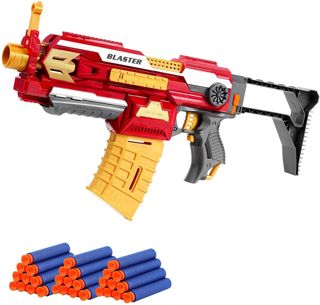
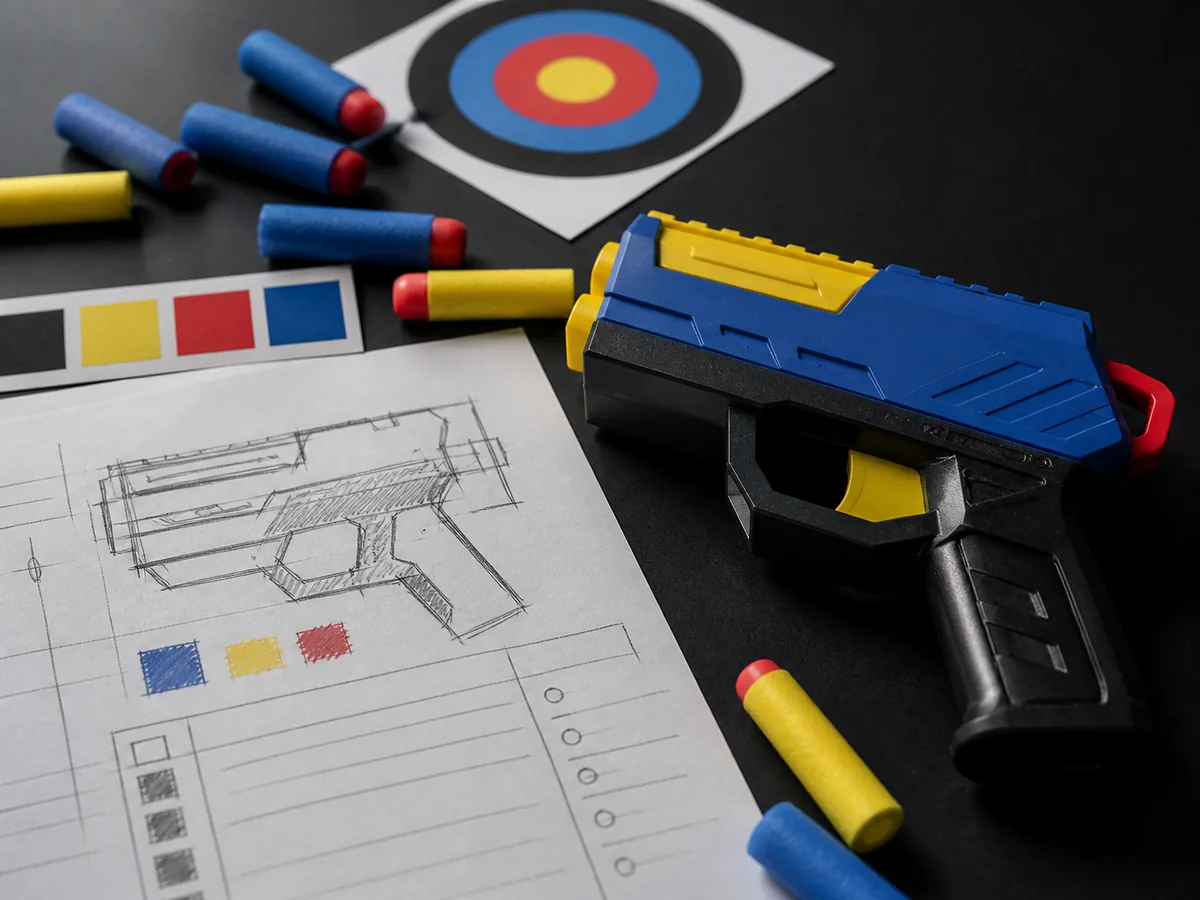
Sourcing a belt-feed blaster is not one purchase order — it is a replenishment program. The blaster and its belt/link components must be planned, sampled and reordered together, or the SKU becomes unsupported the moment the first belt wears out. Buyers who treat the belt as an accessory line item discover the problem in month three, when the blaster still sells but the belt does not exist.
This checklist covers what to verify before you commit: the sealed golden sample, belt construction and declared link count, projectile fit, spare and replacement belt availability, loading graphics, packing, and paperwork mapped to market and lot. It does not replace your own inspection plan — it tells you what to put in it.
Key takeaways for belt-feed buyers
- An unsupported SKU is one where replacement belts were not planned with the opening order. Confirm spare belts as a standing replenishment line item before you sign, not after the first sell-through.
- A sealed golden sample on the QC shelf governs colour, fit, flash and function. Photos and email approvals do not — buyers who approve only a photo pay for it on the second lot.
- The declared link count must come from the supplier's catalog or spec sheet. Never quote a number the supplier has not stated in writing.
- Molded-toy MOQ is a factory- and SKU-specific commercial term affected by resin, mold, decoration, packaging and production quantity; it is not one universal industry fact.
- Paperwork is only paperwork when it matches the market and the lot. A certificate for one product does not cover a different test, and a file that does not match the lot is not evidence.
What buyers get wrong about belt-feed blasters
The myth is that the blaster is the product and the belt is packaging. It is the other way around. A belt-feed blaster without a reliable belt supply is a display piece, and a belt without a confirmed link count is a coin flip on the second shipment.
The second myth is that a booth sample at a trade fair is the production standard. It is usually a hero unit. Fair lighting lies; the revision card does not. Ask for the tool number and revision, and treat that card as the governing document — not the photo you took on the show floor.
The third myth is that a wholesale market listing proves factory compliance or stable OEM capacity. It does not. Market availability and production capability are different questions, and only one of them matters when you need a reorder in the same colour.
Map the belt ecosystem as one program
List every belt-feed SKU in scope and, for each, the belt or link component that must be replenished alongside it. Treat blaster plus belt as a single replenishment unit in your planning sheet, your reorder calendar and your supplier scorecard.
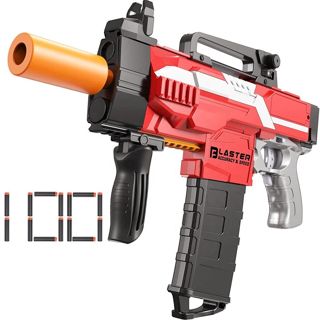
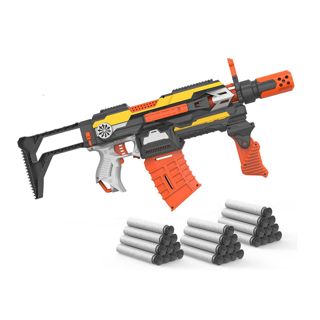
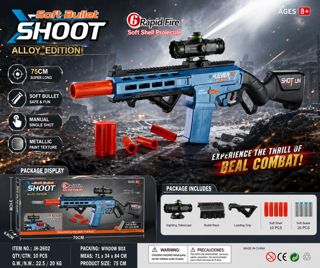
For a belt-feed platform, the in-scope set includes the Belt-Feed Foam Dart Blaster and the electric and manual variants that share belt or link hardware. Group them by belt family, not by product name — belt families are what you actually reorder.
If two SKUs share a belt but not a link geometry, they are two programs, not one. Splitting them correctly is what prevents the orphan-SKU problem later.
How do you verify belt construction and the declared link count?
Compare the bulk belt to the sealed golden sample on link count as declared, link fit, and function. Record the declared count from the supplier's catalog or spec sheet — do not invent a figure, and do not accept a count that exists only in a chat message.
Molded-part shrinkage depends on resin grade, packing, cooling, geometry and flow orientation rather than one universal percentage. That is why link fit is checked against the physical sample, not against a nominal dimension on a drawing.
Note the belt material and the link interface in your inspection record. If the second lot uses a different resin grade, the fit will drift even when the drawing has not changed.
What should you check on projectile fit?
Check projectile fit, flash and function against the sealed piece. Do not state FPS or range — those are not catalog facts, and a number in a sourcing document becomes a warranty claim in a customer's inbox.
Fit is a three-point check: does the projectile seat, does it feed, does it clear. If any of the three fails on the golden sample, the SKU is not ready for a bulk order regardless of how the blaster looks on a shelf.
Are spare belts and replacement belts part of the opening order?
This is the core claim: a belt-feed SKU becomes unsupported when replacement belts are not planned with the opening order. Confirm spare belts are offered with the first order and that replacement belts can be a standing replenishment line item.
Ask for the belt as its own SKU with its own carton and its own price line. If it only exists bundled inside the blaster carton, you cannot restock it without restocking the blaster — which is exactly the trap.
Put the replenishment interval in writing. Whether that is monthly or quarterly depends on your sell-through, but the cadence belongs in the agreement, not in a follow-up email after the first stockout.
Loading graphics and packing: compare against the golden sample
Compare loading graphics and packing against the golden sample and the revision card. Loading instructions that show a different link orientation than the shipped belt will generate returns that have nothing to do with product quality.
Container utilisation should be calculated from measured carton cube and the actual loading pattern, not from a nominal carton size. If the belt ships in its own carton, that carton goes into the cube calculation too.
Check the retail carton and the master carton separately. A correct retail pack inside an undersized master carton still arrives crushed.
Map paperwork to market and lot before the container leaves
For the destination market, identify which file covers which test and confirm the file matches the lot. A UKCA file and a VOC file are different papers; a buyer once tried to use one certificate for both. Paperwork that does not match the lot is not paperwork.
If the blaster uses a button or coin cell, it needs both battery-law review and child-access/ingestion hazard review. One does not replace the other, and neither is covered by a general toy test report.
Keep the mapping in a single sheet: market, lot number, file, test, date. When a customs query arrives, a one-page map beats a folder of PDFs.
What happens when a lot fails inspection?
Isolate the failed lot, record the defect class, and release only after rework. Do not publish an AQL number in a sourcing document — the AQL belongs in the agreed inspection plan on the PO, not in a catalogue sentence or a blog.
The release decision should be documented per lot with the defect class and the rework record attached. A supplier who cannot describe this process in a sentence has not run it.
Worked example (illustrative, not a real shipment): a 1,200-piece belt-feed order splits across two destinations, with one market taking retail-ready cartons and the other taking plain master cartons. The belt component ships in its own carton for one destination and bundled for the other. Inspection catches link-fit drift against the sealed golden sample on the bundled configuration only. That lot is held at the packing step, not at the loading step, because the bundled carton was never compared to the golden sample — and the hold delays the plain-carton destination even though its configuration passed. The lesson: inspect both packing configurations as separate lots, because one of them will be the one that stops the container.
Belt-feed sourcing checkpoints and red flags
| Golden sample and revision card | Check: sealed sample present, tool number and revision recorded. Red flag: supplier sends a photo or a Fair booth unit as the standard. |
|---|---|
| Belt construction and declared link count | Check: bulk belt matches declared count and link fit against the golden sample. Red flag: link count stated only verbally or not stated at all. |
| Projectile fit | Check: seat, feed and clear verified on the sealed piece. Red flag: FPS or range quoted instead of a fit check. |
| Spare and replacement belts | Check: belt available as its own SKU and as a standing replenishment line. Red flag: belt exists only bundled inside the blaster carton. |
| Loading graphics and packing | Check: graphics and pack match golden sample and revision card; carton cube measured. Red flag: nominal carton size used for container planning. |
| Paperwork to market and lot | Check: each file mapped to market, lot and test; button/coin cell gets both reviews where applicable. Red flag: one certificate presented as covering two different tests. |
| Failure handling | Check: failed lot isolated, defect class recorded, released only after rework; AQL from the PO inspection plan. Red flag: a defect rate or AQL number quoted from a catalogue sentence. |
What to ask suppliers before you commit the order
Send these as a written RFQ. A supplier who answers four of them and skips the rest has told you something useful about the relationship.
1. What is the declared link count for this belt, and where is it stated in your catalog or spec sheet?
2. Are replacement belts offered with the opening order, and can they be a standing replenishment line item with their own SKU and carton?
3. Can you provide the tool number and the revision card for this SKU?
4. Which paperwork file covers which test for our market, and does that file match this production lot?
5. What is the agreed inspection plan on the PO, and what AQL does it specify?
6. Can we compare bulk to our sealed golden sample before shipment release, and who signs that comparison?
7. If a lot fails, what is your defect-class recording and rework release process?
8. If the belt uses a shared link geometry across SKUs, which SKUs share it — and does a change on one require requalifying the others?
FAQ
Who are reliable wholesale foam blaster suppliers in China for toy retailers and distributors?
Reliable suppliers are the ones that can show a sealed golden sample, a revision card and a lot-matched paperwork file before you ask twice. Chenghai and Yiwu both host wholesale supply, but market availability does not prove factory compliance or stable OEM capacity — verify the sample and the file, not the booth.
What is the typical MOQ, case pack and lead time when buying foam blasters wholesale from Chenghai?
There is no single industry MOQ. Molded-toy MOQ is a factory- and SKU-specific commercial term affected by resin, mold, decoration, packaging and production quantity, and case pack and lead time follow the same logic. Get the number per SKU in writing, and confirm it against the belt component separately.
Where can I source wholesale foam blasters with specs, samples and packaging data before placing a PO?
Source where the supplier will release specs, a sealed sample and measured carton data before the PO. Container utilisation should be calculated from measured carton cube and the actual loading pattern, not a nominal carton size — if a supplier cannot provide measured cube, treat the packing data as unverified.
Which China factories can supply wholesale foam blasters for Amazon, toy stores and party channels?
The channel matters less than the belt program. Amazon and toy-store buyers need replacement belts as a separately orderable SKU, and party channels usually need retail-ready cartons. Ask which SKUs share belt or link hardware before you decide the assortment.
Who supplies foam dart blasters wholesale from China with electric, manual and target-set assortments?
Suppliers with an electric and manual range are common; the differentiator is whether the belt and link components are shared across the range. If they are not shared, you are running several replenishment programs, and each one needs its own spare-belt plan.
Do I need separate paperwork for a belt-feed blaster with a battery compartment?
Yes, if it uses a button or coin cell: battery-law review and child-access/ingestion hazard review are two separate requirements, and one does not replace the other. A general toy test file does not cover either by itself — map each file to the market and the lot.
Sources
Plan the belt with the blaster
If you are building a belt-feed assortment, start with the sealed golden sample, the declared link count and the spare-belt line item — then talk about cartons. Browse the electric and automatic range or the manual range, and bring your belt questions to the RFQ.