Keep only the claims your factory can reproduce with the production item — that is the whole decision. Everything else on a blaster detail page is decoration. A range figure, an FPS number, a dart count, or a "shoots 100 feet" line is either backed by a sample you can re-test on demand, or it is a future A-to-Z claim waiting to happen. Rebuild the listing by stripping every performance statement down to what a golden sample and a supplier invoice can defend, then re-shoot the demonstration to match. This page covers the original listing language, the unsupported range and FPS wording, the revised demo, exact contents, setup copy, return themes, and how to monitor conversion after the rewrite — and translates all of it into a wholesale decision you can act on before placing a PO.
Shortlist criteria: what to ask, what to collect, what fails
| Can the factory reproduce the range and FPS claim on a production unit? | Ask for a golden-sample test with the exact production configuration. Proof: a dated test record tied to the sample you hold. Fail if the number only exists in a chat message. |
|---|---|
| What exactly is in the box? | Ask for the packed contents list: blaster, dart count, target, stand, batteries or not, manual. Proof: a packed-unit photo and the carton configuration. Fail if the listing bullet count does not match the packed contents. |
| Does the supplier issue a verifiable invoice in your business name? | Ask before the PO, not after a complaint. Proof: a sample invoice showing your registered entity, supplier details, and quantities covering units sold. Fail if the supplier will only issue a receipt or a screenshot. |
| Which safety documents apply to this blaster for your destination? | Ask which standards the factory tests to and for the test report for the exact model. Proof: the report naming the model. Fail if the report names a different SKU or a generic category. |
| Can the factory hold the sample configuration across repeat orders? | Ask how the golden sample is stored and referenced at production. Proof: a written spec sheet with material and dimensions. Fail if the spec is verbal only. |
| Who owns the listing content and who can change it? | Ask who controls titles, main images, bullets, and descriptions. Proof: your own brand-registry status and content control. Fail if any third party can edit the detail page. |
What the original listing language got wrong
Most rebuilt blaster pages fail for the same reason: the copy was written to win the click, then never reconciled with the factory's actual output. The original language typically stacks superlatives — longest range, fastest rate, most darts — none of which the supplier ever agreed to in writing. When a buyer receives the unit and measures differently, the gap becomes a return, and enough returns become a claim pattern.
The fix starts with a claim audit. Pull every performance statement off the detail page and sort them into three buckets: reproducible (the factory can re-test it on the production item), documented (a test report or spec sheet supports it), and unsupported (it exists only in marketing copy). Only the first two buckets survive. This is the same discipline behind treating A-to-Z claims as diagnostic evidence rather than support tickets — each claim points at either a product problem or a fulfillment problem, and the tag decides who fixes it.
A practical benchmark worth holding: a return rate under 8% is a working entry bar for many categories. Treat it as a target you set yourself, not an Amazon policy, and confirm your own thresholds inside Seller Central. If the rebuilt listing cannot hold under that line, the problem is usually the promise, not the product.
Why unsupported range and FPS wording is the expensive part
Range and FPS are the two claims buyers test first, and the two that are hardest to defend without a controlled test. A blaster that reaches a stated distance on a fresh battery at room temperature may not reach it after twenty shots, in cold weather, or with a different dart batch. If the listing states a single number with no conditions, every one of those variables becomes your liability.
The safer approach is to state the condition, not just the number — or to drop the number entirely and let the demonstration carry it. Where a factory provides a test report, keep the report on file and make sure the model named on it matches the model you sell. A report for a different SKU is not evidence; it is a liability with a cover page.
This is also where documentation discipline pays off. Amazon authenticity reviews generally focus on verifiable supplier invoices from the last 365 days plus a Plan of Action, with invoices showing your business name, the supplier's details, and quantities covering sales. Retail receipts and screenshots are usually rejected. If your supplier cannot issue that invoice, the sourcing risk is bigger than the listing copy.
Rebuilding the demonstration and the exact contents
Re-shoot the demo with the production unit, not a hand-picked sample. Same dart type, same battery state, same distance to target, and a visible measurement. If the blaster ships with a stand or a target, show them in use — the demo should match the packed contents exactly, because a mismatch between what the video shows and what arrives is a return theme in itself.
Then reconcile the bullets against the box. Count the darts, list the accessories, state whether batteries are included, and describe the assembly step honestly. A blaster that needs a stand assembled before play should say so. Setup copy is boring and it prevents a specific kind of complaint: the buyer who cannot get the thing working and concludes it is defective.
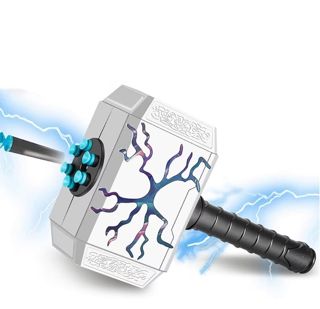
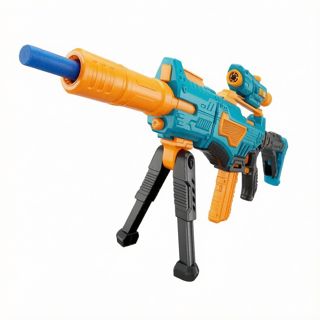
For a catalog example, the Space-Theme Foam Rocket Launcher ships in a window box at a reference MOQ of 72 with 24 units per carton — a packing configuration that makes the contents easy to show on camera. Reconfirm the sample, current quote, age evidence, and destination documents before you commit, because a catalog record establishes the item, not certification or stock. If your assortment needs a light-up option, the Light-Up Hammer Foam Dart Blaster is the kind of SKU where the demo has to show the light function working on arrival, not just in the studio.
Return themes to watch after the rewrite
Returns tell you which claim failed. Sort them into the same two buckets as claims: product problems and fulfillment problems. A blaster that arrives cracked is a packaging or transit issue. A blaster that "doesn't shoot as far as the video" is a listing-accuracy issue, and no amount of better foam fixes it.
Common themes on blaster listings cluster around jam frequency, dart quality, battery compartment fit, and missing accessories. Each one maps back to a line of copy you can change. If jams dominate, the demo should show the loading sequence and the listing should state the dart type. If accessories go missing, the packed contents photo needs to be on the detail page.
The recall record is a useful reminder of how far a small design detail can travel. In 2026, CPSC recalls covered LED finger lights whose button cell batteries were accessible to children, a teething toy whose silicone pull string was smaller and longer than permitted, and a Christmas tree play set whose zipper pull exceeded the federal lead content limit. None of those products is a blaster, and none is connected to any supplier or SKU here — but the pattern is the same one that governs a battery compartment or a small part on a toy blaster. Screen the design, not just the paperwork.
Monitoring conversion after the claims change
A rebuilt listing usually converts differently, and not always better at first. Track four signals weekly: rating trend, return rate, conversion rate, and cost of acquisition. Read them together over a 60- to 90-day window before you decide to scale, fix, or kill the product. One week of soft conversion after removing an inflated claim is noise; two months of it is a signal.
Segment the data by traffic channel. Organic, paid, promotions, influencer, and off-channel traffic bring different buyers with different expectations. A blended claim rate hides the channel that is sending the wrong buyer. If paid traffic returns at twice the organic rate, the ad creative is making a promise the listing no longer supports.
The decision rule is simple: if no signal improves inside the window, stop spending and fix the product or the promise. Do not keep buying traffic to rescue a listing whose claims you already know are unverifiable.
Where this category is typically made
Foam blasters sit in the injection-molded plastic cluster, and that cluster is concentrated in Chenghai, Shantou, in Guangdong province. Chenghai's advantage is density: mold shops, injection houses, assembly, printing, and packaging sit within a short drive, which shortens sampling cycles and makes small-batch tooling changes realistic. If your blaster needs a new shell or a modified magazine, that proximity matters more than a lower unit price elsewhere.
Yiwu is the other name buyers hear, and it serves a different job. Yiwu is a trading and small-commodity hub — strong for mixed assortments, party-channel items, and low-volume variety, weaker for tight engineering tolerances and repeatable mechanical performance. If you are assembling a party-favor program across many SKUs, Yiwu makes sense. If you need a blaster that performs the same way on order five as on order one, the molded-toy cluster around Shantou is the better fit.
Other categories follow their own geography: wooden toys cluster in Yunhe, plush in Yangzhou. Knowing which region owns which material tells you where to look first, and it also tells you what a factory there is genuinely good at. A supplier outside the cluster can still be excellent, but you should ask harder questions about who actually molds the parts.
FAQ
Who are reliable wholesale foam blaster suppliers in China for toy retailers and distributors?
Reliability here means reproducible output plus verifiable paperwork, not a directory listing. Shortlist factories in the molded-toy cluster around Chenghai and Shantou, then filter on three proofs: a golden sample you can re-test, a test report naming the exact model, and an invoice in your business name covering the quantities you sell. A supplier who cannot produce all three is a sourcing risk regardless of price.
Where can I source wholesale foam blasters with specs, samples and packaging data before placing a PO?
Ask for the packed-unit configuration, not just the product photo: material, dimensions, units per carton, gross weight, and the exact box contents. A catalog record such as the Space-Theme Foam Rocket Launcher shows the format — window box, reference MOQ 72, 24 units per carton — but a catalog record establishes the item only. Reconfirm the sample, current quote, age evidence, and destination documents before the PO.
Which China factories can supply wholesale foam blasters for Amazon, toy stores and party channels?
The same factory rarely serves all three well. Amazon sellers need documentation depth and content control; toy stores need packaging that survives retail handling; party channels need low unit cost and fast assortment turnover. Decide which channel you are buying for first, then match the factory's strength — molded-toy cluster for performance consistency, trading hubs for assortment breadth.
Who supplies foam dart blasters wholesale from China with electric, manual and target-set assortments?
Assortment breadth is a catalog question, not a factory-size question. Ask for the full mechanism range you need — manual, pump-action, electric — and confirm each one shares the same dart type and battery standard, because mixed standards multiply your spare-parts and returns burden. If a supplier only molds one mechanism, they are likely trading the rest.
Who are foam blaster manufacturers in Chenghai that support samples, OEM packaging and repeat orders?
Chenghai's density makes sampling and packaging changes realistic, but verify the factory actually molds rather than assembles. Ask to see the mold for your shell, confirm who owns it, and get the golden-sample spec in writing so repeat orders match. OEM packaging is routine in the cluster; ownership of the tooling is the question that separates a manufacturer from a middleman.
How do I verify a Chinese toy supplier before committing to a PO?
Run a three-part check: a third-party audit of the production site, a golden sample you test yourself against the listed claims, and the document set for your destination market. Then confirm the invoice standard — supplier invoices from the last 365 days showing your business name, supplier details, and quantities covering sales are what authenticity reviews generally expect. Missing any one of these is a fail, not a negotiation point.
Sources
Request a quote or a factory audit
If you are rebuilding a blaster listing and need a supplier who can back the claims with a golden sample, a model-specific test report, and a verifiable invoice, send us the spec you need to defend. FoamBlasterSource works this way with importers and private-label buyers, and we will quote against your spec and walk you through the sample and audit process before you commit to a PO.