The defect library is the acceptance standard for a foam blaster shipment: one photographed example per defect class, graded critical, major, or minor, signed off before the sampler opens a carton. Without it, a "scratch" on a blaster shell becomes a debate between your inspector and the factory's QC lead, and the outcome depends on who is more tired.
This page covers the seven classes that matter for foam blasters — function, projectile tips, sharp damage, missing parts, cosmetics, artwork, and cartons — with concrete examples at each grade. It also covers the commercial mechanics that determine whether the library is enforceable at all: the sealed golden sample, the revision card, the Incoterms line on the PO, and the release rule for a failed lot.
One thing this page will not do: quote you an AQL number. Sampling plans and defect limits belong in the inspection plan attached to your purchase order, agreed per lot. A blog is not an acceptance criterion, and a factory's default percentage is not your buyer's requirement.
What buyers should lock before the sampler opens a carton
- A sealed golden sample on the QC shelf beats any photo. Compare bulk against that physical piece for colour, fit, flash, and function — buyers who approve only a photograph generally pay for it on the second lot.
- A booth photo from a trade fair is not a production standard. Label the tool number and the revision on the table, and require the factory to do the same; fair lighting flatters a hero unit that the mould may never reproduce.
- Grade defects in three classes and photograph one example of each. Critical covers safety and function failures, major covers fit, assembly and missing parts, minor covers cosmetics, artwork drift and carton printing. The examples, not the numbers, are what inspectors and factory QC can point at together.
- Major and minor limits must be stated per lot or per inspection plan. A factory's default rejection percentage is not automatically your acceptance criterion, so write your own into the PO.
- Treat button-cell compartment items as a pre-function check: screw closure, tool access, and the warning must pass before anyone discusses how far the blaster shoots.
What does an AQL defect library for foam blasters actually contain?
It contains photographed examples, not prose. For each defect class you need one or more reference images showing an acceptable piece and a rejected piece side by side, with the class (critical, major, minor), the check method, and the disposition written underneath.
The seven classes to build for a foam blaster are function, projectile tips, sharp damage, missing parts, cosmetics, artwork, and cartons. Function covers trigger action, motor operation on electric models, feeding, and shell ejection where the model has it. Projectile tips cover foam head integrity and whether the tip separates from the shaft. Sharp damage covers flash, burrs, and exposed edges on the shell and on internal seams. Missing parts covers screws, caps, battery covers, magazines, and accessories. Cosmetics covers colour drift, sink marks, scuffs, and weld-line flash. Artwork covers tampo print, decals, and label placement. Cartons covers print, label position, and the shipping mark.
Write the library against a specific order. The blaster category spans manual spring models, small ABS multi-port minis, and electric automatic units with sound, light, or shell ejection, and the defect priorities shift with the mechanism. An electric blaster with a motor has failure modes a manual one does not. A gel-style or disc-firing unit has tip and feeding behaviour that a dart blaster does not share. Confirm which SKUs are in the lot before you photograph anything.
Critical defects: what should stop a lot from shipping
Critical means the piece cannot be released as-is, and a cluster of critical findings should hold the lot. For a foam blaster, the critical list is short and non-negotiable: any sharp edge or point reachable in normal play, a projectile tip that detaches and leaves a hard core exposed, a battery compartment that opens without a tool on a button-cell model, missing safety warnings, and any failure that makes the blaster fire in an unintended way.
The button-cell check is a compartment problem before it is a function problem. Inspect screw closure and tool access first, then confirm the warning is present and legible. A cute electronic unit that opens with fingernails does not ship, regardless of how well it cycles.
Projectile tips deserve their own photograph in the library because they are the part most likely to be argued about. Show an intact tip, a tip with a partial tear, and a tip that separates from the shaft. The third image is the one that ends the discussion.
Major defects: fit, assembly and missing parts
Major covers defects that do not injure a child but do break the product for the buyer: a shell seam that will not close, a magazine that does not seat, a battery door that pops open in handling, a motor that stalls, a screw boss that strips, or a missing accessory that makes the retail pack incomplete.
This is where incoming-component checks earn their keep. Wheels, axles, batteries, fasteners, inserts, and printed parts should be verified before they enter assembly, because a finished-unit test may not isolate which supplier delivered the bad batch. If a blaster fails at final test, the cause may already be three stations upstream.
First-article inspection belongs here too. Before routine release, the initial production parts should be verified against drawing, material, appearance, and assembly requirements. A first article that passes with a hand-fitted sample is not a pass.
Minor defects: cosmetics, artwork and carton condition
Minor defects are the ones that generate the most email and the least risk. Colour drift against the golden sample, light scuffs, sink marks on a large shell face, flash at the gate, a tampo print that is 1 mm off-centre, a carton with a scuffed corner.
Set the tolerance in the library with images, because "acceptable colour" is not a phrase that survives a second lot. Show the buyer-approved piece next to a just-out-of-tolerance piece and write the disposition underneath. When the argument arrives, the sealed sample on the QC shelf settles it — emails do not.
Artwork and carton checks belong in the same library even though they are minor. A shipping mark that does not match the PO, a missing age warning, or a barcode placed on a curved surface are all carton-class defects, and they are cheaper to catch at the factory than at the DC.
How do you build the library step by step?
Start with the sealed golden sample and the revision card. Confirm which SKUs are in the lot, which tool number and revision apply, and that the factory stores the sealed piece on the QC shelf where it can be pulled during inspection. A photograph in an email thread is not a substitute. At a trade fair the booth sample is often a hand-built hero unit, and fair lighting flatters it; the revision card does not lie.
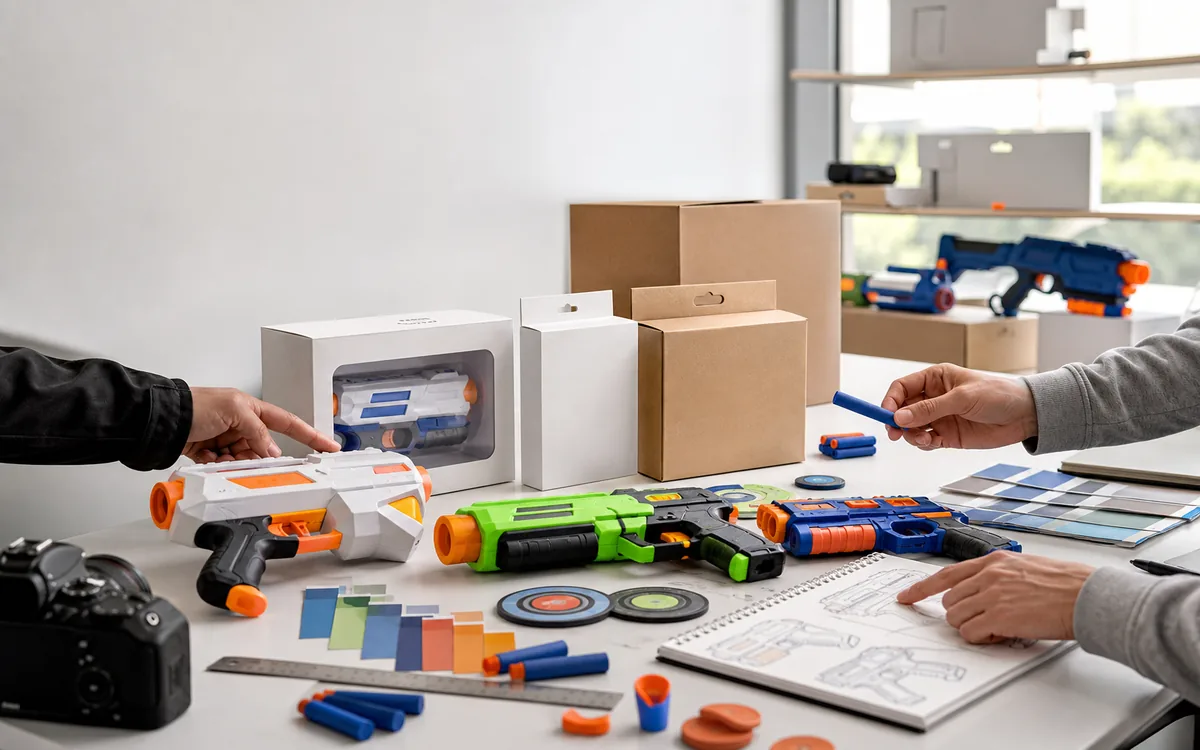
Photograph the seven classes against that sample. Shoot on a neutral background under consistent light, with a scale reference in frame for anything dimensional. For each class, capture one acceptable example and one rejected example, and write the class and the disposition underneath. Keep the file naming tied to the SKU and revision so a second lot can be compared without ambiguity.
Map the paperwork class separately from the product class. Certificates and test files are not interchangeable across markets or lots — one file may cover a market and a test that another file does not. If the file does not match the lot, it is not paperwork. Add a paperwork row to the library with the market and the lot written next to the document reference.
Fix the commercial terms before scheduling anything. Incoterms version and named place belong on the PO — a freight argument that starts with an unnamed FOB place can outlast the production run. The quote itself should separate tooling, samples, production parts, decoration, testing, packaging, freight, and taxes, because a single landed number hides which line moved when the second quote comes in higher.
Then agree the release rule. A failed lot is isolated, the defect class is recorded, and release happens only after rework and re-inspection. The defect library supports that decision; it does not replace the inspection plan attached to the PO.
Worked example (illustrative, not a real shipment)
A European importer books one lot of 3,600 electric foam blasters across two SKUs, packed 12 per carton. Half the lot is destined for a German retail chain with German-language warnings on the retail box; the other half goes to a UK distributor with UKCA marking and English-only packaging. Same blaster, two packaging variants, one production run.
The importer photographs the defect library two weeks before the inspection date: function and tip examples from the German-variant golden sample, carton examples showing both the German retail box and the UK shipper mark, and a paperwork row listing which test file covers which market. The button-cell compartment check is photographed separately because the model uses a coin cell.
At inspection, the sampler finds fifteen units with a trigger that sticks intermittently. Under a library that grades function as critical when the unit fires unintentionally, and major when it stalls, the finding is major — but the count is high enough that the importer holds the lot and asks for a rework plan before release. The same inspection finds a batch of UK-variant cartons printed with the German retail label position. Because the carton class was photographed with both variants in the library, this is not a debate: it is a carton-class defect, corrected by re-labelling the affected cartons before the lot is released.
Without the library, the trigger finding would likely have been negotiated down to "within factory norm," and the carton mismatch might not have been flagged at all until the DC.
What to ask suppliers before you approve the inspection plan
Ask these in writing and keep the answers with the PO. The goal is not to interrogate the factory — it is to have a record that both sides agreed on what will be photographed and how a failed lot will be handled.
Which SKUs from our order are in this lot, and which tool number and revision apply to each? Can you seal a golden sample for this order and store it on the QC shelf? Will you photograph one example per defect class — function, projectile tips, sharp damage, missing parts, cosmetics, artwork, cartons — before sampling begins? For any button-cell or coin-cell model, what is the compartment closure design, what tool is required to open it, and where is the warning placed? Which Incoterms version and named place will appear on the PO? Which certificate or test file covers which market and which lot, and can you provide the file reference next to the lot number? What is the agreed inspection plan and acceptance limit on this PO? And what is the rework and release rule if a lot is isolated?
FAQ
What AQL level should I write into a foam blaster inspection plan?
There is no single correct number. The limit belongs in the inspection plan attached to your PO, agreed per lot, because major and minor defect limits must be stated per lot or inspection plan and a factory's default percentage is not automatically your acceptance criterion. Decide the grade for each defect class first, then agree the sampling plan that enforces it.
Can I use ISO 2859 or GB/T 2828.1 sampling for foam blasters?
Yes — those are the standard sampling frameworks inspectors use, and foam-part inspection documents in the trade typically reference a normal single-sampling plan at inspection level II. What matters for your lot is that the sampling level, the defect classes, and the accept/reject numbers are written into the PO inspection plan, not left to the factory's habit.
How do I stop a colour argument on a second production run?
Use a sealed golden sample stored on the QC shelf and compare bulk against it for colour, fit, flash, and function. Approving only a photograph is the common failure point, because screens and lighting shift the reference; the physical piece does not.
Is a trade fair sample good enough as a production standard?
No. Booth samples are often hand-built hero units displayed under flattering light. Ask for the tool number and revision, and require the sealed pre-production sample to be the reference. A fair photo is a starting point for a conversation, not an acceptance standard.
What should I check first on an electric blaster with a button-cell compartment?
Check the compartment before the function. Confirm the closure requires a screw or tool, that the tool access works, and that the warning is present and legible. Only then test the motor, feeding, and any sound, light, or shell-ejection feature.
Does the defect library replace the inspection plan on the PO?
No. The library defines what a defect looks like and how it is graded; the inspection plan defines how many units are sampled and what accept/reject limits apply. Both need to be agreed, and both should be referenced on the PO.
How should paperwork defects be handled in the library?
As their own class, mapped by market and by lot. Certificate and test files are not interchangeable across markets or tests, so a row in the library should name the market, the lot, and the document reference. If the file does not match the lot, treat it as a defect rather than as evidence.
Wholesale decision: what the library changes for your order
The library converts a subjective argument into a documented decision, and that decision has a commercial consequence. A lot with a high count of major function defects is a rework-and-reinspect lot, not a discount lot — because a stuck trigger on the retail shelf becomes a return, and a return costs more than the unit. A lot with minor cosmetic drift and clean cartons is a normal release, provided the buyer accepted that drift in the golden sample.
For buyers sourcing across multiple channels, the library also protects the assortments. A party-channel order that mixes manual and electric blasters, or a retail program that mixes a small multi-port mini with a larger automatic unit, will have different defect priorities per SKU. One library per SKU family, tied to one revision, keeps the inspection team from applying the wrong standard to the wrong carton.
The practical takeaway: the acceptance standard always comes from your own sealed sample and the inspection plan on your PO, not from a catalogue page or a supplier's default percentage.
Sources
Build the defect library before the first carton is opened
If you are planning a foam blaster program and want the inspection conversation settled before production starts, send us the SKU list, the destination markets, and the packaging variants. We will help you structure the defect classes, the golden-sample handling, and the questions to put to the factory — so the inspection plan on your PO has something concrete to point at.
Share your order scope and target markets, and we will come back with the checklist structure and the supplier questions that matter for that specific lot.