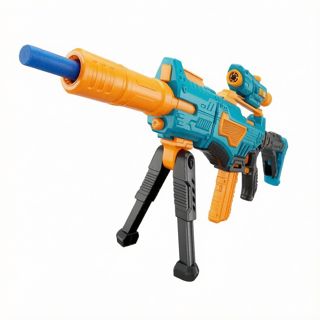
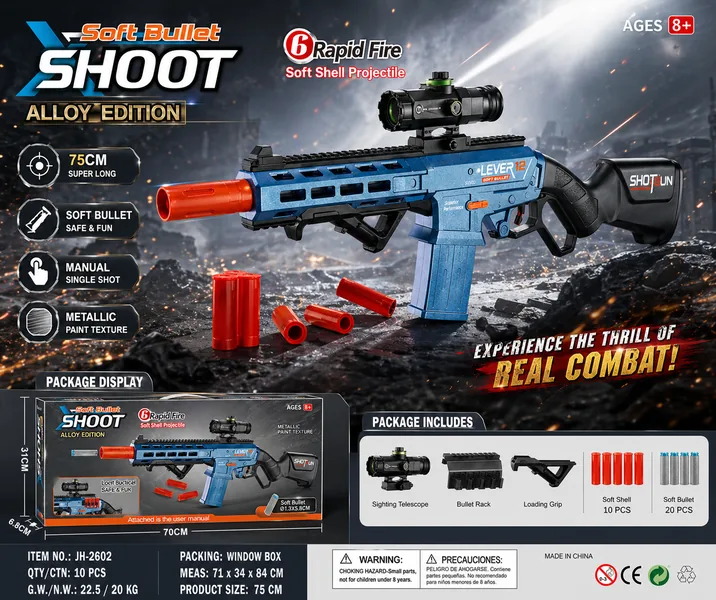
A polished sample proves the tool can make one good part. It cannot prove the tool holds dimensions through 50,000 shots. The most expensive blaster mistake is signing a high-volume PO after approving a hero sample from a trade show booth—without ever asking who owns the mold, when it was last serviced, or how many times it has cycled. That sample was likely made on a fresh or recently refurbished tool, with a hand-picked cavity and a slow cycle time. Production won't run that way.
Before committing tooling budget or a high-volume order, demand documented evidence of the tool's maintenance path: ownership and release terms, a shot-count-based service schedule, cavity-level inspection records, repair history, spare insert inventory, and dimensional trending data. If the supplier cannot produce those records, the mold is a black box—and the buyer is underwriting its failure risk. This article shows exactly what to ask for, how to read the answers, and when to walk away.
What Buyers Should Verify Before Committing Tooling Budget
- The sample is not the mold. A hero unit from a booth or a first-article sample often comes from a fresh cavity with slow cycle times; it says nothing about wear, vent condition, or dimensional drift after tens of thousands of shots.
- Shot count, not calendar time, drives structural maintenance. Published maintenance schedules tie component service to shot intervals—commonly every 50,000–100,000 shots for P20-class molds and every 100,000–250,000 shots for hardened H13—while daily and weekly checks cover cleaning, venting, and cooling. A supplier who cannot tell you the tool's current shot count cannot tell you what maintenance is due.
- Tool ownership and release terms belong in the contract, not in a handshake. A buyer who paid a tooling fee once discovered the contract had not frozen storage years or release conditions. Write the fee, ownership, storage period, idle-tool handling, and final revision into the tooling agreement.
- Cavity differences are a quality risk in multi-cavity tools. Uneven wear across cavities means part-to-part variation that a single sample will never reveal. Ask for cavity-specific inspection records and dimensional trending against the original tool drawing or a sealed golden sample.
- A certificate that does not match the lot is not paperwork. Map every test file—EN71, ASTM F963, CPC, UKCA—to the specific SKU, market, and production lot. Never let a supplier use one generic certificate to cover multiple products or markets.
What Should a Blaster Tooling Agreement Freeze Before Production Starts?
A tooling agreement must freeze four things: who owns the tool, how long it will be stored, what triggers release to the buyer, and what happens if the tool sits idle. These are not legal boilerplate—they are the difference between a mold you can retrieve and one that disappears into a supplier's rack.
A buyer once asked who owned the tool after paying a fee. The contract had not frozen storage years or release conditions. The supplier had no obligation to release the tool, and the buyer had no right to retrieve it. That dispute lasted longer than the production run. Tooling policy is a document, not a handshake.
The agreement should also identify the final revision, cavity count, approved resin, process window, spare parts list, and who owns maintenance responsibility. If the mold is insert-based, the agreement should list which inserts are replaceable and whether spare inserts ship with the tool. Without those details, a worn insert becomes a full mold replacement instead of a scheduled swap.
| Tool ownership after fee payment | Must be stated in writing—who holds title, under what conditions title transfers |
|---|---|
| Storage period and idle-tool terms | Freeze the number of years stored, the storage environment, and what happens if the tool idles beyond that period |
| Release conditions | Define what triggers release: final payment, production completion, or a specified date |
| Final revision and cavity count | Record the exact revision number and number of cavities so future production matches the approved tool |
| Approved resin and process window | Name the resin grade and the temperature/pressure window the tool was designed for |
| Spare parts and inserts | List replaceable inserts, wear components, and whether spares ship with the tool |
| Maintenance owner | Assign responsibility for maintenance during production and storage |
How Do You Read a Shot History and Maintenance Schedule?
Ask for the tool's current shot count and the maintenance schedule tied to that count. If the supplier cannot produce both, you are evaluating a mold with unknown wear. Published industrial schedules typically call for a 5–10 minute visual inspection at every shift end, a more thorough functional check weekly, and component-level service based on shot count—commonly every 50,000–100,000 shots for P20-class molds and every 100,000–250,000 shots for hardened H13 tooling.
The schedule should cover cleaning, vent inspection, corrosion protection, lubrication where permitted, alignment checks, and replacement of worn components such as ejector pins, springs, seals, and guide bushings. A mold running abrasive material or high cycle counts may need shorter intervals. The supplier should be able to explain why their interval differs from the published range—not just assert that the mold is "well maintained."
Dimensional trending is the most valuable record and the one most often missing. A supplier who measures critical dimensions at each service interval and plots them against the original drawing can predict when a cavity will drift out of tolerance. A supplier who only inspects visually cannot. If the tool has run more than half its expected life without dimensional trending, budget for a full dimensional inspection before the high-volume order starts.
| Daily/shift-end check | Visual inspection of cavity, core, and parting line; verify water lines are clear; check ejection movement |
|---|---|
| Weekly functional check | Vent cleaning, lubrication where permitted, cooling flow verification, slide and lifter function test |
| Shot-count service interval (P20-class) | Commonly every 50,000–100,000 shots—verify against the tool's actual steel and resin |
| Shot-count service interval (hardened H13) | Commonly every 100,000–250,000 shots—verify against the tool's actual steel and resin |
| Dimensional trending | Measure critical dimensions at each service interval and compare to original drawing or golden sample |
| Repair records | Document every nick, scratch, weld repair, and parting-line wear event with date and shot count |
| Spare insert inventory | List available spare inserts and wear components; confirm lead time for replacements |
Why Do Cavity Differences Matter for Blaster Part Consistency?
In a multi-cavity mold, each cavity wears differently. Ejector pins on one cavity may wear faster; cooling channels on another may scale unevenly; a third may develop flash at the parting line. A single sample from the best cavity hides all of it. In production, those differences show up as color variation, fit problems, and function inconsistency across units from the same run.
Ask for cavity-specific inspection records. If the supplier tracks dimensions per cavity, you can see which cavities are drifting and schedule targeted maintenance before the high-volume order. If they only track the tool as a whole, you are accepting unknown cavity-level risk. For a blaster with moving internal parts—triggers, seals, air chambers—cavity-level dimensional drift can affect function, not just appearance.
The practical decision: if the supplier cannot show cavity-level data, either budget for a full dimensional inspection at your cost before production, or reduce the order to a pilot quantity and inspect the first production lot cavity by cavity. Do not assume a multi-cavity tool produces identical parts from every cavity.
How Do Repair Records and Spare Inserts Predict Downtime?
Repair records tell you how the tool has been treated and what has already failed. A mold with multiple weld repairs on the same cavity is a different risk than a mold with routine ejector-pin replacements. Ask for the repair log: what failed, when, at what shot count, and how it was fixed. Minor repairs—polishing, micro-welding, re-texturing—are normal. Repeated repairs on the same area suggest a design or process problem that will recur.
Spare insert availability determines how long a failure stops production. If the tool uses insert-based cores and cavities, a worn insert can be swapped in hours. If the cavity is cut directly into the mold block, a worn area may require welding and re-machining—days of downtime. Ask whether spare inserts exist, where they are stored, and how long a replacement takes. For a high-volume blaster order, a mold without spare inserts is a single point of failure.
Cooling channel condition belongs in the same conversation. Scale and corrosion reduce heat transfer, lengthen cycle time, and cause warping. Ask when the cooling channels were last flushed, what method was used, and whether the tool has a water-quality log. A mold that has run for years without cooling-system service may need descaling before a high-volume run.
How Do Certificates and Test Files Map to a Blaster SKU?
A certificate is not a factory badge. It is a document that ties a specific product configuration, age grade, material, and standard edition to a test result. According to the EU Toy Safety Directive 2009/48/EC, toys placed on the EU market must meet the applicable essential safety requirements, and CE marking plus an EU Declaration of Conformity belong to the conformity process. According to CPSC business guidance, children's toys generally require testing at a CPSC-accepted laboratory and a Children's Product Certificate. The applicable ASTM F963 edition should be read from the current regulation before a report is quoted.
The common failure is a supplier who presents one certificate for multiple products or markets. A UKCA file and a VOC test report are different papers; one cannot cover the other. Map every certificate to the specific SKU, destination market, and production lot. If the supplier cannot explain which test covers which product and which market, the paperwork does not match the lot—and paperwork that does not match the lot is not paperwork.
For blasters with electronic components—light-up shields, motorized mechanisms, electronic scoring targets—check whether the product uses button cells. Button-cell compartments are a design and warning problem. Verify screw closure, tool access, and the required warning before discussing toy function. A compartment that opens with fingernails does not ship to markets with button-cell rules. This is a design conversation that belongs in the tooling review, not in a last-minute packaging check.
What Should a Buyer Ask Before Approving a High-Volume Blaster Tool?
A booth sample is not a production standard. At trade fairs, the displayed unit is often a hero piece made on a fresh tool under slow cycle conditions. Label the tool number and revision on the table, and refuse to accept a fair photo as the production reference. Fair lighting lies. The revision card does not.
The sealed golden sample on the QC shelf is the reference that ends arguments. A physical sealed piece—compared for color, fit, flash, and function against bulk production—settles a color dispute that emails and photos cannot. Buyers who approve only a photo pay for it on the second lot, when the color has drifted and the fit has changed.
Inspection criteria should come from the agreed inspection plan on the PO, not from a catalog sentence. A supplier should not invent an AQL number in a blog or a brochure. On the floor, a failed lot is isolated, the defect class is recorded, and release happens only after rework. If you want a specific AQL, write it into the PO inspection plan and confirm the supplier can execute it.
Incoterms need a version and a named place. FOB without a named place—Shantou or Shenzhen as actually booked—starts a freight argument that can last longer than production. Write the Incoterms version and the named place into the quotation. Incoterms are not a vibe.
| Golden sample control | Sealed physical reference on the QC shelf; compare bulk to it for color, fit, flash, function |
|---|---|
| Revision labeling | Tool number and revision marked on the sample and on the production record |
| Inspection plan | AQL and defect classes from the agreed PO inspection plan, not from a catalog |
| Failed-lot handling | Isolate the lot, record the defect class, release only after rework |
| Incoterms | Write the Incoterms version and named place (e.g., FOB Shantou or FOB Shenzhen as booked) |
| QC evidence | Pre-shipment QC photos for mixed-SKU orders; compare against the sealed golden sample |
Which Blaster SKUs Suit High-Volume Tooling—and Which Suit Small Batches?
Not every blaster in a catalog justifies a dedicated high-volume tool. The catalog data tells you which SKUs are positioned for larger runs and which are suited to smaller, mixed orders. A motorized rifle blaster with a low MOQ is likely produced on an existing tool shared across orders; a DIY motorized blaster with a high MOQ suggests a dedicated tool with higher setup commitment. Neither is better—they are different risk profiles.
If you are ordering a high-volume SKU, the tooling assessment above applies directly: you need shot history, maintenance records, and spare inserts. If you are ordering a mixed assortment of lower-MOQ SKUs, the risk shifts to color consistency, packaging, and QC photos across the assortment. For a mixed order, request pre-shipment QC photos for each SKU and compare them to the sealed golden sample before the container loads.
The catalog also shows material differences. ABS/EVA constructions and straight ABS or plastic constructions behave differently in molding: ABS/EVA assemblies may involve multiple tools or secondary operations, while a single-material plastic part may come from a simpler tool. More tools mean more maintenance points. Ask which SKUs share a tool family and which have dedicated tools—that tells you where a single tool failure would stop multiple products.
| Soft-Bounce Alloy Edition 6-Shot Blaster (Electroplated Blue) | ABS/EVA · MOQ 12 · suit mixed orders and sample runs |
|---|---|
| Soft-Bounce Alloy Edition 6-Shot Blaster (Black and White) | ABS/EVA · MOQ 12 · suit mixed orders and sample runs |
| 48-Dart Electric Soft Bullet Blaster | ABS/EVA · MOQ 50 · mid-volume electric SKU |
| 12-Dart Electric Soft Bullet Blaster | ABS/EVA · MOQ 50 · mid-volume electric SKU |
| Graffiti Mini Manual Soft Dart Blaster | MOQ 432 · high-volume manual SKU; material varies by spec |
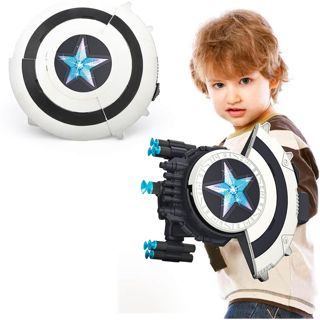
| Light-Up Shield Foam Dart Blaster | Plastic · MOQ 72 · mid-volume novelty SKU with electronic component |
| Mini Dinosaur Foam Dart Blaster | ABS · MOQ 480 · high-volume small-format SKU |
| 3-Mode DIY Motorized Foam Dart Blaster | ABS · MOQ 500 · high-volume motorized SKU; tooling risk concentrated here |
| Motorized Foam Dart Rifle Blaster | ABS · MOQ 120 · mid-volume motorized SKU |
| Electronic Scoring Target and Foam Dart Blaster Set | ABS/EVA · MOQ 72 · multi-component set; multiple tools likely |
| Pump-Action Foam Dart Blaster | ABS/EVA · MOQ 54 · mid-volume manual SKU |
Which Chinese Toy Cluster Fits Your Blaster Order?
Chenghai, a district of Shantou in Guangdong province, is one of China's largest toy manufacturing clusters. Its supply chain advantage is density: mold makers, injection molders, electronics assemblers, and packaging printers sit within a short drive of each other. That density shortens tooling lead times and makes it easier to source spare inserts or schedule a mold repair without shipping the tool across the country. For a high-volume blaster order, that local tooling ecosystem matters—a mold that needs rework can be serviced by a nearby specialist rather than sent to a distant shop.
Shantou's port handles container exports, and many factories quote FOB Shantou or FOB Shenzhen. The named place matters for freight cost and responsibility. When comparing quotations, confirm which port is actually booked—not just which port is convenient to name.
Yiwu, in Zhejiang province, is a different cluster. It is known for small-commodity wholesale and mixed-container sourcing, which suits buyers assembling a broad assortment of low-to-mid volume items rather than a dedicated high-volume tool. If your blaster order is part of a mixed container with other toy categories, Yiwu's aggregation model can reduce freight cost. If your order justifies a dedicated mold and a high-volume run, Chenghai/Shantou's tooling ecosystem is the stronger fit. Neither location guarantees quality—the maintenance records decide that.
| Chenghai (Shantou, Guangdong) | High-density toy manufacturing cluster; strong tooling, injection molding, electronics assembly; suits dedicated high-volume blaster tools |
|---|---|
| Shantou port | Container export gateway for the Chenghai cluster; FOB Shantou is a common quotation basis |
| Shenzhen port | Alternative export gateway; FOB Shenzhen may be quoted depending on booking and freight routing |
| Yiwu (Zhejiang) | Small-commodity wholesale and mixed-container aggregation; suits broad assortments and lower-volume mixed orders |
| Guangdong province | Broader manufacturing base including plastics, electronics, and packaging suppliers serving toy production |
How Do You Verify a Chinese Blaster Supplier Before the PO?
Verification is a sequence, not a single document. Start with the tooling records: ownership document, shot history, maintenance schedule, cavity-level inspection data, repair log, and spare-insert list. If the supplier cannot produce these, the tooling risk is unquantified. Next, verify the certificates: confirm that each test file matches the specific SKU, age grade, material, and destination market. A CPC is product-specific and should not be described as a blanket factory certificate. An EN71 report for one SKU does not cover another. Check the current consolidated text of the applicable standard before quoting any report.
Then verify the production evidence: a sealed golden sample on the QC shelf, revision labeling on the sample, and a PO inspection plan with agreed AQL and defect classes. For a mixed-SKU order, request pre-shipment QC photos for each SKU. The pattern is consistent: buyers who approve only a photo pay for it on the second lot. The physical sealed sample is the reference that prevents that.
Finally, verify the commercial terms: Incoterms version and named place, tooling fee and ownership, storage period, and release conditions. If the supplier resists putting tooling terms in writing, treat that as a risk signal. A factory that owns its tooling process will have the documents. A trading company that does not may not.
Before the PO, request a sample and the packaging data for the specific SKU so material, MOQ, and packaging details are stated for buyer review. When comparing tooling families across a range, group SKUs by mechanism type—manual, electric, motorized—so you can see which share a tool and which carry dedicated tooling.
FAQ: Mold Maintenance and Tooling Risk for Blaster Orders
How many shots can a blaster mold run before it needs major service?
Published industrial schedules commonly tie component service to shot count—every 50,000–100,000 shots for P20-class molds and every 100,000–250,000 shots for hardened H13—but the actual interval depends on steel type, resin abrasiveness, and cycle conditions. Ask the supplier for the tool's specific shot count and their documented service interval; if they cannot provide both, the remaining tool life is unknown.
What is the minimum tooling documentation I should require before a high-volume blaster PO?
Require six documents: the tool ownership and release agreement, the current shot count, the maintenance schedule tied to shot count, cavity-level dimensional inspection records, the repair log, and the spare-insert inventory. If any of these are missing, the tooling risk is unquantified and you should either budget for a pre-production dimensional inspection or reduce the first order to a pilot quantity.
Can a supplier use one certificate to cover multiple blaster SKUs?
No. A Children's Product Certificate is product-specific, and an EN71 or ASTM F963 report must match the product configuration, age grade, material, and standard edition. A UKCA file and a VOC report are different papers; one cannot cover the other. Map every certificate to the specific SKU, destination market, and production lot before the PO.
What MOQ should I expect for custom blaster tooling?
MOQ varies by SKU and tooling arrangement. Catalog data shows MOQs ranging from 12 units for some soft-bounce models to 500 units for motorized and DIY blasters. A dedicated custom tool typically requires a higher volume commitment than an existing-tool order. Confirm the MOQ for the specific SKU and tool family, and ask whether the tool is shared or dedicated—that affects both MOQ and maintenance risk.
How do I check cavity differences in a multi-cavity blaster mold?
Ask for cavity-specific dimensional inspection records plotted against the original tool drawing or a sealed golden sample. If the supplier tracks only the tool as a whole, request a full dimensional inspection at your cost before production, or inspect the first production lot cavity by cavity. Uneven wear across cavities causes part-to-part variation that a single sample will never reveal.
What happens to my mold if the supplier stores it and I stop ordering?
That depends entirely on the tooling agreement. A buyer once discovered the contract had not frozen storage years or release conditions, leaving the tool's fate unclear. Write the storage period, idle-tool handling, and release conditions into the agreement. Tooling policy is a document, not a handshake.
Sources
Request a Quote or Factory Audit
If you are evaluating tooling for a high-volume blaster order, start with the records—not the sample. Request a quotation that includes the tooling terms, shot history, and maintenance schedule for the specific SKU you are considering. If you need to verify a supplier's tooling documentation before committing, ask for a factory audit that covers the maintenance log, cavity inspection records, and spare-insert inventory.
Send your target SKU, forecast volume, and destination market to the supplier, and request a quotation with the tooling terms and the documentation checklist for your review.