Choose fixed colors if you pick to a single SKU and reorder the same shade every cycle; choose assorted colors if your orders are mixed palettes and your picking is carton-level rather than piece-level. Color assortment is a supply-chain choice, not a merchandising preference — it changes how you pick, how you replace, and how predictably you can reorder. A party wholesaler shipping 72-piece master cartons to gift distributors faces different math than an Amazon seller breaking cases into 6-packs. Below: the trade-offs that move cost and service level, the carton markings to demand, and the questions to put in your RFQ.
What this means for your next PO
- Fixed-color cartons win when your downstream order is single-palette: one shade per SKU means one pick face, one packing-list line, and a replacement that matches without a color story.
- Assorted cartons win when your buyers are party retailers and event resellers who need 2–4 palette colors in one order; the cost is picking complexity and the risk that replacements no longer match the original assortment.
- Master-carton markings decide whether an assorted carton is workable: without a color-mix code, pieces-per-carton count, and tool/revision reference printed on the box, your receiving team is guessing at the pick face.
- Reorder predictability is a color decision: a buyer on a 6–8 week reorder cycle asks for 'the next batch of mix #03', not 'do you have stock' — that only works if the supplier treats the mix as a fixed SKU.
- Gender-neutral and non-character color basics carry less markdown risk than licensed themes because they keep selling when a child's favorite character changes between order date and party date.
What MOQ should I expect when I ask for a custom color mix?
Expect the MOQ to be quoted per colorway, not per order — a 1,000-piece total can often be split into several colorways when production conditions allow, which lets you test more colors without committing to a large run per SKU. Get that sentence in writing from a candidate factory.
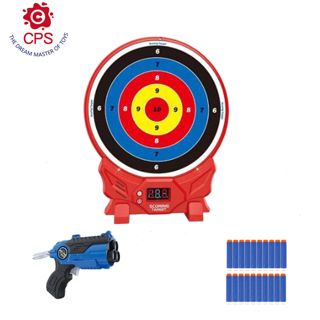
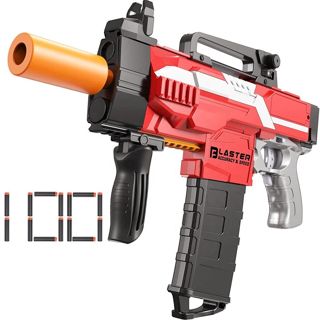
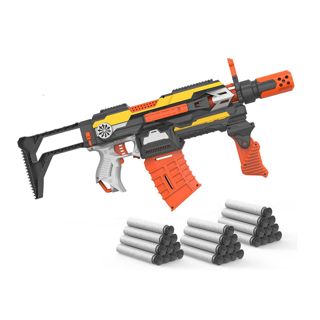
In the frozen catalog data for this category, per-SKU MOQs sit in bands: 50–72 pieces on electric and light-up blaster SKUs (for example, the 48-Dart Electric Soft Bullet Blaster and the Electronic Scoring Target Foam Dart Set), 90–120 pieces on bow and motorized rifle formats, and 216–432 pieces on the small manual and tactical units. Treat those bands as the shape of the negotiation, not as a universal rule — the actual number depends on tooling, color changeover, and packaging.
What to put in the RFQ: total quantity, number of colorways, whether colorways share components, and whether the factory can run them as one combined color run. If the answer is 'each colorway is its own MOQ', your test order gets expensive fast. If the answer is 'shared components, one run, split colors', you can carry more colors at the same buy.
Which color blocks a master carton should carry — and why it changes your picking
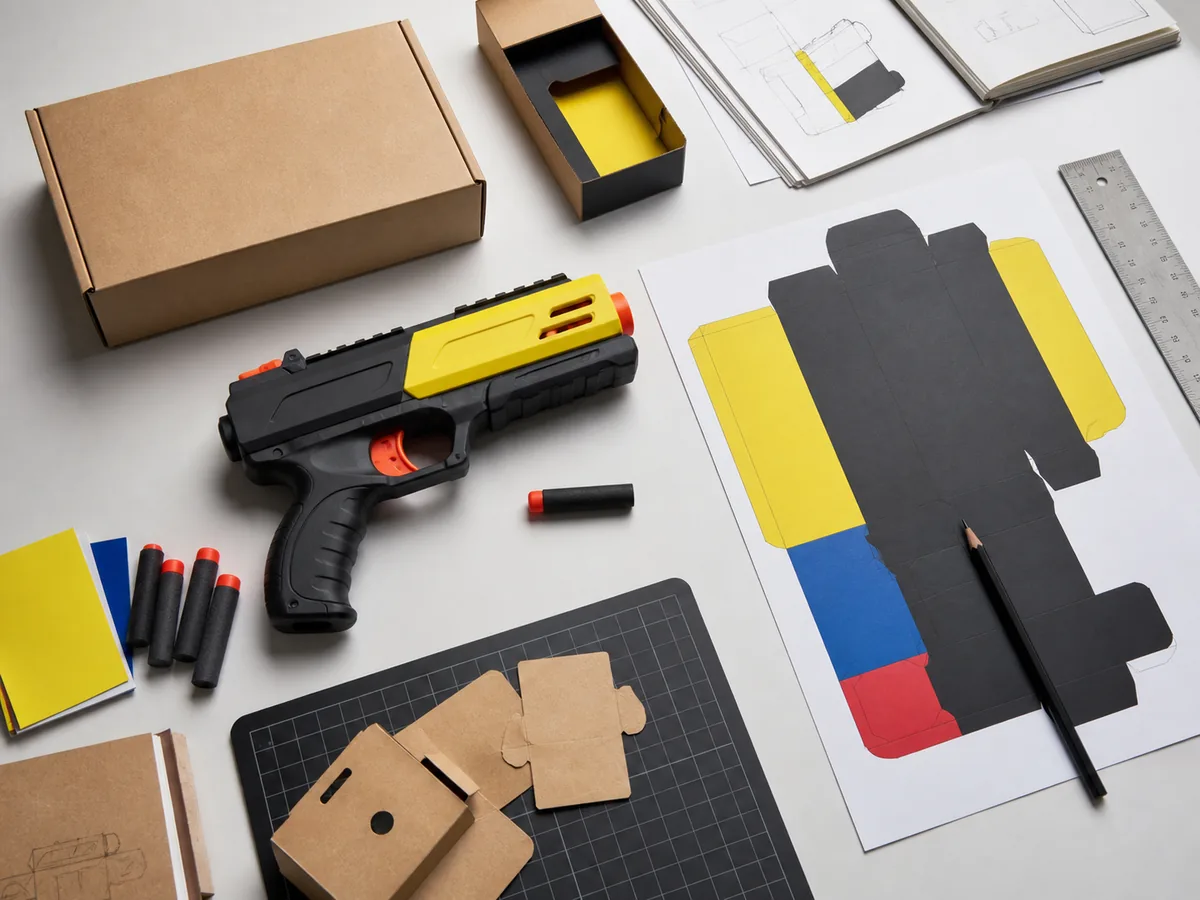
A fixed-color carton should be marked with one color reference and nothing ambiguous. A mixed carton needs three things printed on the box: the mix code (so 'mix #03' is a real, repeatable identity, not a description), the pieces-per-carton count, and the tool number plus revision. Without those, your receiving team opens cartons to find out what is inside, and your packing list cannot be built from the box label.
Party and impulse-toy channels show the same pattern: inconsistent colors and stockouts on viral designs are the usual trigger for switching suppliers, and the fix is retail-ready packaging plus pieces-per-carton data usable directly in packing lists. That data is not a nice-to-have. It is the difference between a carton you can receive blind and a carton you have to inspect piece by piece.
One caution on samples: a booth or fair sample is often a hero unit. Ask for the tool number and revision on the sample card, and do not treat a fair photo as the production standard — lighting flatters color, and the revision card is what the factory will actually run.
How do I keep replacements matching the original color?
Match replacements to the mix code and the production cohort, not to a photograph. A type-test or golden-sample report does not automatically cover a later production lot; importers should match report SKU, materials, colors, and production date or cohort to the PO. If your replacement claim is 'same color as last lot', you need the lot reference, not a memory of the shade.
On the floor, the working rule is simple: isolate a failed lot, record the defect class, and release only after rework. If you want a numeric AQL, get it from the agreed inspection plan on the PO — a catalog sentence is not an inspection plan, and a supplier who quotes an AQL number in marketing copy is telling you something about their paperwork discipline.
For assorted cartons specifically, decide up front whether replacements are color-matched or color-neutral. Color-matched replacements preserve the assortment story but require the factory to hold or reproduce the mix; color-neutral replacements (any shade in the family) are cheaper and faster but break the 'any three to five pieces group harmoniously' promise your retail buyer is making to the end customer.
Where are these goods actually produced?
Color strategy changes by production cluster, and the cluster determines what you can realistically specify. Injection-molded plastic toys — blasters, targets, small manual units — concentrate in Chenghai, Shantou, where color is a masterbatch and mold decision and changeover cost is real. Wooden toys come out of Yunhe, where color is a paint or stain spec and consistency is a finishing question. Plush comes from Yangzhou, where color is a fabric dye-lot question and the biggest replacement risk is a shade shift between dye lots. General party sundries and mixed-category cartons come through Yiwu, where assortment is often assembled rather than manufactured.
That matters for your RFQ: asking a Chenghai molder for a Pantone match on a molded part is a different conversation than asking a Yunhe wood shop for a stain match, and a Yangzhou plush line will quote color against a fabric swatch, not a plastic chip. Specify the reference in the language of the cluster you are buying from.
Which materials and tests should I ask for by use case?
Match the material question to how the product will actually be used, then request the test that answers it. The table below is a request template for your RFQ — it is not a certification claim, and no test result should be assumed until the report matches your SKU, materials, colors, and production cohort.
Use case → material to ask about → test to request
| Indoor target play, repeated shooting | Ask: ABS shell with EVA dart heads; confirm wall thickness and screw-post design. Request: drop/impact test on assembled unit plus a function cycle test on the trigger and target mechanism. |
|---|---|
| Party favor / impulse giveaway | Ask: single-material plastic where possible, minimum small parts, simple color molded-in rather than painted. Request: age-grading review and small-parts assessment for the intended age band. |
| Outdoor use, sun and pool-adjacent | Ask: UV-stabilized masterbatch and colorfast pigment; confirm whether the shade is a molded color or a surface print. Request: accelerated light-exposure (fade) test and a colorfastness check on any printed or coated surface. |
| Chlorinated-water contact | Ask: which components are intended for water contact and whether hardware is corrosion-resistant. Request: a material-compatibility statement from the factory plus the applicable test for the market you sell into — do not assume pool use is covered by a general toy report. |
| Repeated handling / drop abuse | Ask: wall thickness at stress points, ribbing, and whether the tool has been revised for breakage. Request: drop test at the carton and unit level, plus a review of the tool revision number on the sample. |
| Private-label gift or corporate set | Ask: approximate Pantone match on the molded or printed surface, plus logo placement. Request: pre-production color sample approval against the agreed reference before the run. |
Which certification applies to toys sold in the EU and UK?
A product may carry multiple conformity markings, such as CE and UKCA, when it complies with every relevant requirement and the markings remain clear. That is the rule; the practical trap is treating one document as covering everything. A UKCA file and a VOC file on an electric item are different papers answering different questions — a buyer who tried to use one certificate for both discovered they do not interchange.
For battery-containing items, battery-related information and marking duties depend on the battery category and the applicable implementation date, so the toy file should not assume one universal label. Map market, lot, and which document covers which test, and make that map part of the PO. Paperwork that does not match the lot is not paperwork.
How should I present gender-neutral color without killing the party theme?
Build the assortment around a small palette rather than a rainbow. Consumer party-styling guidance converges on a 2–4 color palette applied across tableware, balloons, and table decor, with accent colors used sparingly; the same discipline translates to wholesale: specify coordinated color stories per carton instead of random mixes.
The commercial argument for gender-neutral basics is risk, not taste. A child's favorite character can change between order date and party date, and one manufacturer's branded range can span several shades of the same color, producing a mismatched look. Plain palette-colored goods keep selling when the licensed theme cools, and they photograph consistently across a catalog. If you carry licensed themes, carry a fixed-color basics line underneath them as the stable layer.
How this framework was built
Three inputs, kept separate. First, the frozen product catalog for this category — per-SKU MOQ bands, material classes (ABS, ABS/EVA, EVA, plastic), and product formats — used only to describe realistic MOQ shape and material questions, never to rank suppliers. Second, first-hand fulfillment evidence from party and impulse-toy channels: 6–8 week reorder cycles, the shift from 'do you have stock' to 'when is the next batch of mix #03', pieces-per-carton data feeding packing lists, and lot-level quality handling. Third, compliance principles on marking, report scope, and battery labeling.
What this framework does not do: it does not invent MOQ, lead time, AQL, certification numbers, or FPS/range/dart-count specs beyond what the catalog names state. It does not name a best factory. It does not treat a trade-show sample as a production standard. Where a number depends on your specification, the article says so and tells you which question to put in the RFQ instead.
Buyer FAQ
Should a party wholesaler choose fixed or assorted colors?
Choose fixed if your picking is SKU-level and your downstream orders are single-palette; choose assorted if your buyers order mixed palettes and your receiving is carton-level. The deciding factor is your pick face and your replacement policy, not the visual appeal of a mixed carton.
What should be printed on a master carton for an assorted-color SKU?
At minimum: the mix code, the pieces-per-carton count, and the tool number plus revision. The mix code makes 'mix #03' a repeatable identity; the piece count lets you build packing lists from the label; the tool and revision reference tells you which version of the product you actually received.
How do I spec color for a replacement order so it matches the original?
Reference the mix code and the production cohort or lot, not a photo or a memory of the shade. A type-test or golden-sample report does not automatically cover a later production lot, so match report SKU, materials, colors, and production date to the PO before you accept the replacement.
Which production region should I source from for each material?
Injection-molded plastic toys concentrate in Chenghai, Shantou; wooden toys in Yunhe; plush in Yangzhou; general party sundries and assembled mixed cartons through Yiwu. Specify color in the language of the cluster — masterbatch for molded plastic, stain or paint for wood, fabric swatch for plush.
What tests should I request for outdoor or water-adjacent party toys?
Ask for accelerated light-exposure testing if the product will sit in sun, and a colorfastness check on any printed or coated surface. For water contact, ask which components are intended for it and request the applicable test for your destination market — do not assume a general toy report covers pool or chlorinated-water use.
Can a supplier quote an AQL number in a catalog?
Treat catalog AQL claims with caution. The working practice is to isolate a failed lot, record the defect class, and release only after rework; if you want a numeric AQL, it belongs in the agreed inspection plan on the PO, not in a product description.
How do I keep color consistent across a private-label run?
Approve a pre-production color sample against an agreed reference — an approximate Pantone match on the molded or printed surface — and keep that approved sample as the standard for the run. Confirm whether the color is molded-in or applied as a print or coating, because the two fail differently in use.
Sources
- A Simple Guide to Your One-Stop Party Store
- Bulk Frozen Party Supplies — What Actually Worked and What Flopped at Our Last Party
- How do you coordinate birthday party products with a color scheme? - Globos Europe
- How to Build a Custom Kids Party Supplies Collection with a Reliable ODM Factory - SUNBEAUTY
Put the color-mix questions in your next RFQ
Fixed or assorted is a workflow decision, and the fastest way to test a supplier is to ask them four things in writing: MOQ per colorway, whether colorways can share one production run, what is printed on the master carton, and how replacements are matched to the original lot. If you want to check spec sheets and assortment options for electric and manual blaster formats before you write that RFQ, the wholesale foam blaster range at FoamBlasterSource.com is a reasonable place to start.