Close your foam blaster purchase order with a controlled document set, not with a handshake. The purchase order is strongest when every approval can be traced to a versioned attachment — the spec sheet, bill of materials, artwork files, golden-sample record, testing matrix, inspection plan, carton marks, and schedule. Each attachment resolves a verbal assumption that otherwise becomes a dispute at inspection or a chargeback at retail. This guide covers the eight documents to attach before you issue the PO, with checkpoints at sample approval, inspection, and shipment, plus the exact questions to ask your supplier when a document is missing. The goal is a PO that AP can close without exceptions and QC can enforce without guesswork.
Key Takeaways
- Version everything: A spec without a revision number and date is not a spec. Every attachment on the PO must carry a version and date so the inspector compares bulk to the right baseline, not to an email thread.
- The sealed golden sample, not a photo, is the color authority. Bulk is compared to that physical piece for color, fit, flash, and function. Approving only a photo means paying for the mistake on the second lot.
- Map each certificate to a market and a lot. UKCA and a VOC file are different papers; one certificate does not cover both. If the testing matrix does not link market to file, ask which certificate covers which lot before production starts.
- Tooling policy is a document, not a handshake. If the PO does not state tooling fee, ownership, storage period, and what happens if the tool sits idle for 12 months, get it in writing before you pay the fee.
- Do not guess an AQL number. If the inspection plan attached to the PO has no defect limit, ask the supplier for the agreed AQL level and defect classes. A number invented in a blog is not an inspection plan.
Why a Controlled Document Set Matters When Closing a PO
Closing a purchase order is an administrative act that releases committed budget and signals accounts payable that new invoices are exceptions. The real cost of a poorly closed PO is operational, not administrative. Eighty percent of the disputes that delay a shipment from Chenghai trace back to a verbal assumption that was never written down: the color was 'close to the booth sample,' the dart count was 'what we discussed,' the inspection level was 'the usual one.'
A controlled document set turns those assumptions into attachments. When the final invoice arrives and the goods are fully received, the PO closes cleanly because every line item can be traced to a versioned file. When a partial shipment will never be fulfilled, you close the unfulfilled lines with a vendor confirmation and a reason note — not a blanket year-end closure that hides live orders and distorts committed spend.
The 8 Documents to Attach Before You Issue the PO
These eight attachments form the backbone of a foam blaster PO that survives inspection, customs, and the retailer's receiving dock.
1. Final Specification Sheet
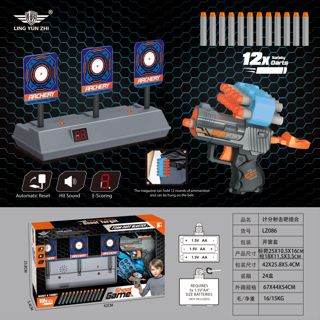
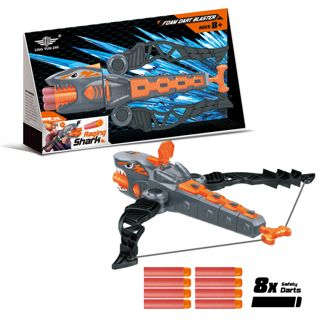
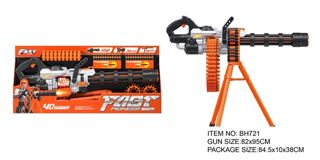
Attach the versioned spec sheet for the exact SKU — for example, the Raging Shark Foam Dart Crossbow Blaster (ABS/EVA) or the Tactical 6-Dart Foam Blaster — with the revision number and date marked. This is the baseline against which every later check compares. The spec must state the material, dimensions, and functional parameters that the supplier quoted. If the spec revision changes, every downstream attachment must be re-issued against the new revision. Ask: 'What revision of the spec sheet is this PO based on, and does the attached BOM match that revision?'
2. Bill of Materials (BOM)
List every component — body, plunger, dart, spring, packaging — with the supplier's part numbers, and cross-reference the BOM to the spec revision. If a component changes, the BOM revision must change with it. A BOM that is out of sync with the spec is the most common source of 'we built what you asked' disputes. Ask: 'Which components in the BOM have changed since the last order, and what triggered the change?'
3. Color and Artwork Files
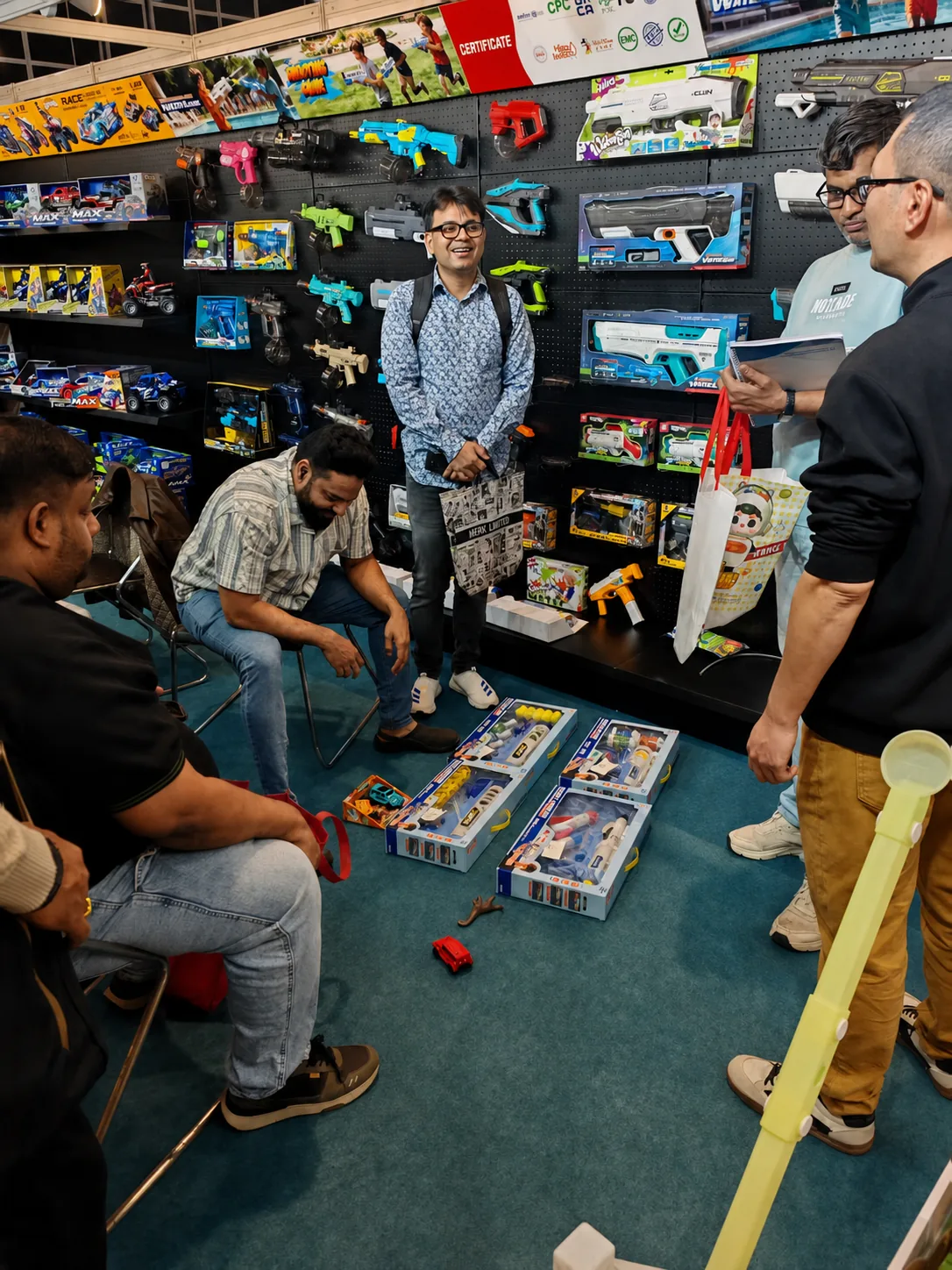
Attach the final CMYK or Pantone color references and the printed artwork for the box and blaster decals. State explicitly that the sealed golden sample, not a photo, is the color authority. A photo taken at a trade fair booth lies — fair lighting is not production lighting. The revision card on the sample does not. Ask: 'How do you handle a color variance between the bulk production and the sealed golden sample — rework or ship-with-discount?'
4. Golden-Sample Record
Attach a photo of the sealed golden sample plus its unique ID and storage location (the QC shelf). The golden sample — with approved material, color, decoration, dimensions, and photos — is a practical production-QC reference, but it does not replace required market testing. The inspector compares bulk to this physical piece for color, fit, flash, and function. Ask: 'Is the golden sample sealed and stored, and will the inspector have access to it during the pre-shipment inspection?'
5. Testing Responsibility Matrix
Attach a matrix that names which party — supplier, buyer, or third-party lab — runs which test, and which market's requirement applies to which lot. Do not name a certificate number in the PO; name the responsibility and the applicable standard. UKCA and a VOC file are different papers, and using one certificate for both is a compliance failure. Ask: 'Which certificate covers which market and which lot for this foam blaster?' If the matrix does not map market to file, the paperwork does not match the lot.
6. Inspection Criteria and Sampling Plan
Attach the inspection plan agreed in the PO, including the sampling level and the defect classes (critical, major, minor) that trigger rejection. Do not invent an AQL number. If the plan has no number, ask: 'What AQL level and defect classes are in the inspection plan attached to this PO?' A defect rate that is not written down is not an inspection criterion. On the factory floor, a failed lot is isolated, the defect class is recorded, and the lot is released only after rework — but the buyer gets the number from the agreed plan, not from a brochure.
7. Carton Marks and Packing Data
Attach the carton-marking artwork: shipping marks, handling symbols, barcode placement, and the pieces-per-carton data for the packing list. The packing list must match the carton marks and the BOM revision at shipment. A mismatch here delays customs clearance and triggers chargebacks at the retailer's receiving dock. Ask: 'Does the packing list reference the same carton marks and pieces-per-carton as the attached artwork?'
8. Schedule with Milestones
Attach a timeline with dates for sample approval, production start, inspection, and shipment. Each milestone references a document version. The schedule also resolves the tooling question: state who owns the tool after the tooling fee is paid, the storage period, and what happens if the tool sits idle for 12 months. A buyer once asked who owns the tool after paying the fee, and the contract had not frozen storage years or release conditions. Tooling policy is a document, not a handshake. Ask: 'Who owns the tool after the fee is paid, and what happens if it sits idle for a year?'
Document Checklist: What to Check and What Questions to Ask
| 1. Final Specification | What to check: Revision number and date marked. Red flag: Spec without a version or date. |
|---|---|
| 2. Bill of Materials | What to check: Every component listed with supplier part numbers, cross-referenced to spec revision. Red flag: BOM out of sync with spec. |
| 3. Color and Artwork | What to check: CMYK/Pantone references and printed artwork attached. Red flag: Golden sample not stated as the color authority. |
| 4. Golden Sample | What to check: Photo, unique ID, storage location on the QC shelf. Red flag: Approving only a photo, not the physical piece. |
| 5. Testing Matrix | What to check: Party responsible for each test, market mapped to lot. Red flag: One certificate used for multiple markets. |
| 6. Inspection Plan | What to check: Sampling level and defect classes defined. Red flag: No AQL number or defect limit written. |
| 7. Carton Marks | What to check: Shipping marks, barcodes, pieces-per-carton match packing list. Red flag: Packing list does not match carton artwork. |
| 8. Schedule | What to check: Milestones for sample, production, inspection, shipment; tooling ownership stated. Red flag: Tooling fee paid without written ownership or storage terms. |
Worked Example: Where a Missing Document Costs You (illustrative, not a real shipment)
Consider a single order of 2,000 units of a foam blaster — call it a crossbow-style model — split between two destinations: 1,400 units for a US retailer with ASTM F963 requirements, and 600 units for an EU distributor under the Toy Safety Directive. The PO was issued with the spec sheet, BOM, and carton marks, but the testing matrix was left blank because 'the supplier knows what we need.'
At the pre-shipment inspection, the inspector compares the bulk to the golden sample. The body color is slightly off from the sealed sample — a minor defect under most plans — but the inspection plan attached to the PO has no AQL number, so the inspector has no authority to reject or accept. The buyer's QC manager asks the supplier for the testing matrix and discovers that the supplier's certificate covers the EU market but not the US market. The US-bound 1,400 units are held at the factory for re-testing, the shipment misses the retailer's seasonal window, and the buyer pays for air freight to recover the delay. A versioned testing matrix and an inspection plan with a defect limit would have caught both gaps before production started. The cost of the missing documents is not the re-test fee; it is the missed shelf date.
When to Close the PO — and When to Leave It Open
Close the PO when the goods are fully received and the final invoice is matched. Closing releases committed budget; leaving it open keeps the order visible to accounts payable. If a partial shipment will never be fulfilled, close the unfulfilled lines, confirm the cancellation with the vendor, and note the reason. Do not blanket-close at year end — a live order that is received-but-not-invoiced becomes a GRNI (goods received not invoiced) item that must be accrued properly. Run a monthly operational review of open POs, with a deeper quarterly pass tied to accrual review. If an invoice arrives against a closed PO, treat it as an exception: verify it, then either reopen the PO or dispute the invoice.
What to Check at Each Milestone
Before issuing: every attachment has a version number and a date; no verbal assumption is left unrecorded. At sample approval: the golden sample is sealed and stored; the photo in the PO matches the physical piece. At inspection: the inspector compares bulk to the golden sample, not to a photo from a trade fair. At shipment: the packing list matches the carton marks and the BOM revision. These four checkpoints catch the vast majority of disputes before they become chargebacks.
FAQ: Closing a Foam Blaster PO
What is the minimum order quantity for a foam blaster PO with these attachments?
The MOQ varies by SKU. For example, the Pump-Action EVA Ball Target Set has an MOQ of 1, while the Compact Tactical Foam Blaster has an MOQ of 288. Confirm the MOQ against the supplier's quote for your specific SKU before issuing the PO.
Which certificate do I need for a foam blaster shipped to the EU?
The EU requires compliance with the Toy Safety Directive. A UKCA mark and a VOC file are different papers and cannot be used interchangeably. Map the certificate to the market and lot in the testing matrix.
What AQL level should I use for foam blaster inspection?
The AQL level and defect classes must be agreed between buyer and supplier and written into the inspection plan attached to the PO. Do not guess a number — ask your supplier for the agreed AQL level and defect classes if the plan is missing them.
Who owns the injection mold for my custom foam blaster after I pay the tooling fee?
Tooling ownership, storage period, and what happens if the tool sits idle must be stated in writing in the PO or a separate tooling agreement. If the contract does not freeze these terms, ask the supplier for a written tooling policy before paying the fee.
What happens if a partial shipment of my foam blaster order will never be fulfilled?
Close the unfulfilled lines, confirm the cancellation with the vendor in writing, and note the reason. This releases the committed budget and signals accounts payable that no further invoices are expected for those lines.
Sources
Ready to Close Your Foam Blaster PO?
If you are sourcing foam blasters wholesale and want a supplier that can provide spec sheets, golden samples, and packing data before you issue the PO, request a quote and confirm the document set you need attached.