Compact carton design is now a compliance and risk decision, not a logistics afterthought — and the safest compact SKU is the one that shrinks the cube without breaking ASTM F963 folding, film-thickness, labeling or tracking-label requirements. If a smaller box forces a folding stand to ship assembled, thins the polybag below the required film gauge, or pushes a warning statement off the panel, the freight saving is a rounding error next to a recall, a customs hold or a marketplace delisting.
Six variables decide whether a compact carton actually works: product-to-pack ratio, stand disassembly, window versus closed boxes, parcel survival, dimensional pricing, and shelf presence. Each one converts into a sourcing action you can write into an RFQ before you negotiate the final unit price. Air freight and parcel networks price space, not just weight, so the box you approve at sampling is the box you pay for all season.
Key Takeaways
- 1. Add carton cube to SKU selection before you agree the unit price. A denser pack changes freight, container fill and parcel billing at the same time, and the change is easier to make before tooling is cut than after.
- 2. Every cube reduction must pass a safety review tied to the actual SKU: ASTM F963 requires certain plastic film, including packaging, to average more than 0.00150 in. or be perforated so 1% of the surface is removed.
- 3. Folding stands and hinged parts sit in the same standard as crush, laceration and pinch risk, so a disassembly step is a test question, not just a packing instruction.
- 4. U.S. children's products intended primarily for children 12 or younger and covered by a CPSC-enforced rule need third-party testing at a CPSC-accepted laboratory and a written Children's Product Certificate; the certificate is product-specific, not a factory-wide credential.
- 5. Compute container utilisation from measured carton dimensions and the real loading pattern. Nominal catalogue sizes and unverified cube figures understate cost and hide the risk that you cannot load what you sold.
Seasonal brand or trend matrix
| Packaging cube as a cost line | Sourcing guidance now frames packaging as often the second-largest cost on a toy and recommends quoting it separately, so a window-box-to-polybag switch becomes a number rather than an assumption. Sourcing implication: quote carton and insert as their own RFQ line, not inside the unit price. Source note: Importivity toy-manufacturer guidance, trend radar item dated 2026-09-26. |
|---|---|
| Dimensional and volumetric pricing pressure | Carrier billing continues to convert light, bulky parcels into higher billable weight, with size thresholds and peak-season surcharges adding cost on top. Sourcing implication: model a bulky and a compact version of the same SKU before committing volume. Source note: parcel and freight trade coverage in the current radar window. |
| Low-unit-cost novelty SKUs | Novelty fidget and plush segments are reported at very low wholesale price bands, which makes per-parcel overhead proportionally heavier. Sourcing implication: for cheap, bulky items, cube discipline matters more than a cent of unit cost. Source note: novelty-toy market reporting dated 2026-09-25. |
| Collectible and plush shelf formats | Character plush and blind-box formats keep demand concentrated in retail-ready display packs. Sourcing implication: weigh display-pack cube against in-store presentation before you approve a plain polybag. Source note: character-goods market reporting dated 2026-09-23. |
| Compliance documentation tightening | Children's products intended primarily for children 12 or younger and covered by CPSC-enforced rules require third-party testing and a Children's Product Certificate, and an electronic certificate-filing requirement for importers is scheduled to begin July 8, 2026. Sourcing implication: treat carton markings, film gauge and tracking labels as controlled fields tied to the SKU. Source note: CPSC business guidance on toy safety and Children's Product Certificates. |
Why does carton cube decide landed cost before unit price does?
Because carriers and marketplaces sell space, and space is billed on the box you actually ship. Air and parcel networks convert light, bulky freight into higher billable weight, and size thresholds can trigger additional-handling charges. A toy that costs a few cents more per unit but packs at a materially better product-to-pack ratio can win on landed economics once freight, container fill and parcel billing are counted.
The operational trap is measurement. Container utilisation has to be calculated from measured carton dimensions and the real loading pattern, not from a nominal carton size. Scanners and carton libraries age; a box measured before sealing, or a stale dimension in your WMS, produces systematic overcharges that no rate negotiation fixes. Measure the sealed carton, then update the master data.
Which risks does a smaller carton create under ASTM F963 and the CPC?
A smaller carton creates three specific risks: film gauge, folding hardware, and labeling and traceability. Section 4.12 of ASTM F963 requires certain plastic film, including packaging, to average more than 0.00150 in. or be perforated so 1% of the surface is removed. Squeeze a product into a thinner bag to save volume and you may move a compliant pack into a non-compliant one.
Folding mechanisms and hinges are covered by ASTM F963 section 4.13, which targets crushing, laceration and pinch hazards. That is exactly the hardware a compact carton asks you to fold, collapse or partially disassemble. Wheels, tires and axles must survive use-and-abuse testing without creating laceration, puncture or ingestion hazards, and stuffed or beanbag toys must have seams that do not rip under test. A carton that compresses a plush item harder than the seam test assumes is a durability question, not a packing preference.
Then there is documentation. Children's products designed or intended primarily for children 12 or younger and subject to a CPSC-enforced rule require third-party testing at a CPSC-accepted laboratory and a written Children's Product Certificate under Section 14 of the CPSA, codified at 16 CFR part 1110. The CPC must carry seven elements — product identification, the applicable rules, the domestic manufacturer or importer, a test-records contact, date and place of manufacture, date and place of testing, and the identifying laboratory — and it must be in English. Toys intended for a 13+ audience may still fall under ASTM F963 requirements without third-party testing or a CPC. Because carton copy is part of the regulated product, any panel change belongs in the same revision control as the SKU.
Window box or closed box: which survives the parcel network and still sells?
Closed boxes win on cube and parcel survival; window boxes win on shelf presence. Resolve that trade-off SKU by SKU rather than as a house style. Window formats need a clear film window, an insert that holds the product in place, and enough board strength to stop the window from deforming when a parcel is stacked. Closed boxes pack denser and protect better, but they remove the visual cue that drives a walk-in purchase.
A closed box suits items that sell online, cartons stacked deep in a parcel network, or products recognizable from the front panel alone. A window box suits impulse purchases in a physical aisle where the product itself is the selling argument. For mixed channels, a display-ready case with a closed outer carton and an open retail front can serve both, but it usually costs cube — price that cube explicitly before you approve it.
How do you test a compact carton before you commit the PO?
Run a golden-sample check that treats the carton as part of the product. Sign off the sealed carton dimensions, the film gauge or perforation, the insert, the folding sequence and the label positions on the same sample, then measure the sealed box rather than the flat blank. Random sampling exists to reduce selection bias, so the cartons pulled for inspection should not be the easiest or most attractive ones in the stack.
Two failure modes need their own QC checklist line. First, moisture: paper-based cartons lose strength when exposed to humidity, so container humidity, warehouse storage and weather protection all affect whether the box arrives square. Second, tracking labels: tracking information should be permanent and support product identification where applicable, and packaging, product markings and lot control should be reviewed together. A compact carton with a small panel often forces that copy somewhere it cannot survive.
What extra EU obligations apply to the same carton?
Toys placed on the EU market must meet the applicable essential safety requirements of the Toy Safety Directive 2009/48/EC, and CE marking and an EU Declaration of Conformity belong to that conformity process and must be matched to the product scope. The General Product Safety Regulation 2023/988 is a separate legal instrument, and importer, manufacturer and product-identification information should be mapped to the relevant market role before you print it on a carton.
Practically, the same panel that carries your brand and warning text also carries regulated identification. Shrinking the carton shrinks the printable area, so confirm the current consolidated text and the product scope for your SKU before you approve artwork. Certification claims belong to a specific product, a specific report and a specific responsible party — never to a standard or guidance page.
OEM-relevant examples
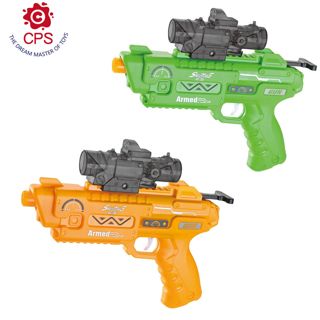
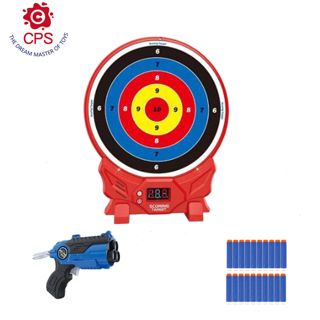
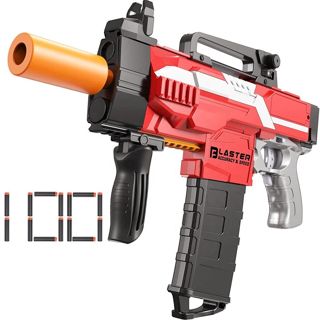
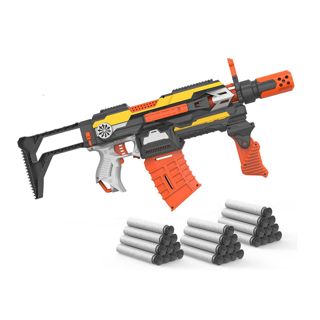
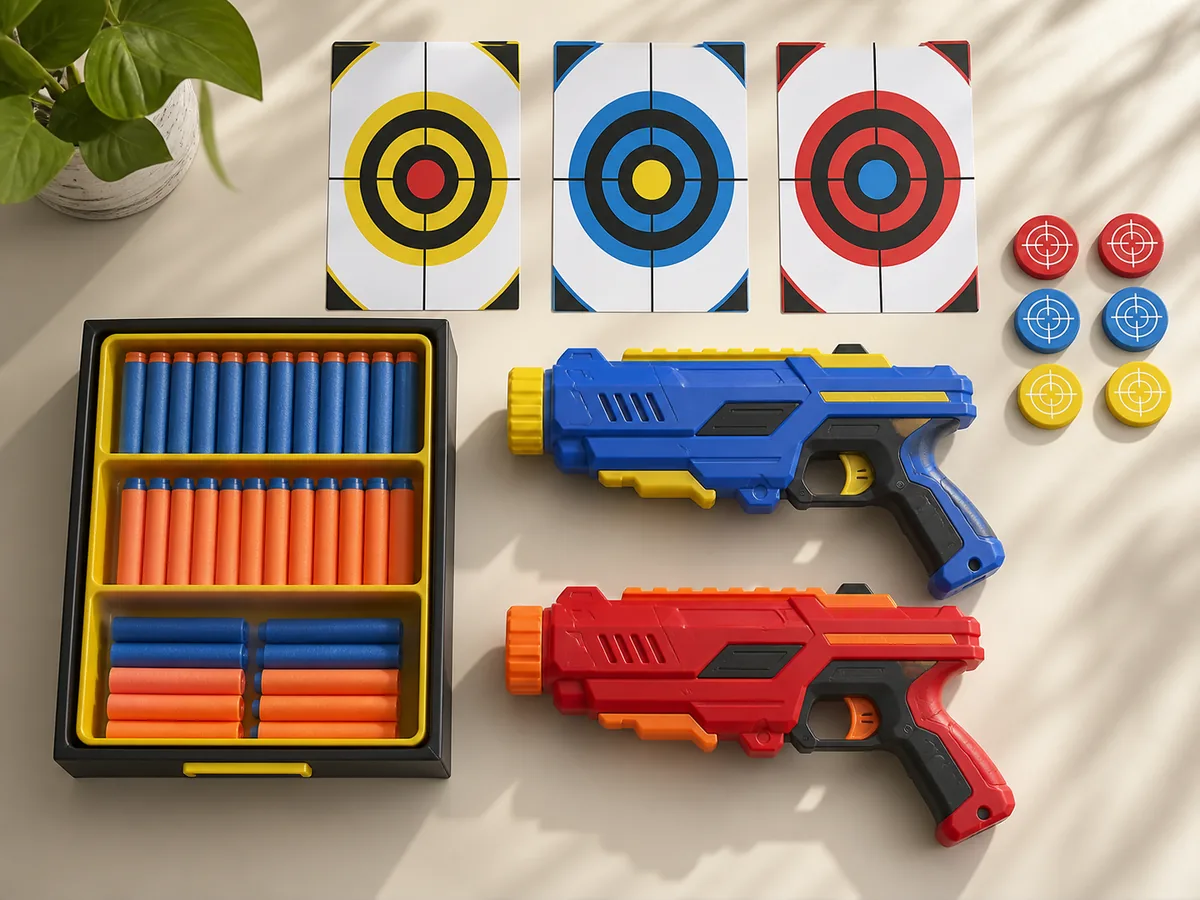
Two catalogue items show where cube discipline and compliance documentation meet. The Compact Electric Automatic Foam Pistol is a small-format blaster where the carton is dominated by the insert, not the product, so the pack ratio is decided at the drawing stage. The Electronic Scoring Target Foam Dart Set is the harder case: a target assembly that ships flat versus assembled can change the carton envelope substantially, and any folding hardware belongs in the same ASTM F963 review as the toy itself.
FAQ
Is toy demand still growing enough to justify compacting cartons in 2026?
Demand is not the deciding factor here — cost per cubic metre is. Packaging is framed in current sourcing guidance as often the second-largest cost on a toy, so reducing cube improves economics whether volumes rise or fall. Confirm your own category's reorder pattern before you commit tooling.
When is the best season to place an order for compact-carton SKUs?
Book production so the sealed cargo clears before peak-season parcel surcharges and holiday cut-offs take effect. Peak surcharges and capacity pressure intensify in the run-up to the holiday period, so sampling and carton sign-off should be finished well before that window opens. The exact cut-off depends on your lane and carrier.
Does a polybag always beat a window box on cost?
No. A polybag usually reduces cube and material cost, but ASTM F963 section 4.12 still requires certain plastic film to average more than 0.00150 in. or be perforated so 1% of the surface is removed. If the item needs shelf presence, a window box may earn back its cube in retail sell-through.
What documentation should I demand before approving a compact carton?
For U.S.-bound children's products intended primarily for children 12 or younger, expect a Children's Product Certificate based on third-party testing at a CPSC-accepted laboratory, in English, with all seven required elements. Treat packaging film, folding hardware and label copy as controlled fields that change with the SKU, and confirm the current rule set for your product and age grade.
Can a supplier's factory certificate cover my compact-carton SKU?
No. A CPC is product-specific and should not be described as a blanket factory certificate, and a standard or guidance page never proves that a specific factory or SKU is certified. Tie every compliance statement to a SKU, a report, a responsible party and the current version of the rule.
How should I verify the carton cube my supplier quotes?
Measure the sealed carton yourself and recalculate container utilisation from those measured dimensions and the actual loading pattern. Nominal carton sizes and unverified cube numbers understate freight and can leave you unable to load what you ordered. Paper cartons also lose strength in humidity, so check storage and container conditions at the same time.
Sources
Request a Quote
Send us the SKU, the target market and the carton you are considering, and we will work through the pack ratio, folding sequence, film gauge and labeling panel with you before you commit to tooling. Bring the sealed-carton measurement and the age grade — those two inputs decide most of the compliance and freight questions on this page.