Choose a blaster supplier that treats instructions as a quality control, not an afterthought—because a manual that fails to explain the pump, trigger, or UV feature reliably will turn into returns and chargebacks faster than any mechanical defect. This page gives you a practical checklist to assess any factory's instruction capability in Chenghai or beyond, even before you place a sample order. You'll learn what to ask for, what to inspect, and how to structure your PO to protect your margin. The cost of a bad manual is not the paper—it's the lost reorders and the freight arguments that follow.
Key Takeaways: Instruction Capability as a Sourcing Criterion
- A supplier that documents the mechanism—pump action, trigger lock, electric feed—into step-by-step instructions is worth more than one that only fills a box. Ask for a golden-sample manual before you talk about price.
- Sequence diagrams and exploded views are non-negotiable for modular blasters; if a factory cannot show you one, expect assembly complaints and returns.
- Translation review is a real cost. If you sell into Spanish-speaking markets, confirm the factory can produce and verify short, clear instructions in that language, not just machine-translated filler.
- Warning placement is a compliance issue: check that projectile, battery, and small-part warnings appear where the user will actually see them—on the packaging, the manual cover, and near the relevant step.
- Version control matters at the line level: a factory that clears labels and work instructions between SKUs is less likely to ship a manual that describes the previous model. Verify this with a production visit or a documented procedure.
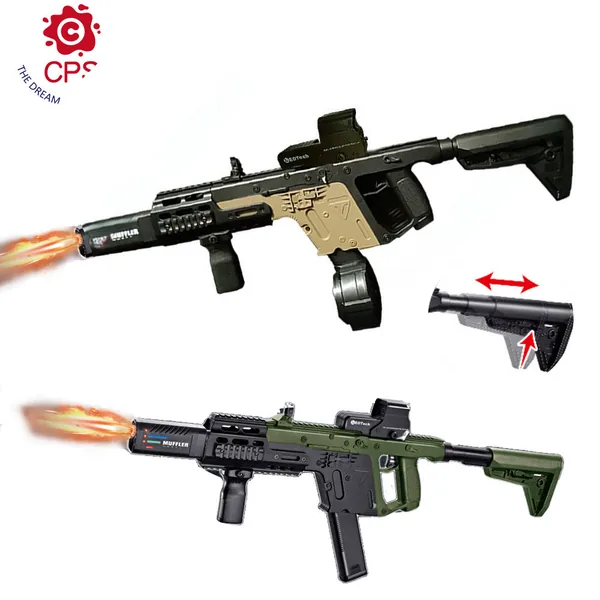
Instruction-Capability Benchmarks Across Blaster Types
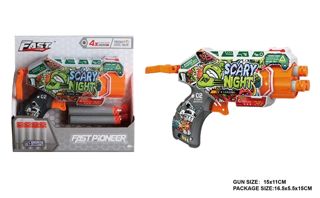
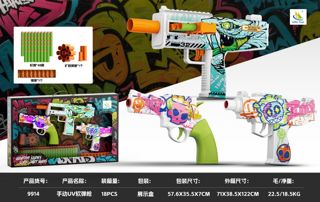
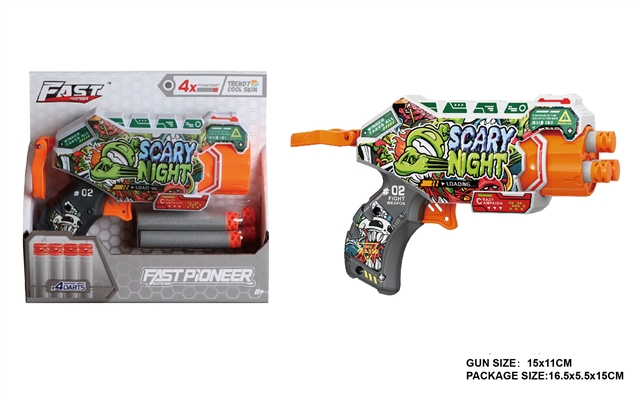
| Manual pump blaster (e.g., Graffiti Mini Manual Soft Dart Blaster) | MOQ from 432 units; manual must show pump stroke, dart loading, and jam clearing. Sequence diagrams and clear text are critical. |
|---|---|
| Electric automatic blaster (e.g., Electric Vector-Style Automatic Foam Blaster) | MOQ from 120 units; manual must cover battery access, switch operation, and safety warnings. Verify button-cell compliance if batteries are included. |
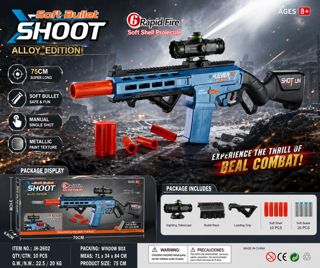
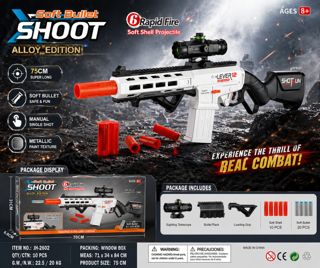
| Modular rifle (e.g., Manual Modular QBZ-Style Foam Rifle) | MOQ from 96 units; manual must include exploded view and step-by-step assembly/disassembly. Insist on a sequence diagram. |
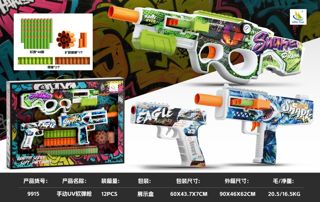
| Multi-mode blaster (e.g., 3-in-1 Manual UV Soft-Shot Gun) | MOQ from 36 units; manual must explain mode switching and UV feature. Check translation for clarity in target markets. |
| Target set (e.g., Dinosaur Pump Blaster Target Set) | MOQ from 200 units; manual must show how to set up targets and store darts. Consider a simple pictogram-only manual for younger users. |
What Does Instruction Capability Actually Include?
Mechanism-to-instruction translation is the core skill. A factory that builds the blaster knows how the pump, trigger, and feed work—but knowing and explaining are different. Ask to see the manual for an existing SKU, and check whether the steps match the actual mechanism. A manual that skips the safety catch or the jam-clearing procedure is a red flag.
Technical writing quality shows in sequence logic and diagram clarity. The best manuals use numbered steps, arrows, and callouts that a child's parent can follow without reading a paragraph. For modular blasters, a sequence diagram that shows how the barrel attaches to the stock is worth more than three pages of text.
Translation review is where many suppliers cut corners. If you sell into Spanish-speaking markets, the factory should demonstrate it can produce short, clear instructions in that language—not just a Google-translated block. The FoamBlasterSource case showed that simple packaging with short Spanish instructions reduced counter returns in a Latin American retail context; the same principle applies to blaster manuals.
How to Verify a Supplier's Instruction Capability
Ask for a golden-sample manual before you commit to a PO. This means the exact manual that will ship with the product, not a generic template. Check that it includes the safety warnings required for your destination market—for example, the Australian projectile warning for toys launching projectiles over 300 mm or with kinetic energy above 0.08 joules, and the EU requirement that warnings be intelligible, legible, and visible.
Request a sequence diagram for any modular blaster. If the factory cannot produce one, it likely lacks the technical writing skill to explain disassembly and reassembly—expect returns from confused customers.
Verify translation quality by having a native speaker review a sample manual. Do not rely on the factory's claim that they 'have a translator.' Ask for the translated PDF and check for errors that could lead to misuse.
Inspect version control at the production line. A factory that clears labels and work instructions between SKUs is less likely to ship a manual that describes the previous model. Ask how they handle line clearance and whether they document it.
Check the feedback loop: does the factory revise manuals based on customer returns or complaints? A supplier that treats returns as data will improve the manual over time, reducing your long-term costs.
The Cost of a Bad Manual: Margin and Return Risks
A confusing manual does not just annoy customers—it hits your margin. Returns from incorrect assembly or misuse are often not recoverable, and they eat the profit from several sales. For battery-operated blasters, a missing battery-access warning can trigger a safety complaint, leading to a recall or a listing removal on Amazon.
Clear instructions also reduce the risk of misuse that could cause injury. A projectile blaster that does not warn against aiming at eyes or face, or that fails to include the required eye/face warning for certain markets, exposes you to liability. According to CPSC guidance on projectile toys (ASTM F963 Section 4.21) and the EU Toy Safety Directive 2009/48/EC, labeling and instructions must prevent foreseeable misuse.
For private-label buyers, the manual is part of your brand. A good manual makes your product look professional; a bad one makes it look cheap, even if the blaster itself is well-made. That perception affects reorder rates and word-of-mouth.
Sourcing Method Comparison for Blaster Wholesale
| Direct from Chenghai factory | Advantage: lower unit cost, direct control over manual content. Risk: requires you to manage quality and documentation; visit or audit required for confidence. |
|---|---|
| Trading company in Yiwu | Advantage: easy access to many products, small MOQs. Risk: less control over instruction quality; verify the factory behind the trader. |
| Online B2B platform (e.g., Alibaba) | Advantage: wide selection, reviews. Risk: manual quality varies; request golden-sample before PO, and check for hidden costs. |
How to Choose the Right Channel for Your Budget
If you are a private-label buyer with a specific blaster design, go direct to a Chenghai factory that can produce the manual in-house. You will pay more in coordination but gain control over instruction quality. If you are a distributor buying assorted SKUs, a trading company might offer convenience, but you must verify that the manual matches each product—a mixed-label risk is real.
The MOQ trade-off matters. A manual pump blaster might have an MOQ of 432 units, while a modular rifle starts at 96. If your budget is tight, start with a lower-MOQ SKU to test the factory's instruction quality, then scale up. The 3-in-1 UV blaster with an MOQ of 36 units is a good trial SKU for a first PO.
Do not skip the audit. A factory that can show you a clean line clearance and a sample manual that matches the actual product is more likely to deliver correct instructions in bulk. If you cannot visit, ask for a video walkthrough of the line clearance and a PDF of the manual for your target SKU.
FAQ: Instruction Capability for Blaster Suppliers
What should I ask a supplier to prove they can write a good instruction manual?
Ask for a golden-sample manual for a similar blaster SKU, and check if it includes a sequence diagram, clear steps, and the required safety warnings. If they cannot provide one, it is a red flag.
How do I verify translation quality for a Spanish-language manual?
Have a native Spanish speaker review a sample manual before you place the PO. Look for errors that could cause misuse, and confirm the factory uses a professional translator, not just machine translation.
What are the must-have warnings for a foam blaster manual in the US?
For the US, follow CPSC guidance: include projectile warnings (eye/face risk) if the projectile exceeds CPSC thresholds, and battery warnings if the blaster uses button cells. The manual should warn against aiming at eyes or face.
What is a typical MOQ for a foam blaster with a custom manual?
MOQs vary by SKU: manual pump blasters may start at 432 units, electric blasters at 120, and modular rifles at 96. Confirm the MOQ for your target SKU and whether manual customization is included.
How can I reduce returns caused by confusing instructions?
Choose a supplier that uses sequence diagrams, tests manuals with real users, and revises based on returns. Also, ensure the manual matches the exact product configuration you order, and check line clearance to avoid mixed SKU labels.
Sources
Request a Quote with Instruction Review
When you're ready to source, ask us for a quote that includes a golden-sample manual review for your target SKU. We'll show you how our Chenghai factory documents the mechanism, places warnings, and handles version control. Contact us to start the evaluation.