
A 6+ label is not a marketing suggestion—it is a legal classification that determines which safety rules apply to your SKU. For toy importers and wholesale buyers, the shift from broad family claims to evidence-led age positioning means the age grade on your packaging must be backed by a test report that identifies the product configuration, the age grade, and the standard edition. Choose a label that matches your evidence, not one that maximizes shelf appeal.
This article covers what the 6+, 8+, and 14+ bands actually mean under US and EU rules, how mechanism usability and warnings factor into the decision, and how to turn each age-band decision into a concrete sourcing and documentation step.
Key Takeaways
- Treat the age grade as a product conclusion that must be backed by test reports and hazard analysis, not as a campaign variable you adjust for marketing appeal.
- For the US market, a toy is any object marketed as a plaything for children under 14, but CPSC testing and certification requirements apply only to products intended primarily for children 12 and younger.
- Toys for children under 8 must not have hazardous edges, points, or puncture hazards before and after use-and-abuse testing—verify this before you commit to a 6+ SKU.
- Educational toys intended for children aged 8 and older may contain magnets if appropriately labeled, so an 8+ band can open design options that 6+ cannot.
- Each SKU's Children's Product Certificate must be product-specific and match the age grade and applicable safety rules; a blanket factory certificate is not acceptable.
Age Band Trend Matrix
| 6+ band | Why visible: Strictest edge/point rules apply (under 8). Sourcing implication: Confirm use-and-abuse testing for hazardous edges/points; small parts and cords for younger users must be assessed. Source note: CPSC Toy Safety Business Guidance. |
|---|---|
| 8+ band | Why visible: Opens design options like magnets with appropriate labeling (educational toys 8+). Sourcing implication: Verify the magnet labeling requirement is on packaging; confirm the test report cites the 8+ configuration. Source note: CPSC Toy Safety Business Guidance. |
| 14+ band | Why visible: Aligns with the EU toy definition (under 14) and the CPSC toy definition (under 14). Sourcing implication: For products intended primarily for 13+, US third-party testing and CPC may not be required, but ASTM F963 compliance is still expected. Source note: CPSC Toy Safety Business Guidance. |
| EU/Polish market | Why visible: Toy definition expanded to products for play by children under 14; sports equipment (e.g., skateboards) classified as toys if user is under 20 kg. Sourcing implication: Confirm whether your product falls under the toy definition; ensure CE marking and declaration of conformity are in place. Source note: UOKiK toy rules archive. |
6+ positioning—why it is the compliance-critical band
The 6+ band is the strictest compliance zone in US toy rules. Toys for children under 8 must not have hazardous edges, points, or puncture hazards before and after use-and-abuse testing, according to CPSC's Toy Safety Business Guidance. That single requirement changes how you spec a product: seams, rigid accessories, and even the shape of a molded part all become compliance inputs.
For a 6+ SKU, request the test report that identifies the product configuration, the age grade, and the standard edition—such as ASTM F963 under 16 CFR Part 1250. A generic report for a similar product is not enough. The edge and point assessment must cover the exact configuration you intend to ship.
The sourcing decision is straightforward: if the supplier cannot produce a report that matches the 6+ configuration, either lower the complexity of the product or move it to a higher age band with supporting evidence.
8+ positioning—where design options open up
The 8+ band is where US rules allow more design freedom, but only with the right label. Educational toys intended for children aged 8 and older may contain magnets if appropriately labeled, per CPSC guidance. That means an 8+ SKU can include features—magnetic closures, more detailed assembly—that a 6+ version cannot.
But the label is conditional. The magnet allowance is tied to the 'appropriately labeled' requirement, so your packaging must carry the warning that the rule expects. Confirm the exact wording with your supplier and check it against the current consolidated text of the regulation before publishing.
For sourcing, an 8+ band is a good fit for products with small parts, magnets, or more complex mechanisms—provided the packaging carries the required warnings and the test report cites the 8+ configuration and the applicable standard edition.
14+ positioning—where testing requirements shift
The 14+ band is where the legal definition of a toy and the certification requirement diverge. Under CPSC rules, a toy is any object designed, manufactured, or marketed as a plaything for children under 14. But CPSC testing and certification requirements apply only to products intended primarily for children 12 and younger.
That creates a specific buying situation: a product intended for 13+ may still be subject to ASTM F963, but it does not require third-party testing or a Children's Product Certificate. In practice, many buyers treat 14+ as a way to reduce documentation burden. The caution is that ASTM F963 compliance is still expected, so the product must still meet the safety sections of the standard.
For the EU market, the 14+ line is different. Under EU-aligned rules, a product designed or intended for play by children under 14 is a toy, so a 14+ label keeps the product inside the toy definition and requires CE marking plus a declaration of conformity. Confirm your target market before you settle on a band.
What mechanism usability and warnings mean for your order
Mechanism usability and warnings are controlled fields that can change with the SKU. For toys designed to emit sound, the applicable sound and volume requirements need an assessment; not every electronic toy has the same sound test scope. If your 6+ or 8+ SKU has a sound feature, ask the supplier which sound test applies to that specific configuration.
Warnings are a controlled field that can change with the SKU. On fragrant toys, EU-aligned rules require a specific warning that the product contains fragrances that may cause allergies. In the US, labeling requirements exist for specific toy types, including age grading and promotional materials. The packaging wording is not something you copy from one English package—warnings and instructions should be translated and placed according to each target market's language requirement.
The sourcing implication is to treat packaging wording and product markings as controlled fields. Every change to a warning, an age label, or an instruction language should trigger a review of the supporting test report and the declaration of conformity.
OEM-relevant examples
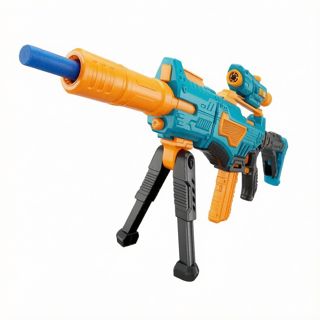
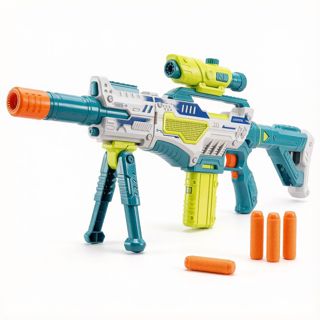
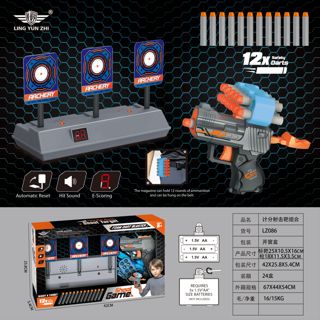
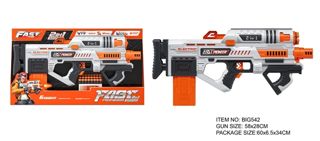
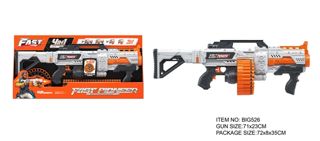
For buyers planning a foam dart blaster line, the age band decision determines which safety sections of ASTM F963 apply. A 6+ blaster must clear the under-8 edge and point rules; an 8+ version can include more complex mechanisms. Projectile toys must ensure the projectiles are not small parts and cannot exert excessive force—a requirement that holds across bands.
When you brief a factory, specify the target age band up front and ask for the test report that matches that configuration. The report should identify the product configuration, the age grade, and the standard edition—not a generic statement of compliance.
FAQ
Is a 6+ label legally different from an 8+ label in the US?
Yes. Toys for children under 8 must not have hazardous edges, points, or puncture hazards before and after use-and-abuse testing, per CPSC guidance. An 8+ product can include features like magnets in educational toys if appropriately labeled. The age grade determines which ASTM F963 sections apply to your SKU.
Do I need a Children's Product Certificate for a 14+ toy?
For the US market, products intended primarily for children 13 and older may be subject to ASTM F963 but do not require third-party testing or a Children's Product Certificate. However, ASTM F963 compliance is still expected. Confirm the intended user age with your supplier before you rely on this exemption.
My supplier says the factory is certified. Is that enough for my 6+ order?
No. A Children's Product Certificate is product-specific and should not be described as a blanket factory certificate. The CPC must identify the product, the applicable safety rules, and the responsible parties, and it must match the age grade on your packaging. Ask for the CPC and test report for the exact SKU you are ordering.
What warning do I need on a fragrant toy for the EU market?
Under EU-aligned rules, fragrant toys must carry a warning that they contain fragrances that may cause allergies. The warning should be translated and placed according to the target market's language requirement. Confirm the exact wording with your supplier and check it against the current regulation.
How does the EU toy definition affect my 14+ product?
A product designed or intended for play by children under 14 is a toy under EU-aligned rules. If your product targets 14+, it stays inside the toy definition and requires CE marking plus a declaration of conformity. For sports equipment, classification can also depend on user weight, such as under 20 kg for skateboards.
What should I check before committing to an 8+ blaster with a sound feature?
Toys designed to emit sound need an assessment of the applicable sound and volume requirements; not every electronic toy has the same sound test scope. Ask the supplier which sound test applies to your specific configuration and confirm the test report cites the 8+ age grade and the standard edition.
Sources
Request a Quote
Planning a new age-banded line or need help matching a SKU to its compliance paperwork? Send us your product spec and target market, and we will help you confirm the age grade, the test requirements, and the packaging warnings before you commit to an order.