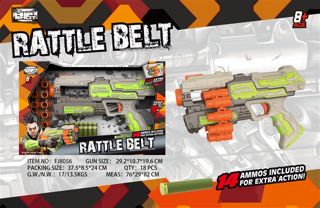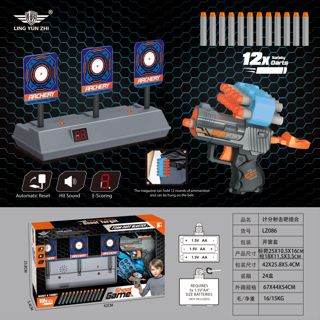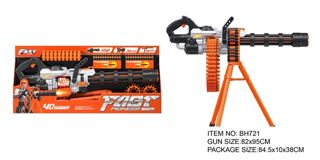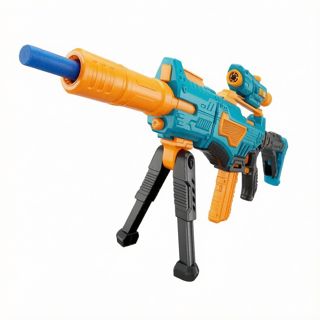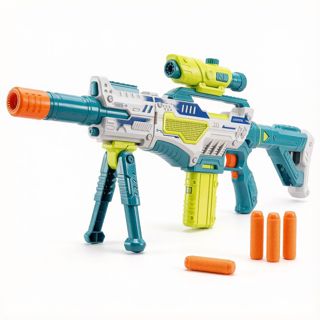

For wholesale buyers, the core question is whether one supplier should own the entire projectile-system performance. Splitting blaster and refill sourcing can save cost but makes compatibility disputes harder to resolve. This guide compares the two options across dimensional matching, color control, tip construction, lot traceability, packaging, and responsibility for feed issues, and translates the findings into a clear decision for your next purchase order.
Key Takeaways for Wholesale Buyers
- Choose factory-provided darts when you need one accountable vendor for dimensional fit and feed performance; a single supplier owns both blaster and dart tolerances, simplifying lot traceability and documentation.
- Choose separately sourced refill packs when per-dart cost at scale matters more than convenience, but you must verify dimensional compatibility yourself and accept responsibility for compatibility disputes.
- Without a TDS listing dart length, diameter, tip material, and Shore hardness, you cannot verify fit or color consistency; request a TDS per dart SKU before committing to either sourcing path.
- Color control and tip construction are easier to enforce when one factory produces both blaster and darts under a single QC plan; separately sourced darts risk shade variation and tip quality differences.
- Total landed cost includes more than unit price: factor in second supplier qualification, separate QC inspection, and the cost of customer returns from feed issues before choosing split sourcing.
Factory-Provided Darts vs. Separately Sourced Refill Packs: At a Glance
| Option | Factory-Provided Darts (included with blaster) |
|---|---|
| Dimensional compatibility | Managed internally by one supplier; but verify with TDS (ask TDS) |
| Color control | Easier to enforce with one QC plan; but ask for written tolerance (ask TDS) |
| Tip construction | Spec-controlled if TDS provided; ask for tip material and durometer (ask TDS) |
| Lot traceability | Simpler; darts and blasters ship under same PO; ask for lot codes on pack |
| Packaging | Retail-ready per blaster SKU; ask for pieces-per-carton data |
| Responsibility for feed issues | One vendor accountable; contract should state liability |
| MOQ | Varies by blaster SKU (e.g., 54 to 500 units) |
| Option | Separately Sourced Refill Packs |
| Dimensional compatibility | Must verify externally; ask for TDS and run feed tests (varies by spec) |
| Color control | Higher risk of shade variation; ask for color tolerance per lot (ask TDS) |
| Tip construction | Unknown unless TDS provided; ask for tip material and bond strength (ask TDS) |
| Lot traceability | Requires separate tracking; ask for manufacturer, date, lot on pack |
| Packaging | Negotiable; ask for retail-ready or bulk packaging and carton data |
| Responsibility for feed issues | Ambiguous; who owns jams? Must be defined in contract |
| MOQ | Varies by supplier; ask for refill pack MOQ |
Which Sourcing Path Fits Your Scenario?
Choose factory-provided darts when you need one accountable vendor for dimensional fit and feed performance. A single supplier owns both blaster and dart tolerances, so dimensional mismatch and feed failures are one vendor's problem. Lot traceability is simpler because darts and blasters ship under the same PO. However, you must confirm the factory actually tests each blaster model with the included darts and can provide a TDS with dart dimensions and tip hardness.
Choose separately sourced refill packs when per-dart cost at scale matters more than convenience. A dedicated dart supplier may offer better pricing per dart at volume, and you control the refill SKU independently. But you must verify dimensional compatibility with each blaster model, and you accept the risk that third-party darts may jam or underperform, with no clear party responsible for returns.
For a mixed order of multiple blaster SKUs needing consistent color and tip construction across the line, choose factory-provided darts with a written color and tip spec per SKU. Color control and tip construction are easier to enforce when one factory produces both blaster and darts under one QC plan. Separately sourced darts risk shade variation across SKUs and tip quality differences that affect performance. Ask the factory to commit to a color tolerance (e.g., Delta E) and provide tip construction details in writing.
Verifying Dart-to-Blaster Fit Without a TDS
The core risk in mixing factory-provided darts with separately sourced refill packs is dimensional mismatch. A dart that is 0.5 mm too long or too short in the foam body, or has a tip diameter outside the blaster's feed channel tolerance, will cause jams, misfeeds, or reduced velocity. None of the blasters in this comparison list dart dimensions, Shore hardness, or tip construction in the catalog data. You cannot verify fit from the product name or price.
Ask the factory for the Technical Data Sheet (TDS) for the darts that ship with each blaster. The TDS should state: foam body outer diameter, overall length, tip material (e.g., TPR, EVA, or closed-cell foam), tip durometer (Shore A or Shore 00), and foam density. If the factory cannot provide a TDS for the included darts, treat that as a red flag — it means the darts are not spec-controlled and may vary between production lots.
For separately sourced refill packs, request the same TDS from the refill supplier and compare row by row. The critical dimensions are the foam body diameter (typically measured at the midpoint) and the tip's outer diameter at its widest point. A difference of more than 0.3 mm in either dimension is enough to cause feed issues in a motorized or belt-fed mechanism. Do not rely on the refill pack's marketing claims of 'compatible with all blasters' — that language appears on consumer packaging and is not a technical guarantee.
If neither supplier can provide a TDS, request physical samples of both the factory dart and the refill dart, and run a feed test through each blaster model you intend to sell. Test at least 50 darts per blaster-dart combination. Record jam rate, misfeed rate, and any darts that fail to seat in the magazine or drum. A jam rate above 2% in a 50-dart test is a practical threshold for rejecting a refill source, but confirm the acceptable rate with your QC plan rather than assuming a number.
Total Cost of Darts: Factory-Included vs. Refill Packs
The catalog prices for the blasters range from 3.55 USD to 14.5 USD, but none of them state how many darts are included in the box. Without a dart count, you cannot calculate the per-dart cost embedded in the blaster price, and you cannot compare it against the per-dart cost of a separately sourced refill pack. This is a mandatory question before you commit to a sourcing decision.
Ask the factory for the included dart count per SKU. For example, if the 3-Mode DIY Motorized Foam Dart Blaster at 14.5 USD includes 12 darts, the embedded dart cost is roughly 1.21 USD per dart (assuming the darts are valued at zero margin, which they are not — the factory has already added a markup). If a refill pack of 50 darts costs 8 USD from a separate supplier, the per-dart cost is 0.16 USD. The refill pack is dramatically cheaper per unit, but you must add logistics: separate shipping, separate customs clearance, separate QC inspection, and the risk of dimensional mismatch that could generate customer returns.
The total cost comparison is not just unit price. It includes: the cost of a rejected lot if the refill darts jam in the blaster, the cost of customer service handling for feed complaints, the cost of a second QC inspection for the refill source, and the cost of holding two SKUs in inventory instead of one. If the factory can supply refill darts as a separate line item on the same PO, even at a higher per-dart price than an external supplier, the total landed cost may still be lower because you avoid a second supplier qualification.
Ask the factory for a per-dart price for additional darts on the same PO as the blasters. If they quote a price, compare it against the external refill supplier's price plus your estimated cost of a second QC inspection (which you should have from your inspection plan, not from a guess). If the factory's per-dart price is within 30% of the external supplier's price, the factory option is usually the better total-cost choice because it eliminates dimensional risk and lot-traceability gaps. If the factory's price is more than 50% higher, the external option may be worth the risk — but only after you have verified dimensional compatibility with a feed test.
Compliance and Documentation: One Short Box
Certification status for darts (ASTM F963, EN71, etc.) is not specified in the catalog. If you source darts separately, each component needs its own compliance documentation matched to the specific SKU and lot. A certificate that does not match the lot is not paperwork. Ask the factory or refill supplier for the compliance file that covers the exact lot you are buying, and keep the CPC matched to the SKU, not to the factory door.
FAQ
What is the exact dart length and diameter for each blaster SKU, and what is the barrel inner diameter?
These dimensions are not listed in the catalog. You must request a TDS from the factory or refill supplier. The TDS should state foam body outer diameter, overall length, and tip dimensions. Without it, you cannot verify fit.
Will the factory provide a TDS per dart SKU showing tip material, foam density, and dimensional tolerances?
Not guaranteed. Ask the factory directly. If they cannot provide a TDS, treat it as a red flag for spec control. For separately sourced darts, request the same TDS from the refill supplier and compare row by row.
If I source darts separately, who is responsible for feed jams or poor performance — the blaster factory or the dart supplier?
This must be defined in your purchase contract. With split sourcing, responsibility is ambiguous and disputes can become finger-pointing. With factory-provided darts, one vendor owns the system, but you should still state liability in the contract.
What is the per-dart price if I buy refill packs from the same factory versus a third-party supplier?
Not provided in the catalog. Ask the factory for a per-dart price for additional darts on the same PO as the blasters, and compare it against external refill supplier quotes plus your cost of a second QC inspection.
Can the factory guarantee color consistency across production lots, and what is the acceptable tolerance?
Color tolerance (e.g., Delta E) is not specified. Ask the factory to commit to a written tolerance per SKU. Separately sourced darts risk shade variation across lots, so request a color standard sample and retained samples per lot.
What is the MOQ for separately sourced refill darts, and does it differ from the blaster MOQs listed?
MOQ for refill darts is not provided. Blaster MOQs range from 54 to 500 units depending on the SKU. Ask the refill supplier for their MOQ and compare it to the blaster MOQs to plan your order quantities.
Sources
Request a Quote
Ready to source foam blasters with factory-provided darts or refill packs? Request a quote with your target SKUs and quantities, and ask for the TDS, dart count, and per-dart pricing to finalize your decision.