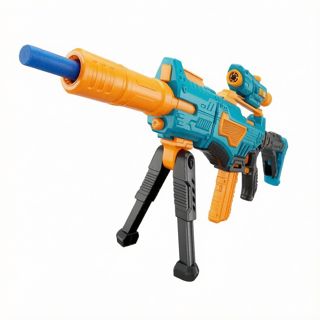
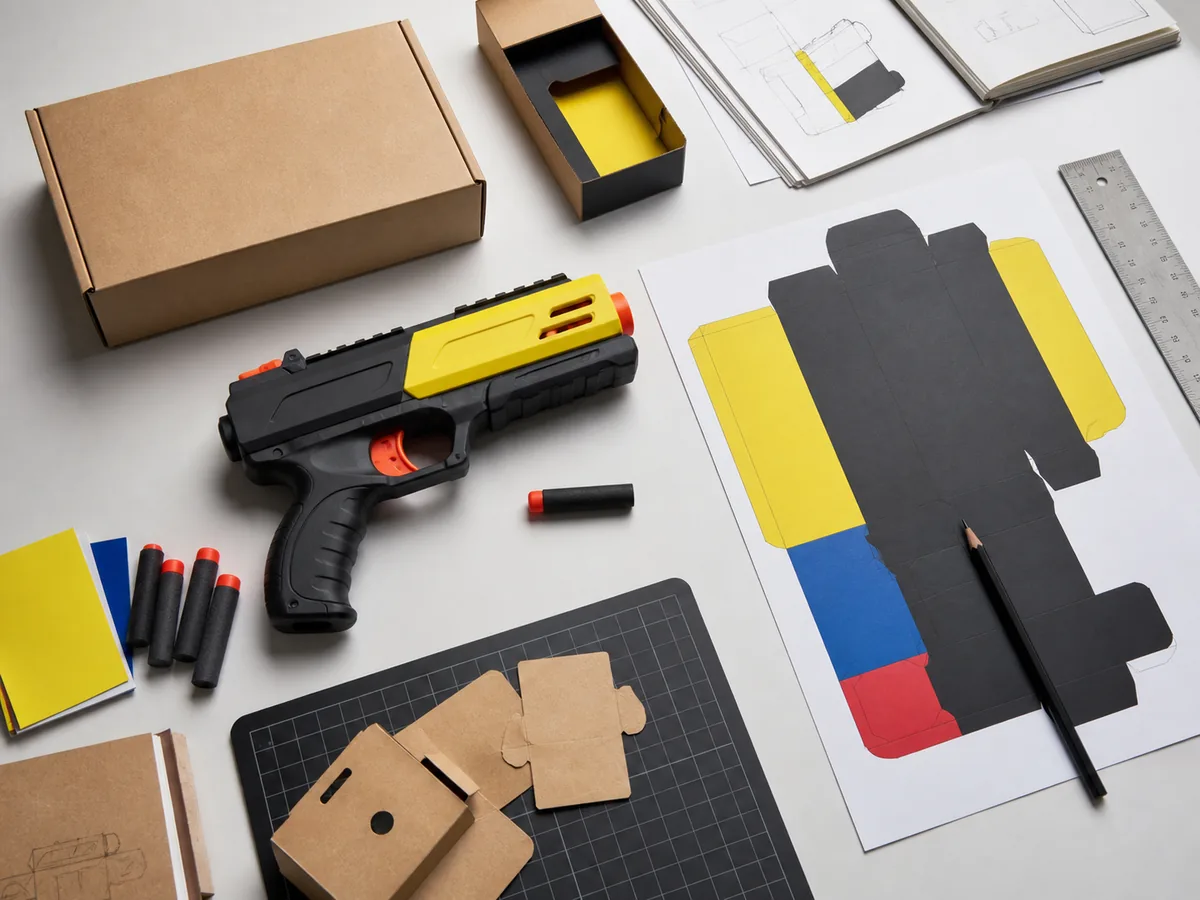
If you are stocking foam blasters for 2026, the fastest way to multiply inventory without adding a single new blaster model is to carry every feed system on the market. Hopper, magazine, belt, drum, disc, ball, and dart platforms each demand their own refill packs, their own spare parts, and often their own shelf space. The wholesale decision is now a discipline question: limit format expansion unless each refill and replacement path is commercially supported.
This guide maps the feed-system landscape for importers and Amazon sellers, translates mechanism variety into inventory risk, and gives a clear rule for which ecosystems deserve a full SKU commitment. The goal is not to name the single best blaster, but to stop fragmentation from quietly doubling your working capital.
Key Takeaways
- Mechanism variety can quietly multiply inventory far beyond the number of blaster SKUs. One blaster that accepts only proprietary darts plus one that takes standard darts is not two SKUs; it is two SKUs plus two refill lines plus two spare-parts sets.
- Standard-dart blasters and disc launchers share a practical advantage: refill ammunition is interchangeable across brands, so a single refill SKU can serve an entire shelf rather than one model.
- Belt-feed and drum-feed systems create the deepest fragmentation because their refill belts and drums are often model-specific; before adding a second belt-fed SKU, confirm that the refill path is commercially viable at your volume.
- For toys with wheels, batteries, seals, connectors, or small functional components, the after-sales spare-parts policy should be agreed before launch, not after the first warranty claim.
- Buyers should treat every new feed system as a category decision, not a line extension; if the refill economics do not work at your MOQ, the blaster margin will be consumed by restocking complexity.
Feed-System Matrix: Refill Complexity by Ecosystem
| Dart (standard magazine) | Why visible: broadest installed base, cross-brand refill compatibility. Sourcing implication: safest first SKU; one refill pack serves multiple blasters. Dated source note: standard in current OEM catalogs. |
|---|---|
| Drum-feed | Why visible: extended capacity positioning, high round-count marketing. Sourcing implication: drums are model-specific; verify spare-drum availability before committing. Dated source note: rising in electric blaster lines. |
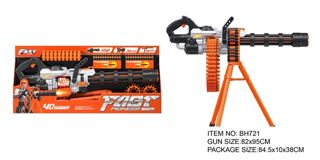
| Belt-feed | Why visible: military-style play pattern, high perceived value. Sourcing implication: refill belts and links are proprietary; carry only if the refill SKU is confirmed. Dated source note: present in OEM lineups; MOQ band 50-54 units. |
| Hopper / gravity-feed (ball) | Why visible: ball ammo is cheap and shareable across hopper models. Sourcing implication: moderate complexity; hopper parts are simple but balls are a separate commodity SKU. Dated source note: ball blasters are a stable niche. |
| Disc launcher | Why visible: family-friendly, indoor-safe play. Sourcing implication: discs are cross-brand standard; excellent refill economics. Dated source note: consistent year-round demand. |
Dart ecosystems: the fragmentation baseline
Dart blasters are the reference point because they are the most standardized. A standard foam dart fits most magazine-fed blasters regardless of brand, which means a single refill SKU can support an entire assortment. That is the exception, not the rule.
The fragmentation starts when a blaster is designed for a proprietary dart. If the ammunition is not interchangeable, the buyer is not stocking one blaster; they are stocking a closed system. The refill pack only sells to owners of that one model, so the inventory turns on a single SKU's sell-through. Before you add a proprietary-dart blaster, ask whether the refill path is commercially supported at your order volume. A 432-unit MOQ on a mini manual blaster is fine when the darts are standard; it is a trap when the darts fit only that gun.
Belt-feed and drum-feed: where SKUs multiply fastest
Belt-feed blasters look impressive on a shelf, and the play pattern sells. The inventory problem is the belt itself. A belt-feed system typically requires a continuous linked belt of darts, and that belt is often model-specific. One electric belt-feed SKU at a 54-unit MOQ is manageable; a second belt-fed model with a different belt pitch doubles your refill SKUs even though you added only one blaster SKU.
Drum-feed systems have the same issue in a different shape. The drum magazine is engineered to a specific blaster, so a spare drum for model A does not fit model B. For an Amazon seller, this means separate listings, separate FBA allocations, and separate risk of stranded inventory. The rule: a drum-fed or belt-fed blaster earns its place only when the refill path — extra drums, spare belts — is a planned SKU with confirmed supply, not an afterthought.
Hopper, ball, and disc systems: the refill-friendly middle ground
Ball blasters use a gravity hopper that is mechanically simple, and the balls themselves are a commodity that can be shared across hopper models. The fragmentation risk is lower, but the hopper lid, feed tube, and any seals are wear items. The verified sourcing guidance is direct: for toys with seals or small functional components, the after-sales spare-parts policy should be agreed before launch.
Disc launchers are the cleanest refill story. Discs are standardized across brands, so one disc refill pack can sit on the shelf and serve every disc blaster you carry. If you are a gift distributor or supermarket buyer looking for a low-complexity add-on, disc systems and standard-dart blasters are the two ecosystems that will not quietly multiply your SKU count.
Shared dimensions and spare parts: the hidden inventory line
Beyond ammunition, fragmentation hides in spare parts. A blaster with wheels, batteries, seals, or connectors is not a finished-goods SKU; it is a finished-goods SKU plus a spare-parts commitment. The verified operational guidance is that this policy should be agreed before launch, which in practice means before you place the PO, not after the first customer complaint.
Shared dimensions across a lineup reduce this burden. When several blasters use the same drum, the same belt, or the same battery compartment, one spare-parts SKU covers multiple models. Ask your supplier which components are shared across their catalog. A supplier that builds a family of blasters on shared internals is a supplier that is helping you control fragmentation; a supplier with a unique mechanism for every SKU is handing you a working-capital problem.
What this means for your 2026 assortment plan
The practical decision rule for this season: carry a maximum of two feed systems in depth, and treat every additional ecosystem as a trial. The safest combination for most importers is standard-dart magazine blasters as the volume line, plus one disc launcher as the refill-friendly second ecosystem.
Add a belt-feed or drum-feed blaster only when you have confirmed the refill path — extra belts or drums available at your MOQ — and only when the blaster margin is high enough to carry the spare-parts commitment. The 48-dart electric blaster tier sits at a 9.65 USD price point with 50-unit MOQ; at that margin, the refill economics have to be clean. If the refill is proprietary, the margin disappears into restocking complexity.
A private-label buyer should also look for dimension standardization across the order. If your supplier can confirm that the belt-feed blaster shares a battery system or drum interface with another SKU you carry, that shared dimension is worth more than a slightly lower unit price.
OEM-relevant examples
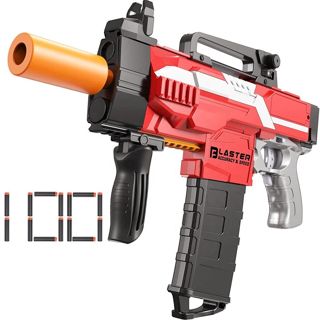
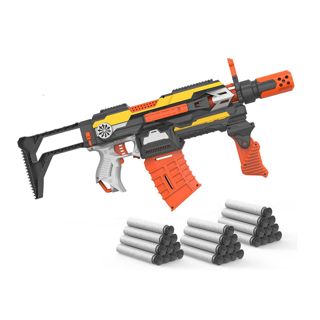
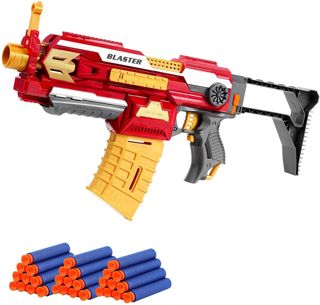
For buyers evaluating OEM options, the catalog shows how feed-system choice maps to price bands. The Belt-Feed Foam Dart Blaster sits at 4.99 USD with a 54-unit MOQ, representing the proprietary-refill end of the spectrum. The 48-Dart Electric Soft Bullet Blaster at 9.65 USD and the 12-Dart Electric Soft Bullet Blaster at 7.28 USD (both ABS/EVA, 50-unit MOQ) represent the standard-dart magazine path where refill is interchangeable. The Graffiti Mini Manual Soft Dart Blaster at 1.61 USD with a 432-unit MOQ is the high-volume, low-price entry point where standard darts keep refill costs negligible.
FAQ
Which feed system should a first-time foam blaster importer choose to avoid refill fragmentation?
Standard-dart magazine-fed blasters are the safest first SKU because the refill darts are interchangeable across brands, so one refill pack serves the whole shelf. Disc launchers are the second-lowest complexity option. Avoid belt-feed or proprietary-dart systems until you have confirmed the refill supply at your MOQ.
How many SKUs does a belt-feed blaster really add to my inventory?
A belt-feed blaster adds the blaster SKU plus a model-specific refill belt SKU, and often a spare-parts SKU for the belt mechanism. If you carry two different belt-fed models, the refill belts are usually not interchangeable, so you add two refill SKUs for one additional blaster line.
What MOQ should I expect for electric drum-feed blasters, and when do they make sense?
Based on available catalog data, electric blasters in the 12- to 48-dart range carry MOQs around 50 units, with prices from roughly 7 to 10 USD. They make sense when the drum or magazine is shared with another SKU in your lineup; if the drum is proprietary, confirm spare-drum availability before committing.
Is a proprietary-dart blaster ever worth the refill risk for an Amazon seller?
Only if the refill pack is a planned, confirmed SKU with its own listing and supply, and the blaster margin is high enough to carry that separate inventory. Otherwise, the refill pack becomes stranded inventory when the blaster stops selling.
What spare parts should I agree on with the supplier before placing a foam blaster PO?
For blasters with wheels, batteries, seals, connectors, or small functional components, agree the after-sales spare-parts policy before launch. Confirm which components are shared across the supplier's catalog, because shared parts mean one spare SKU can cover multiple blaster models.
Sources
Request a Quote
Planning a 2026 foam blaster assortment and need a supplier that can confirm shared dimensions, refill paths, and spare-parts policy before you commit? Contact us for category-specific sourcing advice and catalog details.