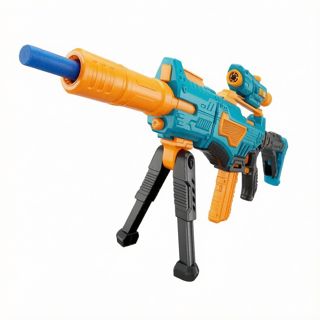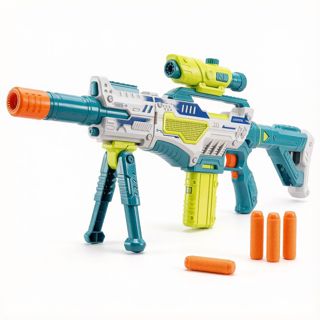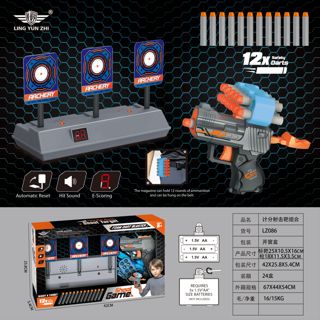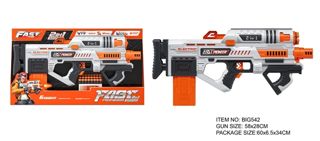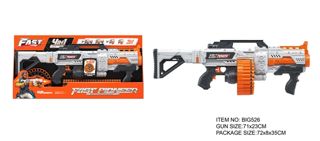
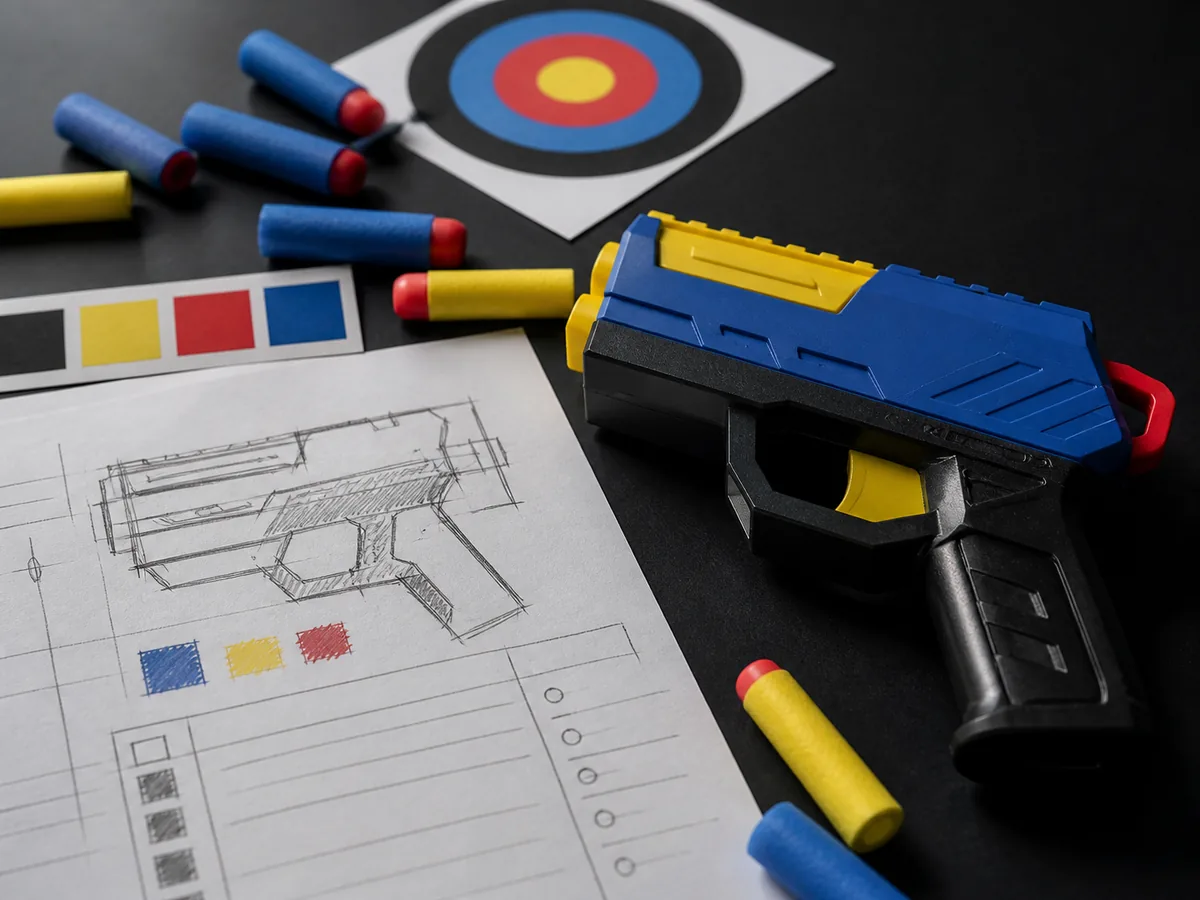
Choose a stock or lightly customized foam blaster if your approval milestones—artwork freeze, sample sign-off, and compliance testing—no longer fit the holiday sales window; otherwise, defer the launch to the next season rather than risk missing peak demand entirely. A missed holiday window costs more than preserving a feature that delays production. This article lays out the timeline pressure points—artwork freeze, sample approval, a 25–35 day lead-time confirmation, inspection, freight booking, and marketplace receiving—and turns them into a clear wholesale decision.
Key Takeaways
- A foam blaster aimed at children 12 and under requires third-party testing at a CPSC-accepted lab and a Children's Product Certificate (CPC); budget this testing time before artwork freeze, because test results can force design changes.
- Treat the 25–35 day lead-time estimate as a confirmation point, not a guarantee: separate tooling, first sample, testing, production, packaging, and shipping, since one total number can hide different dependencies.
- A type-test or golden-sample report does not automatically cover a later production lot; match the report SKU, materials, colors, and production date/cohort to the PO before shipment.
- Starting July 8, 2026, importers must electronically file certificates with U.S. Customs and Border Protection via a PGA Message Set—factor this new step into your import timeline for holiday shipments.
- If approval milestones slip, fall back to a lower-MOQ stock SKU with existing compliance documentation rather than pushing a customized blaster that misses the window.
What actually took effect
The mandatory U.S. toy safety standard, ASTM F963, is codified at 16 C.F.R. part 1250 under the Consumer Product Safety Improvement Act (CPSIA). This is the current regulatory baseline. For foam blasters, the relevant mandatory sections include projectiles, sound-producing toys, small parts, hazardous edges and points, and labeling (Section 5). The exact edition and incorporated regulatory status should be checked before quoting ASTM F963.
Separately, the CPSC has announced that starting July 8, 2026, importers must electronically file certificates with U.S. Customs and Border Protection via a PGA Message Set. This application date affects importers specifically; the timeline is confirmed in CPSC guidance. This is distinct from the EU's Toy Safety Directive and the General Product Safety Regulation 2023/988, which are separate legal instruments with their own timelines. For EU-bound blasters, CE marking and an EU Declaration of Conformity belong to the conformity process and must be matched to the product scope; check the current consolidated text before publishing any claim.
Who is responsible
Responsibility for a foam blaster's compliance is shared, and each party has a verifiable duty. The manufacturer must ensure the product meets the applicable safety rules and produce a test report from a CPSC-accepted lab; the importer must issue a CPC for products intended for children 12 and under, based on that testing. The importer is not the only responsible party—authorized representatives and distributors also have obligations under the EU GPSR, which requires importer, manufacturer, and product-identification information to be mapped to the relevant market role.
For the U.S., the CPC must include seven elements: product identification, citation of applicable safety rules, certifying firm's identity, record-keeper contact, date and place of manufacture, date and place of testing, and lab identification. The importer and manufacturer should verify these together before the shipment. A CPC is product-specific and should not be described as a blanket factory certificate. A test report should identify the product configuration, age grade, and standard edition; never turn a standard or guidance page into a claim that a specific factory or SKU is certified.
What the procurement process must change
The procurement process must change in five concrete ways. First, move compliance testing before artwork freeze: test results on projectiles, sound, and small parts can force design changes, so do not finalize packaging until the test report is back. Second, in the RFQ, ask the supplier for a lead-time breakdown, not a single number—separate tooling, first sample, testing, production, packaging, and shipping, since one total can hide different dependencies. Third, confirm the 25–35 day lead-time estimate in writing, and tie it to a specific PO and production date range.
Fourth, verify the CPC matches the exact SKU, materials, colors, and production cohort; a golden-sample report does not automatically cover a later production lot. Fifth, plan for the July 8, 2026 eFiling requirement with CBP as part of the import timeline, and keep records of test results with a designated contact for audits. For EU-bound product, map the importer, manufacturer, and product-identification information to the relevant market role before publication—packaging wording and product markings are controlled fields that can change with the SKU.
What remains uncertain
The exact application timeline for the EU's Digital Product Passport (DPP) is not confirmed from official text; it is a separate regime from the Toy Safety Directive and GPSR, and its dates are not established in the sources cited here. Do not conflate DPP deadlines with GPSR or Toy Safety Directive deadlines. Similarly, while the CPSC has announced the July 8, 2026 eFiling date, the full operational details for importers—such as exact data fields and error-handling procedures—are not fully specified in the provided materials; treat these as unknown until official guidance is published. For any specific foam blaster SKU, the applicable ASTM F963 edition and whether it requires third-party testing depends on the age grade and the current regulation text; this must be confirmed per SKU, not assumed.
Obligation checklist
| Manufacturer | Ensure product meets applicable safety rules; produce test report from CPSC-accepted lab. Verify: report matches product configuration, age grade, and standard edition. Unknown: whether a specific factory is certified—never assume from a standard page. |
|---|---|
| Importer | Issue CPC based on third-party testing for products intended for children 12 and under; include 7 required elements. Verify: CPC matches SKU, materials, colors, and production date/cohort. Unknown: exact eFiling data fields until CBP publishes them. |
| Importer | Map importer, manufacturer, and product-identification info per GPSR; ensure CE marking and DoC match product scope. Verify: current consolidated text and product scope before publication. Unknown: DPP application date—not confirmed from official text. |
| Authorized Representative | Under EU GPSR, ensure product-identification information is correct and available. Verify: product and packaging markings are controlled fields per SKU. Unknown: any additional national requirements—check current consolidated text. |
| Distributor | Verify that the product carries required markings and documentation before placing on market. Verify: CPC or CE/DoC are present and match the SKU. Unknown: whether a golden-sample report covers a later production lot—it does not automatically. |
FAQ
What is the single most important deadline to protect in a foam blaster holiday launch?
The artwork freeze date, because it triggers the final compliance review and production start. If you miss it, testing and CPC creation may not finish before freight booking, and you lose the holiday window. Confirm the freeze date with your supplier first.
I have a golden-sample test report. Does it cover my full production order?
No. A type-test or golden-sample report does not automatically cover a later production lot. You must match the report SKU, materials, colors, and production date/cohort to the PO, and a CPC must be issued based on tests that reflect the actual manufactured product. If the product changes after the report, a retest decision should be documented.
How do I know if my foam blaster needs a Children's Product Certificate?
If the blaster is intended primarily for children 12 and under, it requires third-party testing at a CPSC-accepted lab and a CPC. If it is intended for ages 13+, it may still be subject to ASTM F963 but does not require third-party testing or a CPC under the CPSC guidance. Confirm the age grade and the applicable rule set before drafting a compliance statement.
What should I ask the supplier in an RFQ to protect my holiday timeline?
Ask for a lead-time breakdown: tooling, first sample, testing, production, packaging, and shipping separately, not one total number. Also ask for a written confirmation of the 25–35 day lead-time estimate, the CPSC-accepted lab name, and the testing duration. This lets you spot which dependency could slip.
I'm importing into the US. What changed after July 8, 2026?
Starting July 8, 2026, importers must electronically file certificates with U.S. Customs and Border Protection via a PGA Message Set. This is a new step in the import process, so factor it into your timeline—especially for holiday shipments. The exact data fields and procedures are not fully specified in the provided materials, so confirm with your customs broker.
If my customization is causing delays, should I cut it or delay the launch?
Choose to reduce customization or defer the launch if approval milestones no longer fit the sales window. If the customization pushes artwork freeze past the point where testing and production can still meet freight booking, switch to a lower-MOQ stock SKU with existing compliance documentation. Otherwise, defer to the next season rather than miss peak demand entirely.
Sources
Request a Quote
Need help choosing a foam blaster SKU that fits your holiday timeline? Contact us for sourcing advice on MOQ, lead times, and compliance documentation.