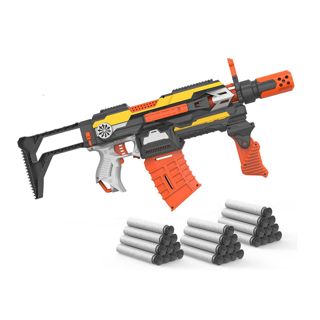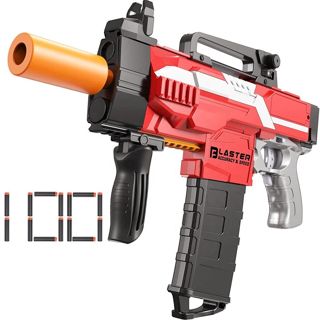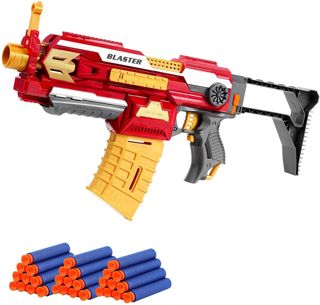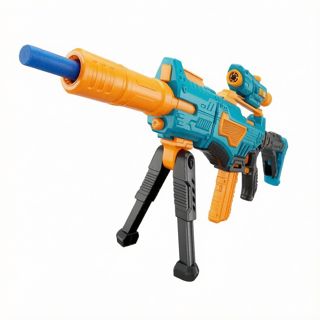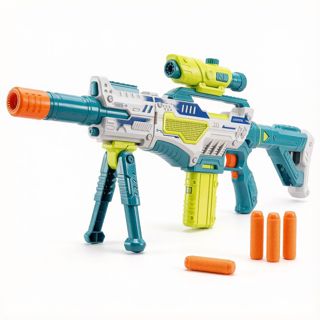

Pause affected listing claims on every blaster SKU until you have mapped the new policy requirements to that specific product — age grading, test reports, responsible-party fields, and documentation. Do not edit listings reactively. The policy update changes what a platform will accept as proof of compliance, not just what words you can use.
Below: what actually took effect (and what did not), which role in the supply chain must verify it, and the one procurement step that changes. Written for importers, Amazon sellers, supermarket buyers, gift distributors, and private-label buyers sourcing foam dart blasters.
What actually took effect
For blaster SKUs, the compliance documents behind your listings are now the binding constraint — and the specific marketplace policy text is not confirmed from official sources available to us. What is confirmed is the regulatory backdrop that platforms cite when they ask for documentation.
According to CPSC guidance, children's toys generally require testing at a CPSC-accepted laboratory and a Children's Product Certificate (CPC) — a product-specific document based on test results that identifies the applicable rules and responsible parties, not a blanket factory certificate. The applicable ASTM F963 edition and its incorporated regulatory status must be read from the current regulation before you quote a report, and a test report should identify the product configuration, age grade, and standard edition it was tested against.
For the EU market, the Toy Safety Directive 2009/48/EC requires that toy products placed on the EU market meet applicable essential safety requirements, with CE marking and an EU Declaration of Conformity matched to the product scope. The General Product Safety Regulation 2023/988 is a separate legal instrument from the Toy Safety Directive — not the same deadline, not the same document set, and never merged into one compliance statement.
What is uncertain: the official text available to us does not confirm a specific marketplace enforcement date for blaster listings, and it does not confirm which listing fields (imagery, age range display, claim wording) will be checked first. Treat any timeline you see in secondary articles as unconfirmed until you read the platform's own policy page and the underlying regulation.
| US — children's toy testing | CPSC-accepted lab testing + Children's Product Certificate; product-specific, based on test results |
|---|---|
| US — test standard | ASTM F963; read the applicable edition from the current regulation before quoting a report |
| EU — toy safety | Toy Safety Directive 2009/48/EC; CE marking + EU Declaration of Conformity matched to product scope |
| EU — general product safety | GPSR 2023/988 — separate legal instrument from the Toy Safety Directive |
| Marketplace enforcement date for blaster listings | Not confirmed from official text available to us |
| Which listing fields are checked first | Unknown — varies by platform |
Who must check it
The importer carries the documentation burden in practice, but the obligation is distributed across roles, and each role can only verify what it actually controls. Map the four roles before you respond to any platform request.
The manufacturer holds the test reports, material declarations, and production records. The authorized representative in the destination market holds the conformity documentation and is the contact point for authorities. The importer — that is you, if you are placing the product on the market — must ensure the product-specific certificate exists, matches the SKU, and names the correct responsible parties. The distributor or retailer passes the product to consumers and must be able to show the documentation chain if asked.
Two CPSC-side details matter for blasters specifically. First, age grading and small-part risk are connected and must be assessed for the actual product configuration — assemblies, detachable accessories (dart tips, scope attachments, stock pieces), and packaging components need the same review discipline, not just the main body. Second, tracking information should be permanent and support product identification where applicable; packaging, product markings, and lot control should be reviewed together, because a lot number that only exists on the carton is not tracking.
The procurement step that changes
The step that changes is the documentation review gate — the point in your buying process where you decide whether a SKU is listing-ready. It moves from after the PO to before the sample approval.
Concretely: add a per-SKU documentation check to your sample evaluation. When you evaluate a blaster sample, ask for the test report that names that configuration, age grade, and standard edition; ask which party will appear as importer and authorized representative; and confirm that the tracking label and lot control plan are defined before the carton artwork is finalized. Packaging wording and product markings are controlled fields that can change with the SKU — treat them as version-controlled, not as fixed marketing copy.
This matters most where a single supplier catalog serves multiple SKUs with different configurations. A catalog record establishes what the product is — material, packing, reference quantity, reference price — but it does not establish certification, age suitability, licensing, stock, or factory capacity. A scoped catalog snapshot is a starting point for a quote, not evidence for a listing claim. A motorized foam dart rifle blaster in ABS with a reference MOQ of 120 units is a sourcing candidate; its listing-readiness depends entirely on the report and certificate that come with that specific configuration.
Practical sequencing for the next 30 days: freeze new listing copy on affected blaster SKUs, pull the certificate and report for each configuration, flag any SKU where the report names a different age grade or configuration than the listing, and only then resume copy edits. If a report cannot be produced for a configuration, that SKU stays paused — not edited.
FAQ
Do I need to pull my blaster listings down entirely?
No — pause the claims, not necessarily the listing. Freeze new copy and images on affected SKUs, verify the certificate and test report for each configuration, and resume edits once the documentation matches the listing. Full removal is only necessary if no matching report can be produced.
Is a factory certificate enough for a blaster listing?
No. A Children's Product Certificate is product-specific and based on testing results — it should not be described as a blanket factory certificate. A report must also match the product, age grade, material, and test edition.
Do EU and US requirements share one deadline?
No. The Toy Safety Directive 2009/48/EC and the GPSR 2023/988 are separate legal instruments with separate document sets. The official text available to us does not confirm a single combined deadline for blaster listings.
What age field should my blaster listing show?
Use the age grade that the test report and certificate actually cover. Age grading and small-part risk are connected and must be assessed for the actual product configuration, including detachable accessories and packaging components.
Can I keep selling while I gather documents?
Only on SKUs where the existing documentation already matches the listing. Where the report names a different configuration or age grade, pause the claim until the gap is closed — seller-account exposure from an unverifiable claim is the larger risk.
Does a supplier catalog record count as compliance evidence?
No. A catalog record establishes material, packing, reference quantity, and reference price only — not certification, age suitability, licensing, stock, or factory capacity. Always reconfirm the sample, current quote, age evidence, and destination documents.
Sources
Need help mapping your blaster SKUs to the new requirements?
We can walk through your existing blaster configurations, check which product-specific reports you already hold, and identify the SKUs where the documentation does not match the listing. Talk to our sourcing team for category and compliance-document advice before your next PO.