
A supplier's 25–35 day lead time is a promise you can test before sending a deposit—but only if you know what questions to ask. Treat any lead-time number as a starting point, not a commitment, until the factory documents the production window: when the clock starts, what depends on your artwork and samples, and which stages can slip. Five checks separate realistic schedules from optimistic quotes, based on how toy factories in Chenghai and Shantou actually plan production. Use them to protect your launch date and your cash flow.
Key Takeaways: Turn Lead-Time Claims into Verifiable Commitments
- Define the start point: A lead time without a defined start date (e.g., after deposit, after artwork approval) is not a schedule. Always ask: 'When does the clock start?'
- Demand capacity evidence: Ask for documented production-line capacity and current utilization. If the factory is already running at 85%+ utilization, expect delays—plan buffer or split sourcing.
- Check material and artwork dependencies: Custom colors, materials, or packaging add days. Confirm material availability and set a design freeze date before tooling starts.
- Verify testing and certification slots: Toy safety testing (EN71, ASTM F963) is a separate step that can take weeks. Ask which lab will test and when the slot is booked.
- Document subcontracting and past performance: If painting, assembly, or finishing is subcontracted, get named capacity. Ask for on-time delivery records from the last 10 orders—not just 'mostly on time.'

What Does a Lead-Time Number Really Mean?
A factory that quotes '25–35 days' might be counting from the day you wire the deposit, or from after your artwork is approved, or even from the day they receive your final approved sample. These starting points can shift your actual delivery by two weeks or more. The most common source of late shipments is not a factory that misses its dates—it's a buyer who accepted a timeline that was never realistic because it didn't include the full production window.
Lead time is the total time from placing a purchase order to goods being ready for shipment, but it splits into internal steps: material procurement, tooling (if new molds are needed), artwork and packaging proofing, sample approval, production, quality inspection, and testing. Each stage has its own duration and risk. A factory that cannot break its lead time into these stages likely doesn't control them well enough to promise a date.
Check 1: Can They Prove Capacity, Not Just Willingness?
Any supplier will say yes to your order volume. Fewer can prove they have the production lines, staff, and time to deliver by your deadline. Before you commit, ask for documented production-line capacity and current utilization. A simple question like 'What is your current order loading for the month we need production?' can reveal whether the factory is already booked solid.
Watch for utilization above 85% with no alternate line or backup tooling—this is a sign that your order could slip if anything goes wrong. Also distinguish in-house manufacturing from subcontracted work. If painting, assembly, or even final packaging is done by a third party, ask for the name of that subcontractor and their capacity. A factory that says 'we manage everything' but cannot name its finishing partner is hiding a risk.
Check 2: Is Material Availability Realistic for Your Spec?
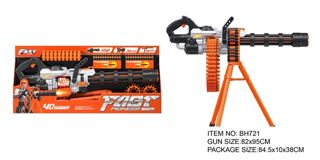
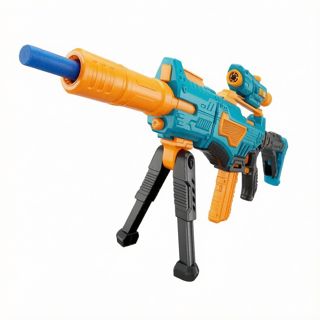
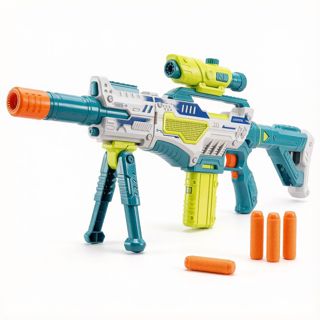
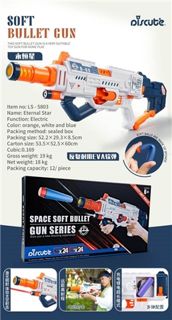
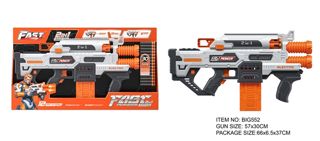
Toy factories in Chenghai typically stock common ABS and EVA foam for standard blaster models. But if you specify a custom color, a particular grade of plastic, or a special foam density, the factory may need to order material—adding days to the schedule. Ask: 'What materials are in stock for this product, and what needs to be ordered? How long does material procurement take?'
Material availability is also seasonal. Before Chinese New Year, resin suppliers and foam converters are slammed, and factories often build inventory months in advance. If your order falls in that window, add buffer. In September and October, when factories prepare for holiday orders, mold-changeover times and material queues lengthen. A verbal 'quick color change' in peak season has missed more vessels than steel problems.
Check 3: How Much Does Your Artwork and Sample Approval Affect the Timeline?
Custom packaging, labels, and even the color of the blaster body are artwork dependencies that most buyers underestimate. A seemingly simple 'change the logo' can require a new printing plate, a color proof, and a packaging approval round—each taking days. The factory's schedule usually assumes your artwork is approved and frozen before production starts. If you make changes after that, the clock resets.
To protect your lead time, set a design freeze date before you commit: a date after which no artwork, color, or specification changes are allowed. Ask the supplier to confirm that date in writing. Also clarify how many sample rounds are included in the quoted lead time. If the first sample needs correction—which is common for new molds—the factory should explain how long a correction loop takes. Sample performance is one of the best predictors of production discipline: if the factory delivers its sample late or fails to answer your technical questions, expect the same during mass production.
Check 4: Are Testing and Certification Slots Booked?
For toys sold in the US or EU, safety testing (ASTM F963, CPSIA, EN71, CE) is not a last-minute check. It requires sending samples to an accredited lab, which has its own queue and turnaround time. A factory that quotes a lead time without confirming the testing slot is building in a hidden delay.
Ask: 'Which lab will test this product? When is the sample ready for testing, and how long does the lab take to issue the report?' If the lab is busy—and labs get busier before peak seasons—your shipment could wait for a report that is required for customs clearance or retail listing. Also confirm which certification documents are needed for your destination market, because a UKCA or VOC file for an electric bubble machine is different from a CE certificate for a foam blaster. Paperwork that does not match your product's lot is not paperwork.
Check 5: What Is Subcontracted, and What Is Their On-Time Record?
Many Chenghai factories do not do every step in-house. Injection molding might be in the same building, but painting, pad printing, or final assembly could be sent to a nearby workshop. That is normal—but it is a risk if the factory cannot name the subcontractor or show evidence of their capacity.
Ask: 'Which stages are subcontracted? What is the current queue at that subcontractor? What happens if they slip?' Then go one step further: ask for evidence of past on-time performance. 'Out of your last 10 orders, how many shipped on or before the promised date?' A factory that answers 'mostly, usually' is not committing. A factory that says '9 out of 10, and the one late order was due to a port delay' is giving you a number you can verify.
Also review your own role in on-time delivery. Late purchase orders, slow approvals, or changing specifications on your side count as internal delays—not supplier failures. Separate your own slippage from the factory's record before you judge reliability.
What to Look For in a Toy Factory's Lead-Time Promise
| Capacity evidence | Ask for current utilization and production-line count. Green flag: they can show you a loading schedule. Red flag: 'We can handle it' with no numbers. |
|---|---|
| Material availability | Confirm which materials are in stock (ABS, EVA) and which require ordering. Green flag: they name specific grades and lead days for procurement. |
| Artwork and sample dependency | Clarify how many sample rounds are included and set a design freeze date. Green flag: they define a freeze date in the quote. |
| Testing slots | Ask which lab will test and when the slot is booked. Green flag: they name the lab and expected report date. Red flag: 'We'll handle testing later.' |
| Subcontracting | Identify outsourced steps (painting, assembly) and demand named capacity. Green flag: they list subcontractors and their lead times. |
| Past on-time performance | Request a number: 'How many of your last 10 orders shipped on time?' Green flag: a specific figure with reasons for any delay. |
How to Turn These Checks into a Wholesale Decision
A supplier that passes all five checks—capacity, material, artwork, testing, and subcontracting—earns your commitment. If they fail on more than one, do not assume the lead time is realistic. Instead, ask for a revised timeline that includes buffer for the risky stages, or consider splitting your order between two factories to reduce exposure.
Write the schedule definition into your purchase order. Include the start date, the production window, the sample approval milestone, and the Incoterms version and named place (e.g., FOB Shantou or Shenzhen as actually booked). An Incoterms reference without a named place is a freight argument waiting to happen. Finally, stage your payments: deposit, pre-shipment inspection, balance on documents. Never wire 100% upfront to an unproven supplier.
What About Regional Differences: Chenghai, Shantou, and Yiwu?
Chenghai, a district of Shantou in Guangdong, is the center of China's plastic toy production. Factories here specialize in injection-molded toys—including foam dart blasters, water guns, and building blocks—and they are used to OEM and ODM work. Shantou's port access and dense supplier ecosystem mean you can source materials, tooling, and finishing services within a short radius, which shortens lead times for standard products.
Yiwu, in Zhejiang, is more of a trading hub for small consumer goods, with a huge market for mixed containers and lower-cost items. You will find many trading companies and small factories there, but for custom plastic toys that require tooling and safety testing, Chenghai factories generally offer more direct control over production. That does not mean Yiwu cannot work—just that you need to apply the same five checks with extra rigor, because the risk of trading intermediaries is higher.
Wherever the factory is located, verify the legal entity, export license, and physical address before you send a deposit. A surprising share of first-order failures trace back to a 'supplier' that turns out to be a trading intermediary, not the factory. Ask for a video call from the factory floor, request the business registration number, and check that the address matches the one on their website.
What Is the Role of Samples in Testing Lead-Time Claims?
A physical sample is the cheapest insurance in sourcing. It tests product quality, but it also tests the supplier's communication speed and shipping competence. If a factory takes two weeks to send a sample that should take three days, that is a lead-time signal. If they send the wrong color or omit the requested packaging, expect the same on your production order.
When you order a sample, ask the factory to quote its own turnaround time—from your order to the sample leaving the factory. Then measure it. A factory that meets its own sample deadline is more likely to meet a production deadline. But be careful: a sample that arrives quickly may be a 'hero unit' built with extra care. Ask for the tool number and revision marked on the sample, and insist that mass production matches the approved sample, not a photo from a trade fair. Fair lighting lies; the revision card does not.
FAQ: Testing Supplier Lead-Time Claims
A factory quotes 25 days for my custom blaster. How can I verify that is realistic?
Ask the factory to break the 25 days into stages: material procurement, production, quality inspection, and testing. Confirm the start date (usually after deposit and artwork approval). If they cannot provide a stage breakdown, treat the 25-day quote as optimistic and add buffer.
What should I ask about capacity before placing a large order?
Request documented production-line capacity and current utilization. Ask how many orders are already booked for your production month. If utilization is above 85%, plan for delays or split your order between two factories.
How does artwork approval affect my lead time?
Custom packaging and colors require approval rounds that add days. Set a design freeze date in writing before you commit. If you make changes after that date, the factory may reset the production window.
Do I need to book a testing slot separately for EN71 or ASTM certification?
Yes. Toy safety testing is a separate step that requires lab time. Ask which lab will test, when the sample will be ready, and how long the report takes. Confirm the report will cover your specific product and destination market.
My supplier says they handle everything in-house. Should I believe them?
Ask for specifics: which stages are in-house and which are subcontracted. A factory that names its painting or assembly partner and provides their capacity is more credible than one that says 'we manage everything' without details.
What is the best way to protect myself from late shipments?
Write the schedule into your purchase order, including start date, production window, sample approval milestone, and Incoterms with a named place (e.g., FOB Shantou). Stage payments: deposit, pre-shipment inspection, balance on documents. Never pay 100% upfront.
Sources
Request a Quote or Factory Audit
FoamBlasterSource, a Chenghai-based factory, treats lead-time claims the way it treats AQL numbers—as commitments to document, not marketing sentences. If you want to test our schedule with the five checks above, request a quote or a factory audit. We will show you the production plan, the material stock, and the testing slot before you commit.