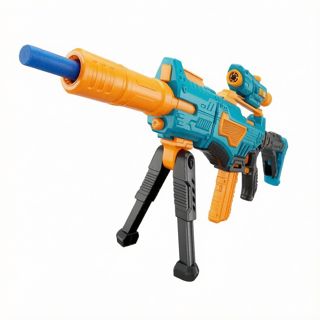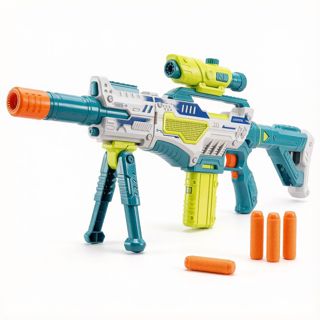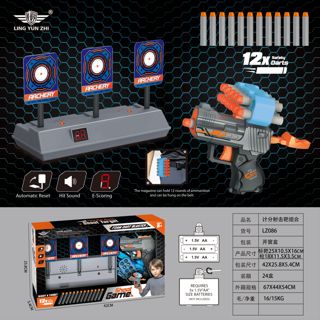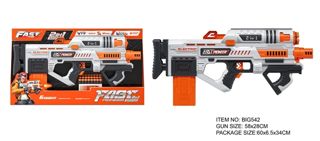
To verify a Chinese foam blaster factory in 2026, check its business license, conduct an on-site or third-party audit, request product certifications (EN71, ASTM F963, CPSIA), and test pre-production samples before committing to a bulk order. This guide walks through each step, focusing on cost, margin, and MOQ trade-offs, so you can source confidently from hubs like Chenghai or Shantou without getting burned.
Key Takeaways
- Always verify the business license and legal registration through Chinese government databases or a third-party service; a mismatch is a deal-breaker.
- Conduct a factory audit—either in person or via a reputable third party—checking production capacity, quality control processes, and safety records.
- Require certifications that match your target market: ASTM F963 and CPSIA for the US, EN71 and CE for the EU, ISO 8124 for international, and others as needed.
- Test samples independently, not just the factory's word. Use a sealed golden sample for color and quality comparison during bulk production.
- Set clear AQL levels (e.g., critical, major, minor) in your contract to define acceptable defect rates; lower AQL numbers mean stricter quality.
Why Verify a Chinese Foam Blaster Factory?
Foam blasters are a popular toy category, but sourcing from China—especially from clusters like Chenghai in Shantou—carries risks: counterfeit certifications, inconsistent quality, and unexpected MOQs. A single bad batch can wipe out your margin and damage your brand. Verification protects your investment and ensures your products meet safety standards in your target market.
The cost of verification is minor compared to the cost of a recall or a failed shipment. A few hundred dollars for a third-party audit or sample test can save you thousands in lost goods and legal fees.
What Are the Benefits of Buying Wholesale Foam Blasters?
Wholesale foam blasters offer solid margins, especially when you buy directly from manufacturers. MOQs can be as low as 30-144 units for certain models, depending on the product, making it accessible for small to mid-sized importers.
You can customize products (OEM) to differentiate your brand, but be prepared for higher MOQs (typically 1000-3000 units) and longer lead times (25-45 days after sample approval).
Bulk buying reduces per-unit costs, but you must balance inventory risk with cash flow. Start with a smaller batch to test the market, then scale up.
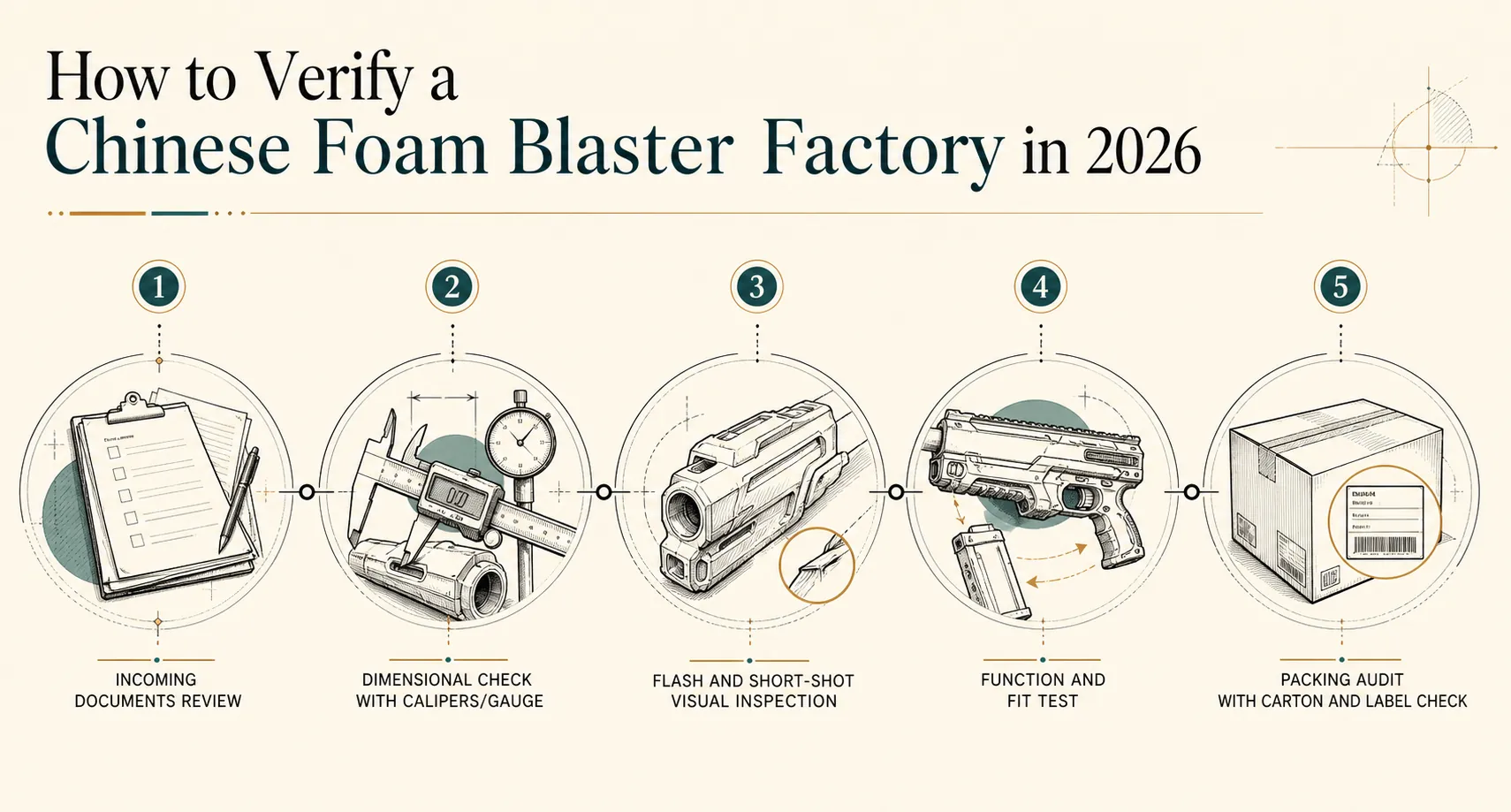
How to Verify a Chinese Foam Blaster Factory: Step-by-Step Checklist
Step 1: Check the Business License. Ask for the factory's business license and verify it through China's National Enterprise Credit Information Publicity System or a third-party verification service. Confirm the legal name, address, and business scope match what they claim.
Step 2: Conduct a Factory Audit. If possible, visit the factory or hire a third-party inspection company to audit production lines, quality control, and safety protocols. Check for proper equipment maintenance, worker safety measures, and evidence of past export experience.
Step 3: Verify Product Certifications. Request copies of valid certificates for your target market: ASTM F963 and CPSIA for the US, EN71 and CE for the EU, ISO 8124 for international, and others like CCC for China, ST for Japan, or GCC for Gulf countries. Confirm the certificates are current and issued by an accredited lab.
Step 4: Request and Test Samples. Ask for pre-production samples (or production samples if possible). Have them independently tested by a third-party lab for safety and quality. Keep a sealed golden sample for comparison during bulk production.
Step 5: Validate MOQ and Capacity Claims. Ask for proof of past production orders (e.g., bill of lading) to verify their capacity. Check if their MOQ claims are realistic given their production line size.
Step 6: Set Clear Quality Standards in Your Contract. Define AQL levels (Acceptable Quality Limits) for critical, major, and minor defects using ISO 2859-1. For example, AQL 0 for critical defects, 1.0 for major, and 2.5 for minor. This is your legal basis for rejecting a bad batch.
Step 7: Inspect Before Shipment. Use a third-party inspection service to check the final goods before they leave the factory. Verify product, packaging, markings, quantity, and documents against your order.
Verification Step | What to Check | Red Flag
| Business License | Legal name, address, business scope matches claims | Mismatched details or refusal to provide license |
|---|---|
| Factory Audit | Production lines, QC processes, safety records | Dirty or unsafe facilities, no QC staff |
| Certifications | Valid certificates for target market (e.g., EN71, ASTM F963) | Expired or unverifiable certificates |
| Sample Testing | Independent lab test results | Factory refuses to send samples or charges exorbitant fees |
| MOQ & Capacity | Proof of past orders, realistic production timeline | Claims of huge capacity without evidence |
| Quality Standards | AQL levels defined in contract | Vague or no QC terms in contract |
| Pre-Shipment Inspection | Third-party inspection report before dispatch | Factory pressures you to skip inspection |
Worked Example (illustrative, not a real shipment)
Imagine you're importing 5,000 foam dart blasters to the US, divided into two batches: 3,000 for a retail chain and 2,000 for online sales. You set AQL levels: critical 0, major 1.0, minor 2.5. A third-party inspection finds 150 units with minor defects (e.g., paint chips), which exceeds the AQL 2.5 limit for a batch of 3,000 (which allows 14 defects). You reject the batch, and the factory must rework it. This protects your retail contract and your brand reputation.
What to Ask Suppliers: RFQ Checklist
Before placing an order, ask these questions to every supplier:
1. What is your MOQ for stock and OEM products?
2. Can you provide certificates for ASTM F963, EN71, CPSIA, or other standards I need? Are they current?
3. What is your lead time for bulk orders after sample approval?
4. Can you send me a pre-production sample for independent testing?
5. What is your AQL policy for final inspection?
6. Do you accept third-party inspections before shipment?
7. What are your payment terms (T/T, L/C)?
8. Can you share references or past export records?
FAQ
What MOQ should I expect for custom foam blaster orders?
For OEM custom orders, MOQs typically range from 1000 to 3000 units, depending on the factory and product complexity. Stock products may have lower MOQs, sometimes as low as one carton. Always confirm with the supplier.
Which certification do I need for foam blasters sold in the US?
For the US market, you need ASTM F963 and CPSIA compliance. These are stricter than EU standards, so verify that the factory's certificates are current and from an accredited lab.
How can I verify a factory's business license in China?
You can check the license through China's National Enterprise Credit Information Publicity System or use a third-party verification service. Confirm the legal name, address, and business scope match what the supplier claims.
What is AQL and why is it important for my order?
AQL (Acceptable Quality Limit) is a standard (ISO 2859-1) that defines the maximum number of defective units allowed in a batch. You set AQL levels for critical, major, and minor defects in your contract to reject unsatisfactory batches.
Should I use a third-party inspection service?
Yes, it's highly recommended. Third-party inspections before shipment can catch defects early, ensuring your goods meet quality standards and reducing risk of costly returns or recalls.
What are the red flags when vetting a foam blaster factory?
Red flags include: refusal to provide business license or certificates, unrealistic MOQ or capacity claims, poor factory conditions, unwillingness to allow inspections, and vague quality terms in contracts.
Sources
Request a Quote
Ready to source high-quality foam blasters from a verified factory? Contact us for a quote and let our experienced team guide you through the process, with certifications and quality checks you can trust.