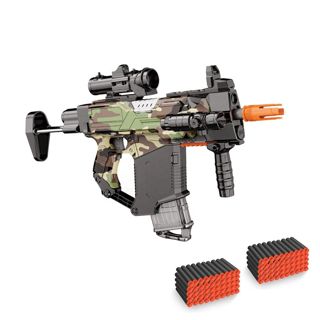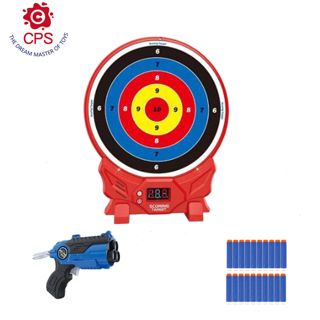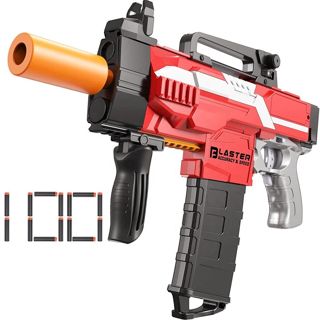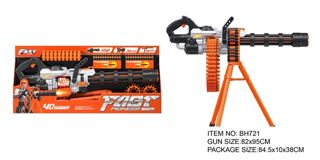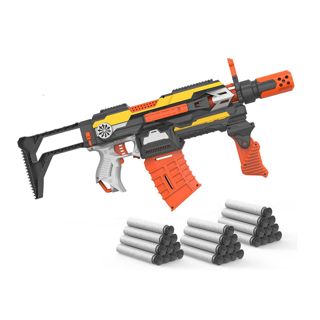
Approve a foam-dart blaster's jam-clearing and reloading instructions only when a buyer or QA staffer can physically follow them on the final production sample — a test report, CPC or EU Declaration of Conformity will not confirm that the wording is safe, complete or matched to the mechanism. Reports and certificates cover chemical, mechanical and physical properties under a named standard edition; they do not audit your instruction sheet. For importers, Amazon sellers and private-label buyers, that splits the decision in two: treat the conformity documents as scope evidence, and treat the instruction sheet as a separate engineering document that must be walked through, step by step, on the sample you are about to release.
What follows is a reading method. One table shows what each common document row proves and does not prove. One section unpacks the row buyers misread most often — the standard-edition citation. The FAQ answers the questions that come up before a PO is signed. Nothing here tells you a specific factory or SKU is certified, because no supplied record supports that claim.
What does each compliance document actually prove?
| Toy test report (ASTM F963 / EN 71 series) | Proves: the tested configuration was assessed against the named standard edition for the properties covered by that edition. Does not prove: that the jam-clearing and reloading instructions are correct, legible, translated or matched to the shipped mechanism. Question if blank: which product configuration, age grade and standard edition were tested? |
|---|---|
| Children's Product Certificate (CPC) | Proves: a written certificate exists, based on third-party testing at a CPSC-accepted laboratory, citing applicable children's product safety rules and naming the responsible parties. Does not prove: instruction content, diagram quality, or that the SKU in your carton matches the tested unit. Question if blank: is the CPC issued for this product identification, and who maintains the test records? |
| EU Declaration of Conformity / CE marking | Proves: the manufacturer or importer has drawn up a conformity document that belongs to the EU conformity process and must be matched to product scope. Does not prove: that the toy's instructions cover jam access, projectile specification or adult-supervision language. Question if blank: which essential safety requirements were assessed, and against which current consolidated text? |
| GPSR-related product and traceability information | Proves: importer, manufacturer and product-identification information can be mapped to the relevant market role under a separate legal instrument. Does not prove: anything about blaster instructions, darts, or jam clearing. Question if blank: which party is named as importer for this destination? |
| Tracking label / lot marking | Proves: where applicable, permanent tracking information supports product identification, and packaging, markings and lot control are reviewed together. Does not prove: that the instruction sheet in the box is the version you approved. Question if blank: how does the lot code on the carton tie back to the instruction revision? |
| Age-grade and small-parts assessment | Proves: age grading and small-part risk were assessed for the actual product configuration, including assemblies and detachable accessories. Does not prove: that the age statement printed on the instruction sheet matches the graded configuration. Question if blank: does the detachable projectile or any accessory change the age grade? |
| Catalog / order record (materials, packing, carton data) | Proves: a recorded material, packing type, reference MOQ and carton figure exist for a named SKU in the scoped catalog snapshot. Does not prove: certification, age suitability, licensing, stock or factory capacity. Question if blank: has the sample, current quote, age evidence and destination documents been reconfirmed? |
Which standard edition was actually tested — and does it still apply?
The standard-edition line is the one that gets read as a blanket approval, and it is the one that says the least about jam clearing. A report should identify the product configuration, age grade and standard edition — and the applicable edition has to be read from the current regulation before a report is quoted, not from the report's own cover page. When a supplier sends a page that names ASTM F963, the useful question is not "are we compliant" but "which edition, for which configuration, and is that the edition the current regulation points to today."
The same discipline applies on the EU side. According to the EU Toy Safety Directive 2009/48/EC, toy products placed on the EU market must meet the applicable essential safety requirements, and CE marking together with the EU Declaration of Conformity belongs to that conformity process and must be matched to the product scope. According to the European Commission's 2026 statement on new EU toy safety rules, the framework is being substantially strengthened; a proposal adopted by the European Parliament is not the same thing as an applicable date for your product category. Treat any timeline you have not read in the official text as unconfirmed rather than as a deadline.
Two more traps sit next to the edition line. First, a CPC is product-specific and should not be described as a blanket factory certificate — a factory-level ISO sheet is not a substitute. Second, the General Product Safety Regulation 2023/988 is a separate legal instrument from the Toy Safety Directive; importer, manufacturer and product-identification duties under it should not be collapsed into the same deadline as toy conformity. Keep the three in separate columns of your own file: toy safety directive status, GPSR role mapping, and US certificate status.
Then walk the sample, because no document covers this part. Is there a stated power-off step before any jam access? Is finger placement described so a hand never enters the path of a spring or moving part? Does the reloading sequence name the projectile type the product actually ships with? Does the sheet tell an adult when to take over? Diagrams carry the same weight as text here — a correct sentence with an ambiguous picture still fails in the hands of a twelve-year-old.
If the instruction sheet is a photocopied generic page, stop. That is the failure mode this review exists to catch, and it is invisible in every test report row above.
FAQ
Do a test report or CPC prove that the jam-clearing instructions are safe?
No. Reports and the CPC address the tested configuration against named safety rules and properties; they do not audit instruction wording, diagrams, translation, power-off steps, finger placement or reloading sequence. Approve instructions only by following them on the final sample.
Which document should I request first for a foam-dart blaster sold to children?
Start with the product-specific certificate and its supporting test report, then the instruction sheet. According to CPSC business guidance, children's toys generally require testing at a CPSC-accepted laboratory and a Children's Product Certificate; a CPC is product-specific and should not be treated as a blanket factory certificate.
Can a supplier say the product is "CE certified" and leave it there?
Treat that as incomplete. Under the EU framework, CE marking and the EU Declaration of Conformity belong to the conformity process and must be matched to the product scope — so ask which essential safety requirements were assessed, for which configuration, and against the current consolidated text.
Does the new EU toy safety discussion create a fixed deadline for my SKU?
Not from the material available here. The European Commission has stated that EU toy safety rules are being substantially strengthened, but an adopted proposal is not the same as an applicable date for a specific product category. Where the official text does not confirm the date, record the timeline as unconfirmed and keep your release decision on current documents.
What should I do if the test report or certificate has a blank field?
Do not fill it in yourself and do not accept a verbal answer. Ask the supplier to complete it — product identification, applicable rule citation, responsible party, manufacture and testing dates and places, and laboratory identification for a CPC — and hold the release until the completed version matches the sample.
How do I connect the instruction sheet to the carton I receive?
Use the tracking and lot discipline. Tracking information should be permanent where applicable, and packaging, product markings and lot control should be reviewed together, so the instruction revision approved at sample stage can be tied back to the shipped lot rather than assumed.
Sources
Before you sign off the next blaster order
Run the sample walk-through once, on the unit you are about to approve, with the instruction sheet in hand. If any step — power-off, jam access, finger placement, projectile type, adult-assistance language or diagram — cannot be followed by someone who has never seen the product, the sheet is not ready, whatever the report says. Buyers who want to start from recorded specifications and packing data can review the foam blaster range and request the current sample and documents for the configuration they intend to release.