Authorize shipment only when the invoice, packing list, inspection report, and declarations all name the same models, lot codes, and production configuration you approved. The post-production document pack is the final gate confirming that the goods on the dock are the goods you tested and ordered.
This checklist covers invoice and packing alignment, final reports, declarations where applicable, lot codes, inspection reports, carton data, artwork versions, and change records. Each step gives you a checkpoint to verify and a question to ask your supplier. The goal is a clear wholesale decision: release, hold, or reject.
Key Takeaways
- Invoice and packing list must match exactly on model, quantity, and carton data. A mismatch is a fast route to a customs query or a Form 28/29 inquiry.
- A type-test or golden-sample report does not automatically cover a later production lot. Match the report to the SKU, materials, colors, and production date on the PO.
- Incoterms define risk transfer, not product-safety compliance. Write the Incoterms version and named place as actually booked—Shantou or Shenzhen—not as assumed.
- A failed lot must be isolated, the defect class recorded, and release only after rework. The AQL number comes from the agreed inspection plan on the PO, not from a catalogue sentence.
- Peak-season mould swaps and verbal color changes eat lead time. Get the freeze date, change-over hours, and press job in writing before you authorize shipment.
What is a post-production document pack, and why does it decide shipment release?
A post-production document pack is the set of commercial, technical, and regulatory records that identify exactly what was built, inspected, and packed for a specific lot. It is the buyer's final tool to confirm that the tested, ordered, and shipped goods are the same. Without it, you are authorizing freight on trust, not evidence.
The pack typically includes the commercial invoice, packing list, inspection report, test or compliance reports where applicable, lot or batch codes, carton data, artwork version records, and change records. Not every shipment requires every document. The exact set depends on the product, destination market, importer, and applicable regulations.
How do I align the commercial invoice with the packing list?
Start by placing the commercial invoice and packing list side by side. The invoice must show complete seller and buyer names and addresses, including the Importer of Record EIN or IRS number where applicable, a precise goods description, the 10-digit Harmonized Tariff Schedule code, unit value, total value, and country of origin. The packing list must show carton count, quantities, weights, and package marks if used—and it must match the invoice exactly.
A mismatch between invoice quantity and packing list quantity is a fast route to a customs query. Vague descriptions like 'general merchandise' or 'samples' are weak. Customs teams often need material type, intended use, model references, or technical category.
Checkpoint: Invoice models, quantities, and carton data equal packing list models, quantities, and carton data. Red flag: The packing list shows pieces-per-carton data that does not match the retail-ready packaging actually shipped.
Ask the supplier: 'What are the invoice and packing list quantities per model, and do they match the pieces-per-carton data on the cartons?'
Which final reports and declarations apply to this lot?
A type-test or golden-sample report does not automatically cover a later production lot. Importers should match report SKU, materials, colors, and production date or cohort to the PO. If the report names a different SKU or a different production window, it does not cover this shipment.
For declarations, map each market to the file that covers it. A UKCA technical file and a VOC file on an electric bubble machine are different papers for different purposes. One certificate cannot cover both. Map market, lot, and which file covers which test. Paperwork that does not match the lot is not paperwork.
Checkpoint: Each declaration is mapped to a destination market and names this lot. Red flag: A certificate is reused across markets or across product categories without matching the lot.
Ask the supplier: 'Which file covers which test for each destination market, and does each file name this lot?'
Do lot codes and tracking labels appear on the product or pack?
Lot codes and tracking labels are not decoration. A US children's lot shipped with a barcode and no tracking label content is a compliance gap. Add the manufacturer, date, and lot on the product or pack as required. Keep the CPC matched to the SKU, not to the factory door.
Verify that the lot code on the product or pack matches the lot code on the inspection report and the packing list. If the lot code is missing, the inspection report cannot be tied to the shipped goods.
Checkpoint: Manufacturer, date, and lot appear on the product or pack where required; the CPC is matched to the SKU. Red flag: The lot code on the carton does not match the lot code on the inspection report.
Ask the supplier: 'Is the CPC matched to this SKU, and where do manufacturer, date, and lot appear on product or pack?'
What should the final inspection report cover before release?
Final inspection should verify the product, packaging, markings, quantity, documents, and test status before shipment release. The report must cover the lot being shipped, not a previous lot or a golden sample. If a failed lot was isolated, the defect class must be recorded, and release only after rework.
Do not rely on a catalogue sentence for the AQL number. The number comes from the agreed inspection plan on the PO. If the report cites an AQL that does not match the PO, stop and reconcile it before authorizing shipment.
Checkpoint: Inspection report covers the shipped lot; any failed lot was isolated and reworked before release. Red flag: The report covers a different lot or does not reference the PO inspection plan.
Ask the supplier: 'What AQL number and inspection plan are on the PO for this lot, and which specific lot does the inspection report cover?'
How do I verify carton data and artwork version?
Carton data must match the packing list and the physical cartons. Check carton count, dimensions, gross weight, net weight, and pieces-per-carton data. If the packing list says one configuration and the carton says another, the document pack is not aligned.
Artwork version is a frequent gap. Confirm the artwork version on file matches the revision card, not a Fair photo. At a trade fair, a booth sample is often a hero unit. The revision card is the production standard; a Fair photo is not. Label tool number and revision, and refuse to take a Fair photo as the production standard.
Checkpoint: Carton data matches packing list; artwork version matches the revision card. Red flag: Artwork on the carton does not match the approved revision, or the supplier cannot produce a revision number.
Ask the supplier: 'What is the artwork version and revision number on the revision card, and does it match the file sent?'
What change records should I require for peak-season production?
Peak season mould swaps eat lead time. A verbal 'quick colour change' in September has missed more vessels than steel problems. Write the freeze date, the change-over hours, and which job is on the press. A production lead time quoted without peak notes is not reliable.
Any change to material, color, artwork, or packaging must be recorded and traced across the document set. Supplier records for materials, production, inspection, change control, and testing should be retained long enough to support the buyer's market and recall obligations.
Checkpoint: Freeze date, change-over hours, and press job are written and match the production timeline. Red flag: Changes are communicated verbally or only by email without a written change record.
Ask the supplier: 'What is the written freeze date, change-over hours, and which job is on the press for this run?'
What is the release decision rule for the document pack?
Authorize shipment only when the invoice, packing list, inspection report, declarations, lot codes, carton data, and artwork version all identify the same models and production configuration. If any document disagrees, hold the shipment and resolve the discrepancy before release.
Incoterms define when risk transfers between seller and buyer; they do not define product-safety compliance or ownership of test reports. Write the Incoterms version and named place as actually booked. FOB without a named place starts a freight argument that lasts longer than production.
Checkpoint: All documents align on model, lot, quantity, and configuration. Red flag: One document disagrees and the supplier pressures you to release anyway.
Ask the supplier: 'What is the Incoterms version and the named place as actually booked—Shantou or Shenzhen?'
Post-Production Document Pack Checklist: What to Check and What Triggers a Hold
| Invoice vs. packing list alignment | Check: Model, quantity, carton data match. Red flag: Invoice quantity differs from packing list quantity. |
|---|---|
| Final inspection report | Check: Covers the shipped lot; failed lot isolated and reworked. Red flag: Report covers a different lot or no PO inspection plan reference. |
| Declarations where applicable | Check: Each declaration mapped to market and lot. Red flag: Certificate reused across markets or product categories. |
| Lot codes and tracking labels | Check: Manufacturer, date, lot on product or pack; CPC matched to SKU. Red flag: Lot code missing or mismatched with inspection report. |
| Carton data | Check: Carton count, dimensions, weights, pieces-per-carton match packing list. Red flag: Physical carton data differs from document. |
| Artwork version | Check: Artwork version matches revision card. Red flag: Artwork matches a Fair photo, not the approved revision. |
| Change records | Check: Freeze date, change-over hours, press job written. Red flag: Verbal color change or mould swap not documented. |
| Incoterms and named place | Check: Incoterms version and named place as booked. Red flag: FOB without a named place. |
Worked example (illustrative, not a real shipment)
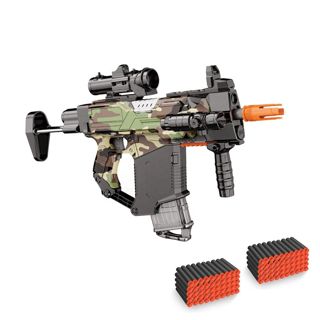
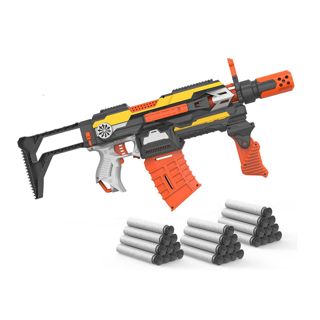
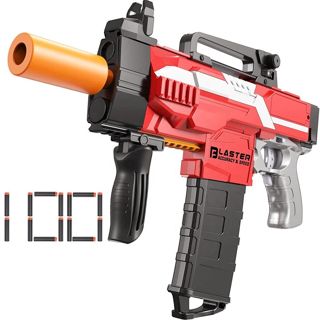
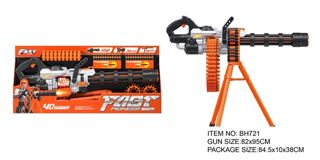
A buyer orders 3,000 units of a motorized foam dart blaster for two destinations: a US Amazon FBA shipment and an EU retail distributor. The PO specifies retail-ready packaging for the US and plain cartons for the EU, with different artwork versions for each.
At the document review stage, the buyer finds that the packing list shows the US pieces-per-carton data for both destinations. The EU cartons are packed to a different configuration. The inspection report covers the US configuration but does not mention the EU lot. The artwork version on the EU carton does not match the revision card.
The release decision: hold the EU portion. The US portion can proceed only if the inspection report is confirmed to cover the shipped lot and the packing list is corrected. The EU portion requires a corrected packing list, a lot-specific inspection report, and artwork confirmation before release. This is a document inconsistency, not a production defect—but it can still delay the vessel.
What to ask suppliers before authorizing shipment
Use this RFQ checklist to close the document pack. Ask each question in writing and keep the answers with the shipment file.
1. What AQL number and inspection plan are on the PO for this lot?
2. Which specific lot does the inspection report cover, and what defect class was recorded on any isolated lot?
3. Which file covers which test for each destination market, and does each file name this lot?
4. Is the CPC matched to this SKU, and where do manufacturer, date, and lot appear on product or pack?
5. What is the Incoterms version and the named place as actually booked—Shantou or Shenzhen?
6. What is the written freeze date, change-over hours, and which job is on the press for this run?
7. What is the artwork version and revision number on the revision card, and does it match the file sent?
8. Which sealed golden sample is the physical standard for this SKU, and what tool number and revision does it carry?
FAQ
What is a post-production document pack?
It is the set of commercial, technical, and regulatory records that identify what was built, inspected, and packed for a specific lot. It typically includes the commercial invoice, packing list, inspection report, declarations where applicable, lot codes, carton data, artwork version, and change records.
Does a type-test report cover my production lot?
No. A type-test or golden-sample report does not automatically cover a later production lot. Importers must match the report's SKU, materials, colors, and production date or cohort to the PO. If the report names a different SKU or production window, it does not cover the shipment.
What is the most common document mismatch that delays shipments?
Invoice and packing list quantity mismatches are a fast route to a customs query. Vague product descriptions also trigger clarification requests. Both should be resolved before the shipment leaves origin.
Do I need a Certificate of Analysis for every toy shipment?
Not every shipment requires every document. The exact document set depends on the product, destination market, importer, and applicable regulations. Confirm requirements by market and customer before production or shipment.
How long should I keep supplier documents?
Supplier records for materials, production, inspection, change control, and testing should be retained long enough to support the buyer's market and recall obligations. Many customs authorities require import records to be retained for five to seven years.
What should I do if the inspection report covers a different lot?
Hold the shipment and request a lot-specific inspection report. The report must cover the lot being shipped, and any failed lot must have been isolated, defect class recorded, and released only after rework. Do not authorize shipment on a report that does not name the shipped lot.
Sources
Request a Quote
Ready to source foam dart blasters with a document pack that matches your market requirements? Send us your target models, destination market, and packaging specifications. We will confirm the document set, lot traceability, and inspection plan before you authorize shipment.