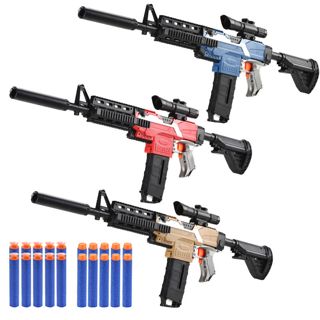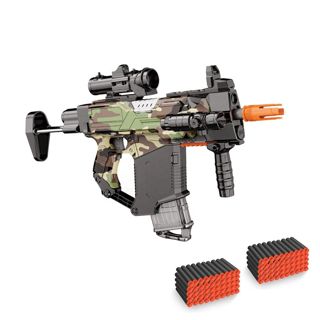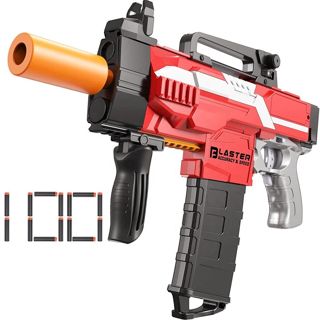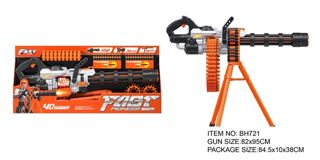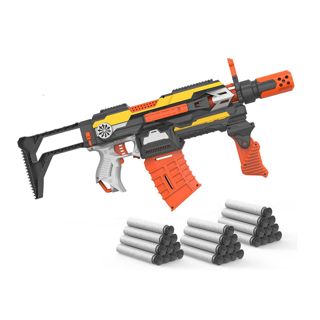

Yes — a six-shot blaster can be OEM or ODM customized, and the box is where you decide whether the premium finish survives the ocean. The practical split is simple: choose Stock+Logo when you need speed and low volume, choose ODM when you want an existing blaster design under your brand, and choose full OEM when you own the shell design and the volume justifies a mold. Typical customization MOQ bands in this category run from about 8–10 pcs for logo-and-sticker work on catalog items up to roughly 120 pcs for molded-shell runs, with packaging-only customization sitting in between. If the finish is the selling point, the insert — not the print — is the product.
Key Takeaways for Buyers
- Finish damage in transit is a packaging failure, not a toy defect. A six-shot blaster whose coating scuffs or chips in the carton arrives as a markdown, whatever the factory paint spec said.
- Insert type drives both cost and protection. A die-cut paper or EVA insert is a no-tooling change you can quote fast; a thermoformed or molded insert needs its own tool and its own sample round.
- Material disclosure has to travel with the SKU. Ask for documentation per SKU covering both the blaster and the packaging — a file that covers only one of the two leaves a gap at retail or at customs.
- MOQ is set by what you change, not by the carton. Logo and packaging work sits at the low end of the catalog band (roughly 8–10 pcs on several blaster SKUs), while new molded shells and full ODM tooling push you toward the 90–120 pcs band.
- One certificate never covers two papers. Map market, lot and which file covers which test before you print a compliance claim on the box.
Which Is Right for You: Private Label vs Full OEM vs Stock+Logo?
Private label means you take an existing blaster and put your brand on it; full OEM means the shell, the mold and the tooling are built to your design. Pick Stock+Logo if you need a first container fast and your volume sits in the low band — logo printing, a branded sleeve or a sticker program on a catalog SKU. Pick ODM if you want a differentiated blaster without paying for a mold: an existing design, your brand, your packaging. Pick full OEM only when you own the design, you can defend the volume, and you accept that the tool has a lead time of its own before the first production unit exists.
The cost logic behind that choice is boring and worth writing down. A no-tooling change costs artwork and setup. A tooling change costs a mold plus a sample round plus a first-article check. If you plan to sell a few hundred pieces into a gift channel, the mold never pays back. If you plan to reorder the same shell for three seasons, it does.
Customization Options, Tooling and MOQ Logic
| Stock + Logo (logo print, sticker, branded sleeve on a catalog blaster) | No new tooling; MOQ generally the low end of the catalog band (several blaster SKUs list MOQ 8–10 pcs); lead time shortest — confirm per SKU |
|---|---|
| ODM (existing blaster design, your brand, your packaging) | Tooling usually not required for the blaster; packaging insert may need a die or a forming tool; MOQ set by the packaging change and the SKU |
| Full OEM (your shell design, your mold) | Mold required; MOQ and lead time both driven by tooling and first-article approval; quote only after the design freeze |
| Color change on an existing shell | No new mold; still needs a press change-over and a sealed golden sample; peak-season freeze dates apply |
| Insert: die-cut paper / EVA | No hard tooling in most cases; cheapest protection route; confirm retention with a drop test |
| Insert: thermoformed or molded tray | Tooling required for the tray; gives the tightest retention and the most premium unboxing; sample round needed |
| Packaging print and material (EU destinations) | No tooling; subject to a PPWR review of material composition, recoverability, waste prevention and information obligations |
| Material documentation per SKU | No tooling; supplied as paperwork — must cover both blaster and packaging |
| Age label and warning positioning | No tooling; a product-specific decision, not a universal 3+ stamp — see the age-positioning section below |
What Can Actually Be Customized on a Six-Shot Blaster?
Color, shell finish, branding, packaging and documentation are all customizable; the blaster's internal mechanism is the part you should not casually touch. Body color and finish are the easiest changes — same tool, different material batch and a new sealed golden sample. Logo can go on the shell (pad print or label), on the box, or both. Packaging is the widest open door: box structure, insert type, sleeve, sticker, hangtag, care notes and material disclosure line.
Where buyers get burned is treating a finish as a print. A premium look on ABS or ABS/EVA shells depends on mold surface, flow and post-process — and weld lines form where flow fronts meet, which can reduce local strength or leave a visible mark, especially around holes and inserts. On a shell with a scope or a rail, that mark lands exactly where the customer looks first.
How Do You Protect a Premium Finish Inside the Box?
Retention, not cushioning, is the first job of the insert. A blaster that can shift even a few millimeters inside the carton will rub its finish against the box wall through every handling step. The insert must hold the blaster, the scope or rail, and any loose accessory in fixed positions — then you confirm that with a physical transit test, not with a photo of the mock-up.
Molded and paper inserts solve different problems. A thermoformed tray gives tight, repeatable retention and the most premium unboxing, but it needs its own tool and a sample round. A die-cut paper or EVA insert is a no-tooling change that quotes fast and ships fast; it is the right call when the finish is matte or textured and the box is not the hero. Whichever you choose, write the retention method into the packaging brief and state the test method that proves it. Without a test method, 'finish protection' is a slogan.
What Should the Material Disclosure Say?
The disclosure must name exactly which materials the claim covers — the blaster, the insert, the box, and any printed component — and it must match the SKU on the PO. A per-SKU document that covers the toy but not the packaging leaves you exposed at retail, and a document that covers the packaging but not the toy leaves you exposed at customs. Ask for both, on the same sheet, tied to the same SKU.
This is not theoretical. A UKCA file and a VOC file are not the same document, and buyers have tried to use one certificate for two different papers. The fix is a map: destination market → lot → which file covers which test. Paperwork that does not match the lot is not paperwork.
Does a 3+ Label Settle the Age Question?
No. A 3+ label is a product-specific age decision and it does not remove the need to evaluate foreseeable younger-child access when the marketing or design reaches that audience. A six-shot blaster that looks like a cartoon toy in the listing photos reaches younger children regardless of what the box says.
Run the review before you design the box, because the outcome changes the box. If the design uses a button cell, the compartment and the warning come first: check screw closure, tool access and warning placement before anyone discusses the toy's function. A compartment that opens with fingernails does not ship. The age call, the warning placement and the insert design are one conversation, and they all land on the same dieline.
What Is the OEM/ODM Process, Step by Step?
Inquiry and design freeze. Send the design or the catalog SKU, the destination market, the target volume and the finish you are protecting. Ask which tool number and revision the quotation refers to, and request the revision card. A quotation without a revision reference is not a quotation yet.
Quotation with Incoterms written out. Ask for the Incoterms version and the named place — Shantou or Shenzhen as actually booked. FOB without a named place has started freight arguments longer than the production run itself.
Sampling and proofing. For a no-tooling change, expect a pre-production sample of the packaging and the printed artwork. For a tooling change, expect a mold sample and a first-article check. Approve against a sealed physical golden sample on the QC shelf, not against a photo — emails do not end a color fight, and buyers who approve only a photo pay for it on the second lot.
Tooling and insert fabrication. Confirm who owns the tool and get it in writing before the mold is cut. Ask for the freeze date, the change-over hours and which job is on the press during peak season; a verbal 'quick colour change' in September has missed more vessels than steel problems.
Mass production. Production lead time without peak notes is fiction. Write the freeze date into the PO.
QC and lot release. Agree the inspection plan on the PO — that is the only legitimate source of any AQL number. On the floor, a failed lot is isolated, the defect class is recorded, and release happens only after rework. Compare bulk against the sealed golden sample for color, fit, flash and function.
Shipping and document handover. Confirm the file map (market → lot → certificate or test file) travels with the shipment, and that the material disclosure sheet matches the SKU on the PO.
Worked Example (illustrative, not a real shipment)
A private-label buyer orders one container of a six-shot blaster SKU split across two destinations: 60% to a US gift channel and 40% to an EU retailer. The US allocation uses a die-cut paper insert and a plain brown corrugated shipper; the EU allocation uses the same blaster but a thermoformed tray and a printed sleeve, because the EU listing needs a premium shelf presence and a PPWR-reviewed packaging material.
Where the shipment gets held: the EU allocation. The tray tool was cut late, so the first-article check slid past the production freeze date, and the thermoformed tray was not sampled against the actual shell. The tray retention was tight enough to scuff the finish at the scope mount, and the packaging material composition had not been reviewed against PPWR information obligations. The US allocation, with the cheaper paper insert, arrived clean — because the insert was sampled early and the retention was proven, not assumed. The lesson is not 'paper beats plastic.' It is that the tooled insert is the one that needs the sample round, and the destination market is the one that needs the paperwork map.
What Do You Need to Send to Quote a Custom Order?
Send the artwork as vector (AI, EPS or PDF with outlines), the Pantone reference for every branded color, the destination market, the target volume, and the packaging requirement. If you have an existing box, send the dieline or the physical sample. If you need a molded insert, send the blaster's outer envelope dimensions and a sample of the shell — the tolerance stack of multiple molded parts, inserts, fasteners and post-processes determines the final fit, not a single dimension on a drawing.
For a branded program, expect to supply the logo file, the color reference, the warning and care-note text you want printed, and the material disclosure wording you are willing to stand behind. Everything else — insert choice, dieline, tool number — is a joint decision that should be written down before the sample round starts.
Who Owns the Mold, and Will You Sign an NDA?
Mold ownership is negotiable and must be written into the agreement before the tool is cut; a factory that will not put tool ownership in writing is telling you something. Ask three questions in the same email: who owns the tool, what happens to the tool if we stop ordering, and can the tool be transferred. Get the answers on paper.
An NDA is standard practice for private-label work and you should ask for one before you send the design or the artwork. Ask for a mutual NDA that covers the design files, the dielines, the tool drawings and the customer list. A supplier who resists a mutual NDA on a private-label program is a supplier to re-evaluate.
Where Do Compliance Deadlines Actually Stand in 2026?
Treat regulatory timing as three separate states, not one date. A regulation's entry into force, the date it actually applies to this product category, and an unconfirmed date are three different things, and they are frequently reported as one. For plastic toy packaging sold into the EU, a PPWR review of material composition, recoverability, waste prevention and information obligations is the work item — the review is what you can act on now, regardless of how the calendar reads.
Do not merge Digital Product Passport requirements with GPSR or with the Toy Safety Directive; they are separate regimes and they do not share a single deadline. Where the official text does not confirm the date a rule applies to your category, the honest line in your compliance file is that the timeline is not confirmed from official text — not that the requirement is mandatory from a date someone put in a headline. A year in a secondary article title is not an application deadline.
FAQ: OEM and Private-Label Packaging for Six-Shot Blasters
What is the minimum order to customize a six-shot blaster with my logo?
Logo and sticker work on catalog blasters sits at the low end of the band — several blaster SKUs in this category list MOQ around 8–10 pcs, while others run 36–120 pcs. Your actual number depends on the SKU and whether you also change the packaging; confirm the MOQ against the specific SKU before you budget.
Does a custom insert require a mold, and who pays for it?
A die-cut paper or EVA insert usually needs no hard tooling, while a thermoformed or molded tray needs its own tool. Who pays is a commercial negotiation — the default is that the buyer funds the tool, so get tool ownership in writing before it is cut.
Can you print our logo and our packaging design?
Yes. Logo can go on the shell, the box, the sleeve and the hangtag, and the packaging print is fully customizable. Send vector artwork, the Pantone reference for each color, and the warning and care-note text you want printed.
Will you sign an NDA before we share our design files?
Ask for a mutual NDA before sending design files, dielines or tool drawings, and make sure it covers the customer list as well. A supplier who resists a mutual NDA on a private-label program is a supplier to re-evaluate.
How long does sampling take for a custom box and insert?
A no-tooling packaging change samples fastest; a tooled insert adds a tool build plus a first-article round. Exact durations vary by spec and by peak-season press loading, so write the freeze date and change-over hours into the PO and treat any lead time without peak notes as fiction.
Can we use one certificate for both the US and the EU shipment?
No. Map market, lot and which file covers which test — a UKCA file and a VOC file are different papers, and packaging material composition for EU destinations needs its own PPWR review. Paperwork that does not match the lot is not paperwork.
How do we stop the finish from scuffing during shipping?
Make retention the first requirement of the insert, then prove it with a physical transit test rather than a mock-up photo. Compare bulk production against the sealed golden sample for color, fit, flash and function before release.
Sources
Send Your Design and Specs for a Custom Quote
Send the blaster SKU or your shell design, the destination market, the target volume, your logo artwork and Pantone references, and the packaging requirement. If you need a molded insert, include the outer envelope dimensions and a note on which finish you are protecting. You will get back a quotation with the tool number and revision, the Incoterms version and named place, the MOQ for the exact configuration, and the sample route — so you can compare it against any other factory on the same terms.