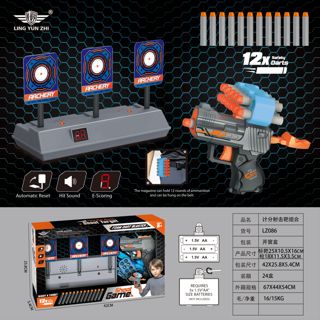
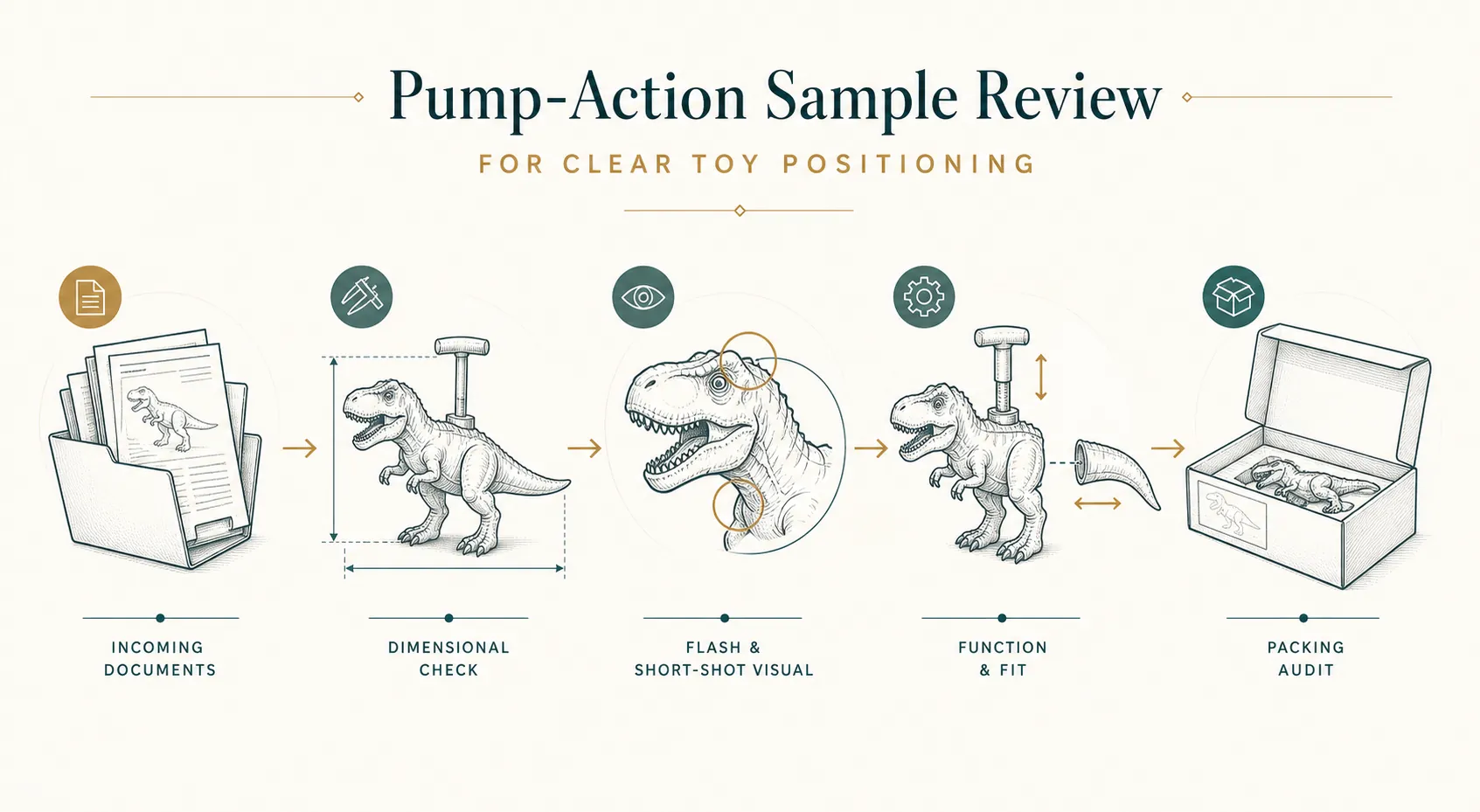
A pump-action blaster earns your approval only when its pump cycle, loading, grip clearance, bright styling, packaging imagery, and market paperwork all match the channel you are selling into. A pump that cycles smoothly means nothing if the bright colorway breaks a retailer's visual rule or the box art shows a different dart count than the catalog name. This guide gives importers, Amazon sellers, supermarket buyers, gift distributors, and private-label buyers a repeatable sample-approval workflow that ends in a clear go/no-go decision. No invented FPS, range, dart-count, certification, or MOQ numbers appear here; where data is missing, the workflow tells you exactly what to ask the supplier.
Start with the sealed golden sample on the QC shelf, not a marketing photo. A booth sample at a trade fair is often a hero unit built to impress, and fair lighting lies; the revision card on the table is the only trustworthy reference. Compare bulk units against that physical piece for colour, fit, flash, and function before any styling discussion begins.
Key Takeaways
- Approve a pump-action blaster only when operation AND appearance both pass for your destination channel; a functional win does not offset a styling or packaging mismatch.
- Judge colour against the sealed golden sample, never against a photo or a trade-fair image — emails do not win a colour argument in Chenghai, the physical piece does.
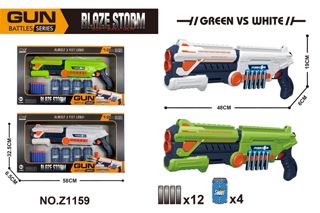
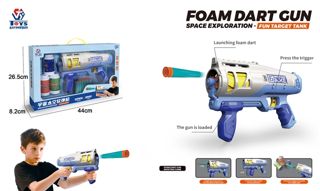
- Verify that packaging imagery (box art colour, configuration, dart count) matches the actual product; a mismatch is a hard blocker for retail, not a minor fix.
- Map every certificate (e.g., UKCA, VOC) to the specific market and lot it covers — using one document for an unrelated test is paperwork that does not match the lot, which is not paperwork.
- Never accept an AQL number from a catalogue sentence; the only valid number comes from the agreed inspection plan written into the PO.
Why destination review comes before the pump test
The hardest failures in toy sourcing are not mechanical — they are mismatches between what the product is and what the channel expects. A pump-action foam dart blaster with a bright colourway may be perfectly functional, yet a gift distributor targeting a muted, minimalist retail aesthetic will reject it on sight. Supermarkets and large retailers enforce visual rules as strictly as safety standards.
This is why the review sequence matters. You check styling and packaging before you invest time in cycle testing. If the appearance fails the destination test, the pump performance is irrelevant. The reverse is also true: a beautiful box that matches the catalog photo but contains a blaster with a sticky pump action will generate returns and chargebacks that erase the margin.
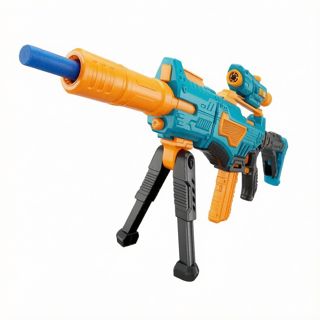
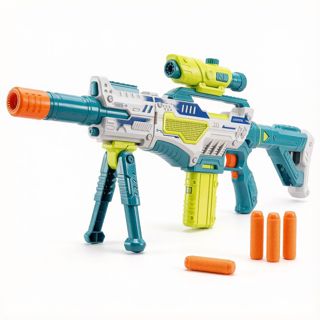
The CPSC Toy Safety Business Guidance reinforces one appearance rule that is non-negotiable for this product category in the US market. Section 4.30 of ASTM F963, codified at 16 C.F.R. part 1250, requires permanent bright colorations or markings on toy guns to minimize resemblance to real firearms, and these markings must survive use-and-abuse testing. A bright colourway is therefore not just a styling choice — for a pump-action blaster sold in the US, it is a compliance feature.
For toys primarily intended for children 12 and under, third-party testing and a Children's Product Certificate (CPC) are mandatory. For products aimed at ages 13+, ASTM F963 still applies, but third-party testing and a CPC are not required. Confirm your age grade before you request certifications, because the paperwork map changes with it.
How to run the pump cycle and grip clearance checks
Pump-action mechanism testing is straightforward, but it needs a protocol, not an impression. Take the golden sample and one bulk unit from the lot. Cycle the pump fully forward and fully back, and record three things: the number of cycles before any sticking or resistance change, the feel of the resistance (smooth vs. gritty), and whether the action returns to battery consistently. If the supplier has lab data on cycle count before failure, ask for it; if they do not, this becomes a question on your RFQ, not a guess in your notes.
Grip clearance is the dimension buyers most often skip and users most often feel. Measure the gap between the pump grip and the trigger guard or barrel in both the forward and rear positions. Compare those measurements against the golden sample. If no tolerance spec exists in your documentation, ask the supplier for the measured values and the acceptable deviation. A pump that pinches on the forward stroke will fail in a child's hands even if it passes a 100-cycle bench test.
Loading instructions deserve the same scrutiny. Confirm that the dart count shown on the packaging matches the catalog name exactly. Do not assume the box reflects the current production configuration — packaging imagery is a known source of drift between SKU revisions. If the catalog name says six darts, the box must show six darts, and the blaster must accept six darts. Any mismatch is a blocker.
What to check in packaging and paperwork before you commit
Line clearance is the quiet killer of otherwise good orders. Before a new SKU runs, the factory must clear the previous SKU's labels, colours, and work instructions from the hopper. A mixed label reaching a retailer is a chargeback event, not a quality quibble. Ask your supplier to confirm line clearance in writing before production starts, and verify it during the pre-production meeting.
Packaging for corner-sensitive goods is a booking-file decision, not a warehouse wish. LCD tablets and similar products die in LCL when the booking instruction is vague. Write double-wall cartons, corner boards, ECT rating, and pallet height directly into the shipping instruction. Claims are won on the booking file, not on a thank-you note.
Paperwork mapping is the final gate. A UKCA mark and a VOC file on an electric bubble machine are different documents covering different tests; one cannot substitute for the other. Map each market, each lot, and which certificate covers which test. If the certificate does not carry the lot number, it does not cover the lot.
For EU-bound plastic toy packaging, note that the Packaging and Packaging Waste Regulation (PPWR) requires a review of material composition, recoverability, waste prevention, and information obligations. This is a separate obligation from the toy safety directive — do not conflate the two deadlines or documents.
If the toy contains a button or coin cell, both battery-law review and child-access/ingestion hazard review are required. One does not replace the other.
On the regulatory timeline: ASTM F963 has been mandatory under CPSIA, but official text does not confirm a specific new application date for any 2026 revision referenced in secondary articles. The timeline is not confirmed from official text. Confirm the applicable version with your testing lab for the current production year.
Sample Approval Checklist: What to Check and What Flags a Problem
| Pump cycle | Check: cycle count before sticking, resistance feel, return-to-battery consistency on golden sample and one bulk unit. Red flag: gritty resistance or inconsistent return; no lab data available — ask for it. |
|---|---|
| Grip clearance | Check: gap between pump grip and trigger guard/barrel in forward and rear positions, compared to golden sample. Red flag: no documented tolerance; pinch risk on forward stroke. |
| Loading instructions | Check: dart count on packaging matches catalog name and actual blaster capacity. Red flag: box art shows a different count than the product accepts. |
| Bright styling | Check: colourway and finish match destination channel rules and ASTM F963 Section 4.30 permanent bright coloration requirement. Red flag: styling approved from photo, not golden sample. |
| Packaging imagery | Check: box art colour, configuration, and dart count match the actual product. Red flag: any mismatch — this is a hard blocker for retail. |
| Paperwork mapping | Check: each certificate (UKCA, VOC, CPC) carries the correct lot number and covers the destination market. Red flag: one certificate used for an unrelated test or missing lot number. |
| Line clearance | Check: previous SKU labels, colours, and work instructions cleared from hopper before this run. Red flag: mixed label risk reaching a retailer. |
| Packaging & shipping spec | Check: double-wall cartons, corner boards, ECT, and pallet height written into the booking instruction. Red flag: vague booking instruction for corner-sensitive goods. |
| Final decision | Approve only when operation (pump, loading, grip) AND appearance (styling, packaging, paperwork) both pass. If either fails, reject or request rework. |
Worked example: a 4,000-unit order, two destinations, one packaging difference
Worked example (illustrative, not a real shipment): A gift distributor orders 4,000 units of a pump-action foam dart blaster, splitting the lot between a US online retail channel and a UK gift-shop channel. The US portion needs a CPC and must show permanent bright coloration per ASTM F963 Section 4.30. The UK portion needs the UKCA mark and a PPWR review for the plastic packaging. The blaster itself is identical — but the packaging language and the paperwork differ.
During the sample review, the buyer catches two issues. First, the box art shows a six-dart configuration while the production model holds four darts. The packaging imagery fails the destination test for both channels — the box must be revised before any approval. Second, the supplier offers a single VOC file for both markets, but the UKCA mark and the VOC file are different documents covering different tests. The paperwork fails the lot-mapping check.
The pump cycle and grip clearance pass on the golden sample and the bulk unit. The bright orange body colour meets the ASTM F963 Section 4.30 requirement. But because the packaging imagery and the paperwork both fail, the model is not approved. The buyer rejects the lot for rework: new packaging art matching the four-dart configuration, and separate paperwork mapped to each market and lot. The rework costs time but avoids a mixed-label chargeback and a certificate mismatch at customs — which would cost far more.
This is the core of the workflow: approve only when both operation and appearance suit the destination channel. A smooth pump does not fix a wrong box.
What to ask suppliers in your RFQ and sample request
A useful toy RFQ states the destination market, age grade, materials and colors, packaging language, requested tests, sample policy, tooling terms, and the requested trade term. Build these questions into that document so the answers arrive with the first quote, not after the second inspection failure.
For the pump-action review specifically, send these questions with your sample request. What is the tested pump-cycle count before failure or sticking? What is the measured grip clearance in forward and rear positions, and what tolerance applies versus the golden sample? What exact dart count is printed on the packaging, and does it match the catalog name? Which certificate (UKCA, VOC, CPC, or other) covers this specific lot and market, and does the certificate carry the lot number? What is the agreed AQL and inspection plan on the PO for this lot? What is the MOQ for this SKU, and does it change with packaging or colourway changes?
These questions are not optional. If the supplier cannot answer the pump-cycle count, the grip clearance tolerance, or the dart-count match, that is a red flag in itself — it means the production standard has not been locked to a golden sample.
Remember the sample-type rule: a concept sample, appearance sample, engineering sample, golden sample, and production sample serve different approval purposes and should be labelled as such. Approving an appearance sample does not approve the engineering. Approving the golden sample does not approve the production run — that requires a production sample or first-article inspection.
For plastic parts, remember that warpage can result from uneven cooling, shrinkage, or orientation, and it should be measured on the assembled toy, not on a flat loose part. A pump-action blaster with a warped receiver will bind even if the individual parts look straight on the bench.
Cycle-time optimization at the factory should be validated against ejection temperature, dimensions, warpage, appearance, and mechanical performance — not judged only by output rate. A faster cycle that produces a warped part is a cost, not a saving.
FAQ: Pump-Action Sample Review and Wholesale Approval
What MOQ should I expect for a pump-action foam dart blaster?
The MOQ varies by SKU and supplier. For reference, catalog MOQs for similar ABS/EVA foam blasters range from 50 to 432 units depending on the model, with the tactical and space-theme variants typically around 54–216 units. Confirm the exact MOQ for your chosen SKU and ask whether it changes with packaging or colourway modifications.
How do I verify the pump cycle before approving a bulk order?
Run a cycle test on both the golden sample and one bulk unit. Record the number of cycles before any sticking or resistance change, the feel of the action, and return-to-battery consistency. If the supplier has lab data on cycle count before failure, request it. If no data exists, add the question to your RFQ rather than guessing.
Which certification applies to a foam dart blaster sold in the US?
ASTM F963 is mandatory for toys intended for children under 14 under CPSIA, and third-party testing plus a Children's Product Certificate (CPC) is required for toys primarily intended for children 12 and under. Section 4.30 requires permanent bright colorations to minimize resemblance to real firearms. For toys aimed at 13+, ASTM F963 applies but third-party testing is not required.
What is the difference between UKCA and a VOC file, and when do I need each?
A UKCA mark is the UK conformity marking, while a VOC (Verification of Conformity) is a separate document covering different tests. You cannot use one to satisfy the other. Map each certificate to the specific market, lot, and test it covers. If the certificate does not carry the lot number, it does not cover the lot.
What should I do if the packaging imagery does not match the actual product?
Treat it as a hard blocker. If the box art shows a different dart count, colour, or configuration than the product, reject the lot for rework. Do not ship it — a mixed or mismatched package reaching a retailer results in chargebacks and can trigger a compliance review.
How do I confirm the line is clear before my SKU runs?
Ask the supplier to confirm in writing that the previous SKU's labels, colours, and work instructions have been cleared from the hopper. Verify this during the pre-production meeting. Line clearance is a boring step, but a mixed label reaching a retailer is an expensive failure.
Sources
Request a Quote
Ready to put this workflow into practice? Send your destination market, age grade, target MOQ, and packaging language, and ask for the pump-cycle count, grip clearance tolerance, and dart-count confirmation upfront. A complete RFQ gets you a meaningful quote — one that separates tooling, samples, production parts, decoration, testing, packaging, freight, and taxes so you can compare like for like.