If a supplier answers "we improved quality" when you ask why a rotating-magazine blaster misfeeds, that is a containment answer, not a root-cause answer — and you should not release the corrected production until the cause and the containment are demonstrated with evidence. In a rotating-magazine blaster, misfeeds that look random almost always trace back to one of two places: an indexing tolerance between the magazine chamber and the feed path, or a dimensional difference between mold cavities on the same tool. Both are findable. Neither is fixed by sorting good units out of a bad lot.
This page walks through the actual investigation sequence a factory should run — failure reproduction, chamber indexing measurement, component measurement, mold-cavity pattern check, corrective tooling, validation samples, and lot containment — and translates each step into the specific evidence a wholesale buyer should demand before signing off on a reworked batch. No FPS, range, or dart-count claims appear here; those belong to your PO and your catalog, not to a blog post.
Key Takeaways
- Sorting is containment, not correction. A corrective and preventive action must address the cause of the defect and verify effectiveness; isolating a failed lot and recording the defect class is the floor's minimum, not the fix.
- Traceability is the tool that makes a root cause findable. A useful record links SKU, mold cavity, resin lot, component lots, production date, operator/process, and carton or pallet identifier — without it, you cannot tell a cavity problem from an assembly problem.
- A type-test or golden-sample report does not automatically cover a later production lot. Match the report's SKU, materials, colors, and production date/cohort to the PO before you treat it as evidence for the shipment in front of you.
- Tooling ownership, movement rights, maintenance, and storage are contractual matters. Paying a sample or development fee does not imply them; write fee, ownership, storage period, and idle-tool consequences into the document.
- Approving only a photo is a known way to pay for a problem on the second lot. The physical sealed golden sample on the QC shelf — compared for color, fit, flash, and function — is the reference that ends disputes.

How do you reproduce a rotating-magazine misfeed so the cause is visible?
You reproduce it before you explain it. A single misfeed on the line is an anecdote; a repeatable failure under a recorded condition is data. The starting discipline is to take the failed units and the retained units from the same lot, then run both through the same cycling sequence with the same magazine and the same ammunition type, and record where the cycle stops. If the failure follows the magazine, the problem is in the magazine. If it follows the blaster, the problem is in the feed path. If it follows neither and only appears in a subset of units, you are looking at a cavity or lot variable — which is the most common and the most misdiagnosed pattern.
On the floor, the first move with a failed lot is isolation and defect classification — not immediate rework. That record is what lets you compare the failed group against the retained group later. The AQL number, if a buyer wants one, comes from the agreed inspection plan on the PO, not from a catalogue sentence; the floor's job at this stage is classification, not scoring.
The practical output of this step is a failure condition written in one line: which units, which magazine, which ammunition, how many cycles, and what happened on each. That line is what every later measurement gets tested against.
Chamber indexing: the tolerance that decides whether a round feeds
Chamber indexing is the alignment between the magazine's chamber position and the feed path at the moment of release. If the chamber sits fractionally off, the round catches a lip, tips, or jams — and because the magazine advances through several positions per shot, the misfeed can appear on some shots and not others, which is exactly why buyers describe it as random. It is not random. It is positional.
The measurement approach is to check the chamber position at each index stop rather than only at rest, because a magazine that aligns perfectly at rest can drift under spring load or under the torque of the advance mechanism. Measure the same feature on the retained units from the same lot. If the failed units and the retained units differ on that feature, you have separated a tolerance problem from an assembly problem.
This is also where the catalog name matters and the marketing numbers do not. "Rotating magazine" describes a mechanism, not a performance specification; the investigation is about dimensional consistency, not about how many rounds the magazine holds or how fast it fires. Buyers who ask for feed-path measurements get a real answer; buyers who ask for a speed number get a number that will not help them.
Component measurements: separating the magazine from the feed path
Once you know the failure follows a component, measure that component against its drawing rather than against another finished unit. A finished unit carries accumulated variation from every part in the assembly, so comparing two finished units tells you they differ but not which part is responsible. Comparing the suspect part to its specification tells you which part is responsible.
The parts that matter in a rotating-magazine mechanism are the ones that define position: the chamber geometry, the advance interface, and the interface between the magazine and the feed path. Measure them on failed units, retained units, and — if available — the golden sample. Three-way comparison is what turns a suspicion into a finding.
Assembly matters too. If the same parts measure within specification but the assembled units behave differently, the variable is process: seating force, orientation, or sequence. That is still a root cause, and it still requires a corrective action on the process rather than on the part.
Mold-cavity patterns: when misfeeds cluster by cavity, not by design
A mold with multiple cavities produces parts that are nominally identical and dimensionally not. A cavity that runs slightly out of tolerance produces units that assemble and function on a bench but misfeed under cycling. The signature is a cluster: misfeeds concentrate in units traceable to one cavity, while units from the other cavities in the same lot behave. If your defect record cannot link a unit to its cavity, this pattern is invisible — which is why the traceability record has to include mold cavity alongside SKU, resin lot, component lots, production date, operator/process, and carton or pallet identifier.
The corrective action for a cavity problem is not sorting. If one cavity is out of tolerance, sorting removes the symptom from the shipment and leaves the cause in the tool. The corrective action is on the tool: correction of the cavity, or a validated decision about what the cavity is allowed to produce and how it is segregated. Corrective and preventive action should address the cause of the defect and verify effectiveness; sorting alone is containment, not root-cause correction.
This is also the point where buyers ask about ownership. If the tool is yours, the question of who corrects the cavity and who bears the cost is a contract question, not a goodwill question. Injection-tool ownership, movement rights, maintenance, and storage are contractual matters and are not implied by paying a sample or development fee. A buyer who paid a fee and never froze storage years or release conditions has a problem that outlasts the misfeed.
Corrective tooling and validation samples: what proves the fix worked
A corrected tool produces a corrected part, but that is not yet proof. Validation is the step where the corrected production is tested against the same failure condition that reproduced the defect, on units drawn from the corrected tool, with the result recorded. If the failure condition no longer reproduces across the validation sample, you have evidence. If it reduces but does not disappear, you have a partial correction and a remaining cause.
Validation samples should be drawn so that they can be traced back to the tool and the cavity, and they should be retained alongside the golden sample. That retained set is what you compare against the next production run — and it is the only defense against a color, fit, flash, or function drift that appears on the second lot. Approving only a photo is how buyers pay for that drift later.
The same discipline applies to identity and paperwork. A type-test or golden-sample report does not automatically cover a later production lot; importers should match report SKU, materials, colors, and production date/cohort to the PO. A certificate covers a market, a lot, and a named test — paperwork that does not match the lot is not paperwork.
Lot containment: what to do with the units already made
Containment is a decision about the existing lot, and it should be made separately from the decision about the cause. The first move is isolation: the failed lot is quarantined and its defect class recorded so it cannot ship while the investigation is open. Release happens only after rework — and rework means the units have been brought to the validated standard, not merely inspected and passed.
Three outcomes are legitimate. Rework and release, if the units can be brought to standard and the rework itself is validated. Scrap, if the units cannot. Ship-with-deviation, only if the buyer has agreed in writing to the deviation and the deviation is documented against the lot. What is not legitimate is shipping a sorted lot as if it were a corrected lot; the buyer receives units that passed a gate, not units that came from a corrected process.
Traceability is what makes containment auditable. A useful record links the SKU, mold cavity, resin lot, component lots, production date, operator/process, and carton or pallet identifier — which is what allows a buyer to know exactly which cartons came from the affected cavity and which did not. Without that link, containment becomes a promise.
Investigation Steps at a Glance: What to Ask For and What It Proves
| Failure reproduction | Record which units, magazine, ammunition, and cycle count reproduce the misfeed. Proves the failure is repeatable, not anecdotal. |
|---|---|
| Chamber indexing measurement | Measure chamber position at each index stop under load, on failed and retained units. Proves or rules out a positional tolerance cause. |
| Component measurement | Measure suspect parts against drawing, not against other finished units. Identifies which part carries the variation. |
| Mold-cavity pattern check | Link defect records to mold cavity via the traceability record. Reveals whether misfeeds cluster by cavity. |
| Corrective tooling | Correct the cavity or the tool feature that caused the defect. Addresses cause; sorting does not. |
| Validation samples | Test corrected production against the original failure condition and retain the sample. Proves effectiveness, not intent. |
| Lot containment | Isolate, classify, rework or scrap, and release only after rework; document any agreed deviation. Protects the shipment while the cause is fixed. |
| Traceability record | SKU, mold cavity, resin lot, component lots, production date, operator/process, carton or pallet ID. Makes all of the above auditable. |
What should a buyer demand before releasing corrected production?
Demand the failure condition in writing, the measurement data from failed and retained units, the cavity attribution of the affected units, the corrective action taken on the tool or process, the validation result against the original failure condition, and the containment record for the existing lot. Six items. A supplier who cannot produce them has not finished the investigation, regardless of how the units look on a bench.
Two documents are worth naming separately because they are commonly confused. The first is the corrective and preventive action record — it should state the cause, the action, and how effectiveness was verified. The second is the traceability record — it should let you trace a carton back to a cavity and a resin lot. A CAPA without traceability cannot verify anything on a real shipment; traceability without a CAPA tells you what went wrong but not what changed.
Release is a buyer decision, not a supplier courtesy. If the evidence is incomplete, the correct posture is to hold the lot and keep the investigation open. That is a slower decision and almost always the cheaper one.
Who supplies foam dart blasters wholesale from China with rotating-magazine models?
Chenghai in Shantou, Guangdong is the cluster where a large share of China's plastic toy production is concentrated, and rotating-magazine blasters sit inside that ecosystem — molded parts, springs, and assembly within a short radius of each other. That density is an advantage for tool correction: a cavity fix can be made and re-validated without shipping a tool across a country. It is not a quality guarantee. Cluster location tells you where the tool shop is, not whether the factory runs a root-cause process.
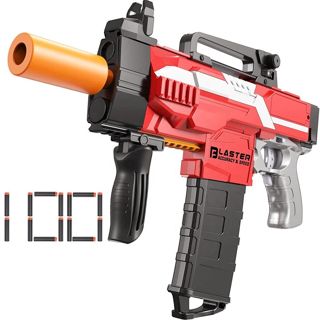
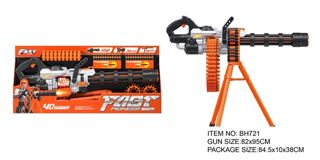
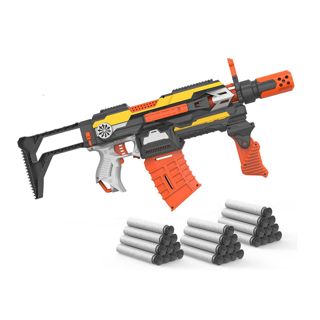
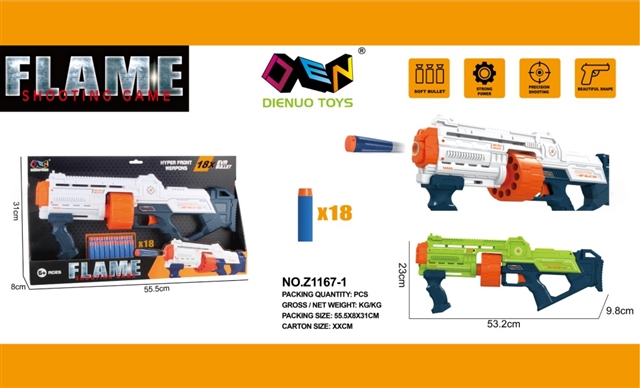
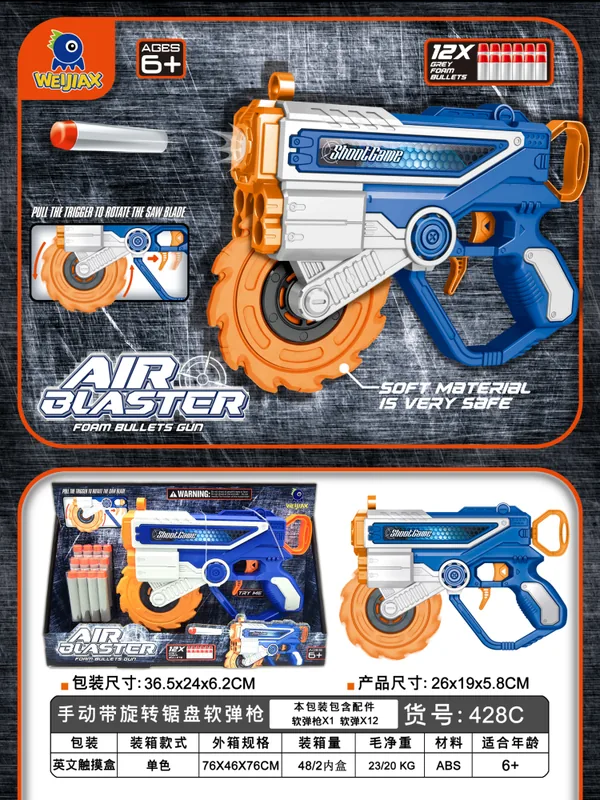
For buyers evaluating suppliers in this category, the practical filter is whether the factory can answer the investigation questions above with records. Two Chenghai-made examples in this category are the rotating disc soft bullet gun and the rotating saw soft bullet gun; both are ABS or ABS/EVA builds, and both depend on the same indexing and cavity disciplines described on this page. Their catalog listings are a starting point for the mechanism and materials, not evidence of a root-cause process — that evidence comes from the factory's records on your specific lot.
Chenghai also hosts the Canton Fair circuit, where booth samples are often hero units. Label the tool number and revision on the table, and refuse to treat a Fair photo as the production standard. Fair lighting lies; the revision card does not. When you move from a booth sample to a PO, the golden sample on the QC shelf is the reference that should travel with the order.
FAQ
How long should a root-cause investigation take before I release a reworked lot?
There is no universal number, because the duration depends on whether the cause is a part, a process, or a cavity, and on whether the tool must be corrected. What you can require is a sequence: failure reproduction first, then measurement, then corrective action, then validation against the original failure condition, then containment. If any step is skipped, the investigation is not finished. Toy lead time should distinguish tooling, first sample, testing, production, packaging, and shipping, because one total number hides different dependencies.
Can a sorted lot be treated as a corrected lot?
No. Sorting is containment, not root-cause correction. A sorted lot contains units that passed a gate; a corrected lot comes from a process whose cause has been addressed and verified. Corrective and preventive action should address the cause of the defect and verify effectiveness, and sorting alone does not meet that standard.
How do I know whether misfeeds come from one mold cavity or from the design?
You check whether the defects cluster by cavity. That requires a traceability record linking SKU, mold cavity, resin lot, component lots, production date, operator/process, and carton or pallet identifier. If misfeeds concentrate in units traceable to one cavity while other cavities in the same lot behave, the cause is the cavity, not the design. Without cavity-level records, this pattern is invisible.
What measurements should I ask for on a rotating-magazine mechanism?
Ask for chamber position at each index stop under load, measured on failed units, retained units, and the golden sample, plus dimensional measurements of the parts that define position, measured against drawing rather than against other finished units. Three-way comparison is what identifies the responsible part. Do not ask for FPS, range, or dart-count figures as substitutes — those describe marketing, not the mechanism.
Does our existing type-test report cover the corrected production lot?
Not automatically. A type-test or golden-sample report does not automatically cover a later production lot. Importers should match report SKU, materials, colors, and production date/cohort to the PO, and confirm whether the corrected production requires re-testing or re-validation against the agreed specification.
Who pays for correcting the tool if the misfeed traces to a cavity?
That depends on the tooling agreement, which is why the agreement matters more than the argument. Injection-tool ownership, movement rights, maintenance, and storage are contractual matters and are not implied by paying a sample or development fee. Write the fee, ownership, storage period, and what happens if the tool sits idle into the document before a defect forces the question.
Sources
Request a Quote or a Factory Audit
If you are holding a rotating-magazine lot and need the investigation evidence before you release, or you want a factory audit that checks cavity-level traceability and CAPA records against the process described here, send the SKU, the lot, and the failure condition. The reply should state which records can be produced and which cannot — and a supplier who cannot answer that question directly is the answer you needed.