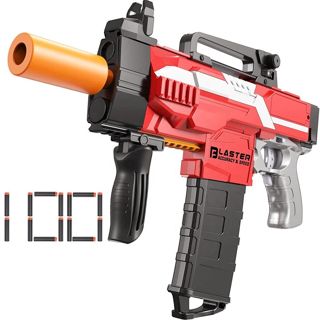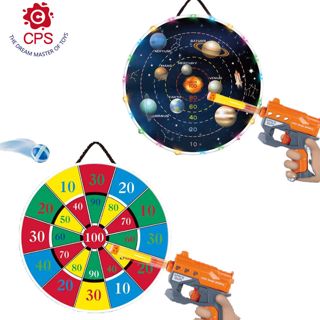
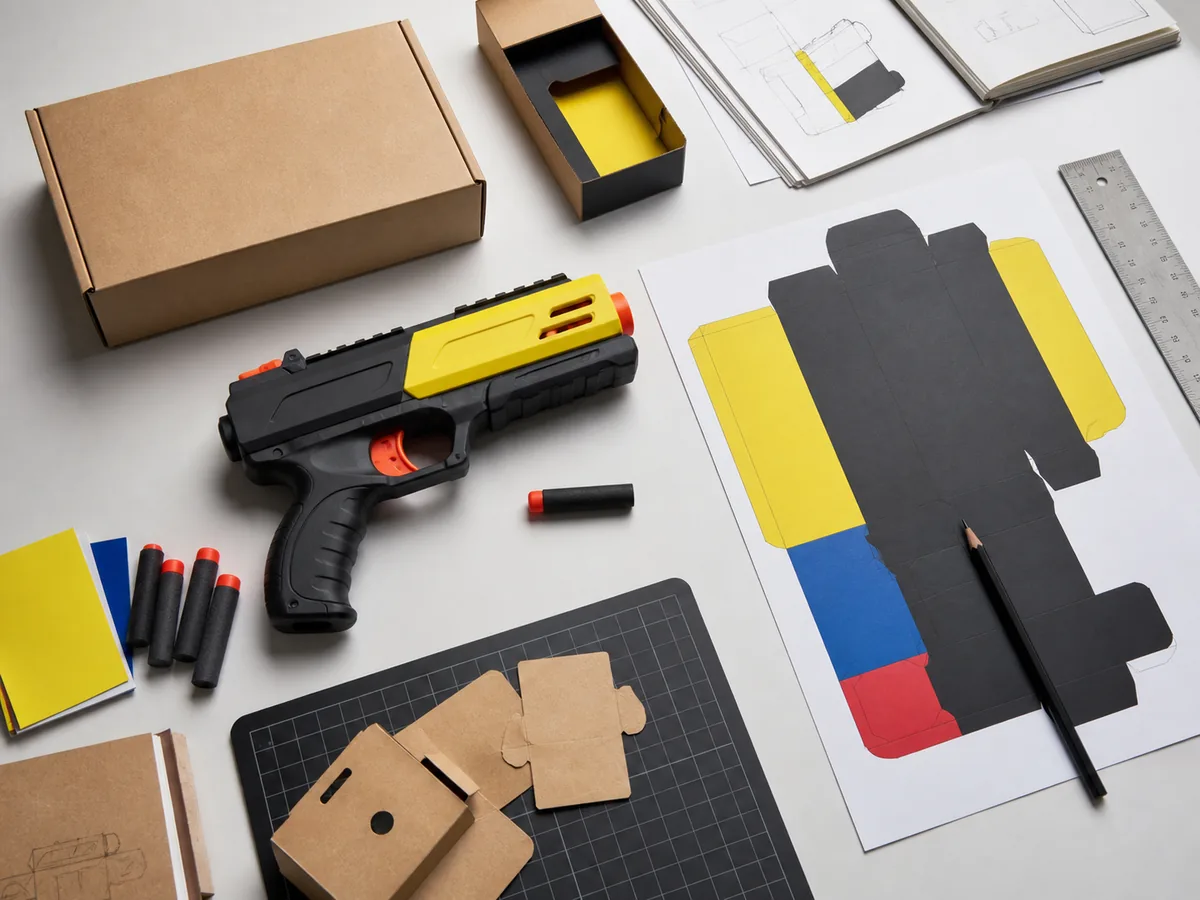
Stop procurement while institutional permission or operating controls remain unresolved. That is the gate: before you shortlist a foam dart blaster or target set for a school activity channel, confirm in writing that the institution has approved the activity context, the destination rules allow the product category, and the operating controls — age group, supervision, eyewear, indoor target plan, storage — are documented. If any of those is open, the product's specs do not matter yet.
This page is the approval checklist a wholesale buyer runs before product selection: written policy approval, destination rules, age group, supervision, eyewear, indoor target plan, storage, and alternative activities. Each item carries a check point you can verify and a question you can send to your supplier. It also maps what a customs or market-surveillance officer will ask to see, and where a shipment gets held.
What documents are checked at a customs or market-surveillance exam?
| Commercial invoice and packing list (Paper) | Why asked: identifies the shipment, model and quantity against the entry. Where it should be: with the broker and in your own file, matching the carton marks. If missing: entry cannot be reconciled; expect delay while the broker requests documents. |
|---|---|
| Product identification and tracking marks (Paper) | Why asked: confirms the physical unit matches the declared model. Where it should be: permanent marks on product and packaging, with photos on file. If missing: the exam cannot tie the sample to your declaration. |
| Declaration of conformity and standards applied (Paper) | Why asked: shows the claims made for the model. Where it should be: supplier document set, model-specific. If missing: you cannot demonstrate the basis for the age range or warnings. |
| Age range statement and required warnings (Paper) | Why asked: determines which rules apply and whether warnings are present. Where it should be: on-pack and in the technical file. If missing: the officer has no basis to clear the stated age group. |
| Test report from an accepted lab (Paper) | Why asked: supports the conformity claim for the shipped model. Where it should be: technical file, current and matching the model. If missing: document set is incomplete for the stated claim. |
| Institutional written approval for the activity (Paper) | Why asked: not a customs document, but the document that decides whether you should have ordered. Where it should be: your procurement file, before the PO. If missing: stop procurement until it exists. |
Worked example (illustrative, not a real shipment)
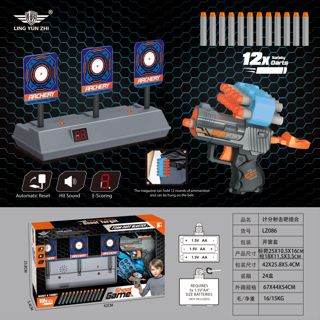
A buyer books one container of roughly 4,000 units split across two destinations: a domestic school-supply distributor and a second market that applies a different age-warning regime. Packaging differs — window box for one destination, display box for the other. The order ships against a catalog record for a Manual Soft-Bullet Gun Target Set, recorded material ABS/EVA, reference MOQ 120, 24 units per carton, reference price 4.74 USD. Every one of those figures is a catalog record only; the sample, current quote, age evidence and destination documents still have to be reconfirmed.
Where this gets held: the file contains a declaration of conformity that names the window-box model, and nothing that names the display-box variant. At the exam, the officer cannot tie the shipped units to the document set, so the consignment sits while the supplier reissues paperwork. The second hold is age evidence — the destination asks for the stated age range and the corresponding warning, and the buyer has only a catalog line. Neither problem is about the blaster. Both are about an approval chain that was never closed.
The step that would have prevented it: before the PO, the buyer asks the supplier for the model-specific document set for both packaging variants and asks the institution for the written activity approval. Two emails, sent before money moved.
Does the school's written policy approve this activity before you order?
Approval is the first gate, and it belongs to the institution, not to you. According to institutional guidance, public events staged by schools and open to the school community — including small children in family groups — must be suitable for general exhibition, and where suitability is in doubt the principal should consult teachers and may consult the school council. Some resources may be appropriate for older students and not for others; in that case the institution can decline permission or restrict entry, and where a particular age group is targeted, approval may depend on the school community being informed well in advance and warned again immediately before the event.
Check point: obtain the written approval that names the activity, the audience and the permitted age group. A verbal yes from a teacher is not a document. Ask the supplier: can you provide the written institutional policy approval that permits this activity context at the destination? If the answer is silence because the approval is your job, that is the answer.
Which destination rules apply to this product category?
Destination rules decide whether your product is treated as a toy, a school supply, or something else — and the treatment, not the product, drives the paperwork. Under the EU toy framework, a toy is defined as a product designed or intended for use in play by children under fourteen, and CE marking applies only where relevant EU legislation specifically provides for it, not as a blanket requirement for children's products. That distinction is where buyers lose time: a pencil case and a foam blaster can sit on the same shelf and carry different obligations.
Two dates worth tracking, stated precisely. Regulation 2025/2509 was published on 12 December 2025, entered into force on 1 January 2026, and will apply from 1 August 2030, replacing Directive 2009/48/EC. Directive 2026/192 addresses permitted uses of cobalt in toy components, with national provisions applying from 29 August 2026. Enforcement day and applicability day are not the same thing — do not treat the entry-into-force date as the day every unit must comply, and do not write a mandatory date the official text does not confirm.
Check point: get the destination document list in writing and confirm the applicable date for this category from the official text. Ask the supplier: what destination rules apply to this product category, and can you supply the destination documents?
Is the age group documented, or only implied by the catalog listing?
Age group is a document question before it is a design question. Toys unsuitable for children under thirty-six months require an age warning accompanied by an indication of the specific hazard, and a product intended for older students may be inappropriate for younger ones in the same building. A single item rarely serves nursery through secondary — items for the youngest users should be fewer, larger and free of detachable components, while primary-age use puts the weight on durability and washability.
Check point: the stated age range and the corresponding warning must exist for the exact model you are shipping, not the category. Ask the supplier: what age group is this product intended for, and what age evidence supports that? If the answer is a catalog line rather than model-specific evidence, you have a gap.
Who supervises, and is that written into the activity plan?
Supervision is an operating control, and it needs to be named before the product is. Institutional guidance is explicit that permission notes for sport and physical activity must spell out the details parents need — supervision among them — along with accident insurance information, because no accident or medical insurance cover is provided by the state fund for students in school sporting activities unless there is a breach of duty of care. That is not a product risk; it is an approval risk that lands on the institution.
Check point: the permission or activity note identifies the supervising adult and the ratio, and the return-to-activity rules are understood — where a concussion is diagnosed, the principal must be advised in writing and clearance is required before return, with a 21-day restriction on vigorous or competitive activity if clearance is not provided.
Ask the supplier: what supervision requirements apply during use, and does the product documentation assume a specific supervision level?
Is eyewear specified, and who supplies it?
For any projectile-based activity, eyewear is part of the control set, not an accessory. The practical sourcing question is ownership: does the institution hold eye protection, does it come in the kit, or is it the buyer's line item? Decide this before the PO, because it changes the carton, the packing list and the unit economics of the assortment.
Check point: the activity plan states whether eye protection is required and who provides it. Ask the supplier: what eyewear requirements apply, and who supplies the eyewear? If the supplier has no answer and the institution has no plan, the activity is not controlled yet.
What is the indoor target plan, and what keeps projectiles contained?
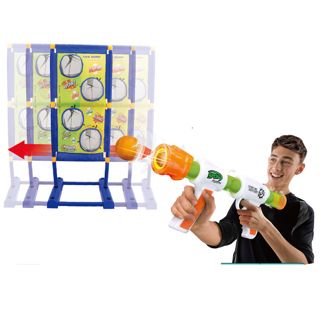
An indoor target plan is the control that makes a projectile activity approvable in a room: a defined firing line, a backstop, a boundary, and a rule for what happens to loose darts. Target sets built around a fixed target — a pump-action EVA ball target set, for instance — are easier to write into a plan than a free-standing blaster, because the target defines the direction of travel.
Check point: the plan names the target position, the backstop, and who clears the floor afterward. Ask the supplier: what is the indoor target plan, and what controls keep projectiles contained? Do not accept a spec sheet in place of a plan — and do not let anyone convert this into a range or velocity claim the catalog does not support.
Where does the product live between sessions?
Storage is where the incident report starts: it asks who had access. The controls that matter: a locked or supervised cabinet, darts stored separately from blasters, batteries removed where applicable, and a named person responsible for check-in and check-out. Institutional buyers are advised to keep certificates for as long as the item is in use, because years later the file is the evidence of diligence — storage is the physical half of the same record.
Check point: a storage location, an owner and a check-in/out method exist before delivery. Ask the supplier: what storage requirements apply between uses, and does the packaging support repeated repacking? Packaging here is a real variable — window box versus display box changes how the product survives a term of handling.
What is the approved alternative if permission is refused?
Every approval gate needs a fallback, or the buyer ends up holding inventory for an activity that never got cleared. Build the alternative into the assortment decision: a target-only set or a non-projectile item that serves the same lesson objective can be substituted without reopening the whole approval, because it does not carry the same operating controls.
Check point: the activity plan lists an approved alternative, and your order can flex toward it without a new PO. Ask the supplier: what alternative activities are approved if this activity is not permitted, and can the assortment be adjusted before production?
What should you ask your supplier before the PO goes out?
Send this as one message. The goal is to surface the gaps before money moves, not to collect paperwork you will never read.
1. Can you provide the written institutional policy approval that permits this activity context at the destination? 2. What destination rules apply to this product category, and can you supply the destination documents? 3. What age group is this product intended for, and what age evidence supports that? 4. What supervision requirements apply during use? 5. What eyewear requirements apply, and who supplies the eyewear? 6. What is the indoor target plan, and what controls keep projectiles contained? 7. What storage requirements apply between uses? 8. What alternative activities are approved if this activity is not permitted? 9. Can you confirm the current sample, current quote, age evidence and destination documents for this specific model, in both packaging variants? 10. Can you confirm whether any historical recall for a comparable product category raises a control question we should apply to our own activity context?
On that last point, two verified historical US recalls are worth reading for the transferable question rather than the product. A 2026-09-17 recall of a Lights & Sounds Fire Truck Activity Board cited a fire hose port that could come loose and detach, posing a risk of serious injury from choking hazard. A 2010-05-17 recall of a Toy Dart Gun Set cited a soft plastic toy dart that could be inhaled into the throat and prevent breathing if placed in the mouth. Both are historical cases, not this week's news, and no connection to any supplier, customer or SKU referenced here is established. The editorial question they raise is the same one: which component comes loose under repeated handling, and who checked?
FAQ
Can I place the order first and sort out the school's approval afterward?
No. Written institutional approval is the gate, and it belongs to the institution rather than to the supplier. If the approval, the destination rules or the operating controls are unresolved, stop procurement — the product cannot compensate for an unapproved activity context.
Do I need a CE mark on every children's product I ship to the EU?
No. CE marking applies only where relevant EU legislation specifically provides for it, not as a blanket rule for children's products. Establish first whether the item falls under toy rules — a toy is defined as a product designed or intended for play by children under fourteen — then request the documentation that matches that classification.
When does the new EU toy regulation actually apply?
Regulation 2025/2509 was published on 12 December 2025, entered into force on 1 January 2026, and will apply from 1 August 2030, replacing Directive 2009/48/EC. Directive 2026/192, on permitted uses of cobalt in toy components, has national provisions applying from 29 August 2026. Where the official text does not confirm an applicability date for your category, treat the timeline as not confirmed rather than assuming a mandatory date.
What age evidence should I hold for a school-channel item?
Model-specific evidence of the stated age range, plus the age warning where the product is unsuitable for children under thirty-six months, including an indication of the specific hazard. A catalog line naming an age group is not evidence.
What documents should be in the file if the shipment is examined at destination?
Invoice and packing list matching the carton marks, permanent tracking marks on product and packaging with photos, a model-specific declaration of conformity with the standards applied, the age range statement and warnings, and a test report from an accepted lab covering the shipped model. Where documents name only one packaging variant, the exam can stall on the variant that is not named.
Do donated or brought-from-home items need the same screening?
Yes, and institutions are advised to apply the same screening to donations as to purchases: recall check, physical inspection, age appropriateness, and certificates where available, backed by a written policy. Donation streams are flagged as the riskiest channel because recalled items can end up in play areas.
Sources
Ready to spec the assortment once the approval gate clears?
Once written permission, destination rules and operating controls are closed, the product decision gets simple. If your plan calls for a fixed-target format, the Pump-Action EVA Ball Target Set is one catalog record to verify against your own checklist, and the Target & Battle Sets range covers the assortment side of the same decision — sample, current quote, age evidence and destination documents reconfirmed first, as always.