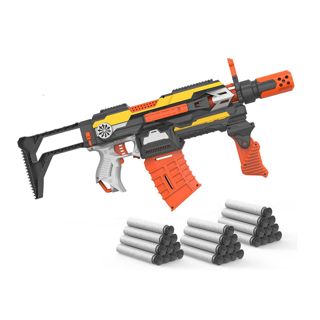
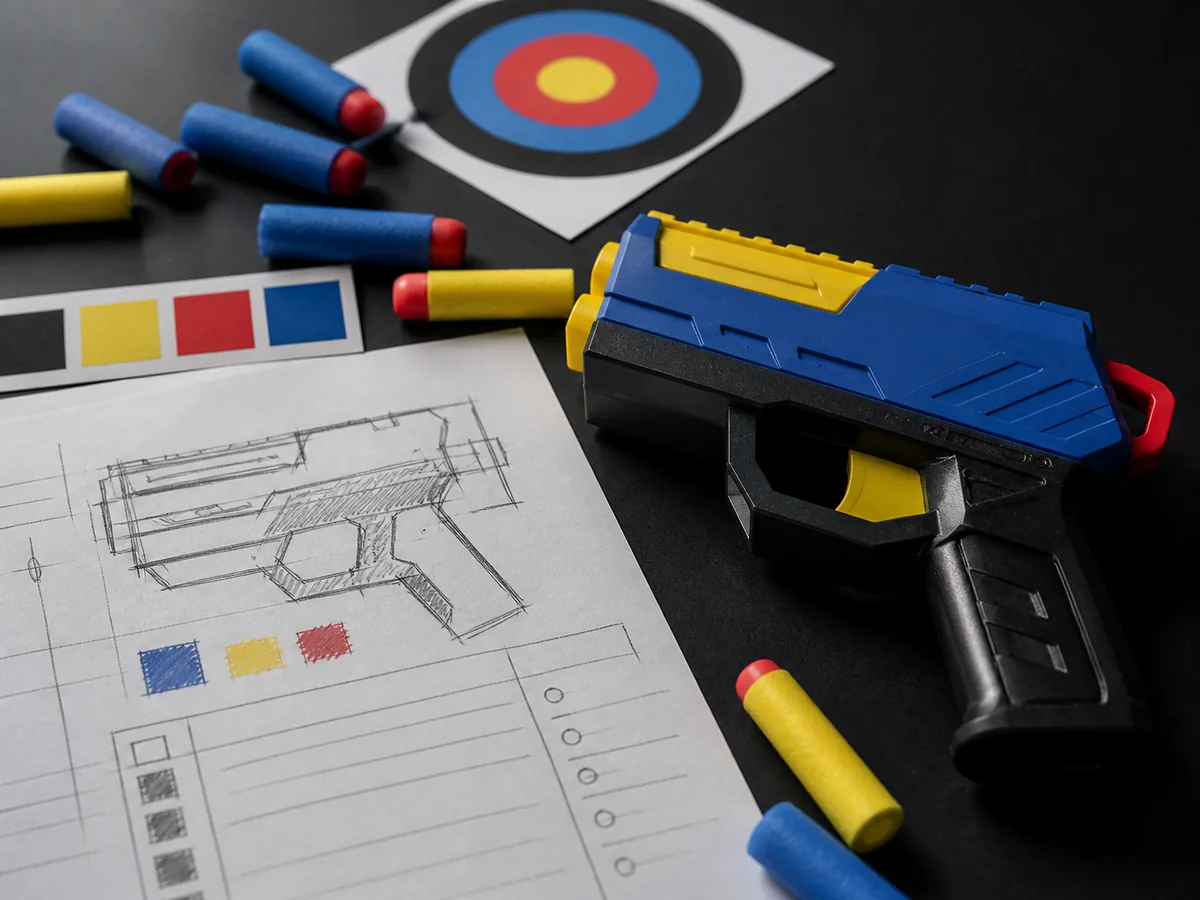
Apartment-friendly target bundles are not chosen by blaster specs. They are chosen by the play loop: setup footprint, sound, target reset, and how fast a dart can be found again. A bundle that scores well on paper but forces a parent to crawl under a sofa every thirty seconds will not reorder, no matter how good the box looks.
For importers, Amazon sellers, supermarket buyers, gift distributors, and private-label owners, that reframes the buying question. You are not spec'ing a toy; you are spec'ing a repeatable indoor loop that survives a 60-square-meter living room. Below is the evaluation frame, the materials to ask for by use case, the tests to request, and the paperwork items that decide whether the second lot matches the first.
Key Takeaways
- Indoor suitability is a whole-loop property. Judge the bundle on setup footprint, target reset, projectile recovery, and sound control — not on the blaster alone.
- A scoring target changes reset friction more than any blaster swap. An electronic scoring target removes manual target resetting; a manual target keeps the unit cost and the electronics risk lower.
- Dart count in the catalog name is the only dart figure you can quote. Do not publish dart counts, FPS, or range that are not in the approved spec sheet.
- Electronic targets and light-up blasters bring a button-cell compartment question. Screw closure, tool access, and the warning belong in the approval before the toy function.
- Sealed golden sample on the QC shelf beats any email thread. Bulk is compared to that physical piece for colour, fit, flash, and function.
Target Bundle Options at a Glance
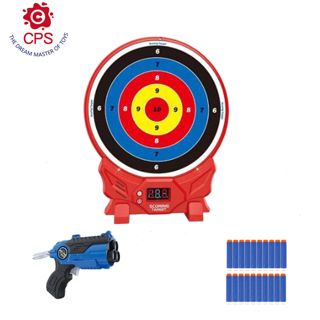
| Electronic Scoring Target Foam Dart Set | Price posture | Material | Age/Use | Best for | Rating | 5.56 USD | Plastic | Indoor target practice | Buyers who want reset friction near zero | Not rated — no rating data supplied |
|---|---|
| Electronic Scoring Target and Foam Dart Blaster Set | Price posture | Material | Age/Use | Best for | Rating | 4.20 USD | ABS/EVA | Indoor, bundled play | Entry bundle that pairs a target with a blaster | Not rated — no rating data supplied |
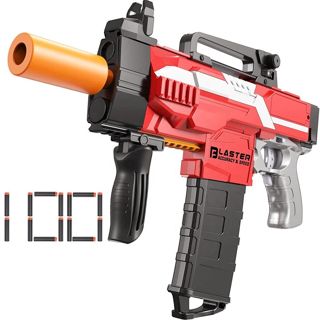
| 12-Dart Electric Soft Bullet Blaster | Price posture | Material | Age/Use | Best for | Rating | 7.28 USD | ABS/EVA | Indoor, moderate volume | Bundles where retrieval time is the limiting factor | Not rated — no rating data supplied |
| 48-Dart Electric Soft Bullet Blaster | Price posture | Material | Age/Use | Best for | Rating | 9.65 USD | ABS/EVA | Indoor, high volume | Party or family bundles where reloading interrupts play | Not rated — no rating data supplied |
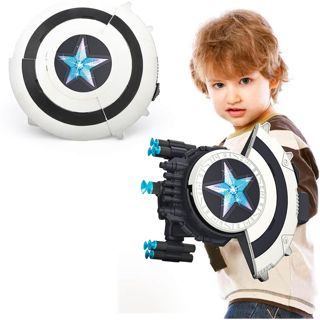
| Light-Up Shield Foam Dart Blaster | Price posture | Material | Age/Use | Best for | Rating | 5.67 USD | Plastic | Indoor, light-controlled | Evening play where sound and light are the sell | Not rated — no rating data supplied |
| Shark-Theme Foam Dart Bow | Price posture | Material | Age/Use | Best for | Rating | 4.30 USD | EVA | Indoor, low-noise | Quiet indoor bundles; no motor, no light | Not rated — no rating data supplied |
| Mini Dinosaur Foam Dart Blaster | Price posture | Material | Age/Use | Best for | Rating | 0.96 USD | ABS | Indoor, entry price | Impulse and gift-channel price points | Not rated — no rating data supplied |
| Graffiti Mini Manual Soft Dart Blaster | Price posture | Material | Age/Use | Best for | Rating | 1.61 USD | varies by spec | Indoor, entry price | High-count assortments and party favors | Not rated — no rating data supplied |
Why the Blaster Spec Sheet Is the Wrong Place to Start
A stronger, faster, louder blaster makes an apartment bundle worse, not better. Indoor play fails at the two ends of the loop — the target that has to be reset by hand, and the darts that end up behind furniture. Neither failure shows up in a blaster specification.
So the first filter is not power. It is whether the bundle keeps a child playing without an adult standing up. A manual target that tips over on every hit creates a reset task. A motorised blaster that empties a magazine in seconds creates a recovery task. Both look impressive in a booth demo and both get returned in a small flat.
Practical consequence for a buying sheet: describe the bundle by loop behaviour — target reset method, sound output, and whether the dart count in the name matches a recovery container in the pack. If the pack has no container, say so, or the first Amazon review will.
Which Target Type Should an Apartment Bundle Anchor On?
Anchor on a scoring target, not on the blaster. The catalog carries two target-anchored options: an Electronic Scoring Target Foam Dart Set in plastic, and an Electronic Scoring Target and Foam Dart Blaster Set in ABS/EVA. Both are named as electronic scoring, which means the reset step is handled by the unit rather than by the player.
That matters commercially. An electronic scoring target supports a listing angle built on uninterrupted play, which is a small-home benefit rather than a performance claim. It also raises the electronics questions earlier: battery compartment, sound level, and whether the target needs a flat surface or a wall mount. None of those are answered by the catalog name — they go on the RFQ.
The trade-off is real. Electronic targets add a component, a battery question, and a compliance question. Manual targets and bows keep the unit simpler and the risk lower, at the cost of the reset step. If your channel sells to gift buyers who want a low return rate, the simpler mechanical option is often the safer first order; if your channel sells to families replacing a broken set, the scoring target is the reorder driver.
How Do You Reduce Projectile Retrieval in a Small Flat?
Control dart count before you control dart type. The catalog names two electric blasters by dart count — 12-Dart and 48-Dart — and that naming is the only dart figure you can responsibly publish. The 12-Dart unit suits a bundle where retrieval is the parent's job and the session is short; the 48-Dart unit suits party or family play where the session is longer and stopping to reload breaks the rhythm.
The retrieval question is really a container question. Ask the factory whether the retail pack includes a net, tray, or bag sized to the named dart count, and whether the pack can be closed with darts inside. A bundle that can be tidied in one motion gets reordered; one that scatters across a living room gets reviewed badly.
For low-noise, low-retrieval bundles, an EVA bow such as the Shark-Theme Foam Dart Bow avoids motors and lights entirely. It is the quiet option in the range, and quiet is a real apartment feature — not a downgrade.
Sound, Light, and the Boundaries of Indoor Use
Sound and light sell, but they also define the room the product can live in. The Light-Up Shield Foam Dart Blaster is named for a light feature; that is a genuine evening-play angle and a genuine constraint for thin-walled apartments. Ask for a sound level reading on the RFQ rather than guessing from a booth demo, and decide whether you want a volume switch.
Electronic targets and light-up units also pull button-cell and battery-compartment questions forward. The compartment has to close with a screw, the tool has to be needed to open it, and the warning has to be on the pack before anyone discusses the toy function. A cute electronic unit that opens with fingernails does not ship — that is a door-design issue, not a marketing issue.
Write the indoor boundary into the listing copy. Say what the product is for: short-range indoor target play. Do not publish FPS, range, or dart counts that are not in the approved spec, and do not borrow hobby-grade language from adult blaster communities. The channel you are selling into is families and gift buyers, and the copy should not promise a shooting range.
Use Case, Material to Ask For, and Test to Request
Match the material ask to the use case rather than to a price target. The table below is the practical version of that rule; every row ends in something you can put in an RFQ email today.
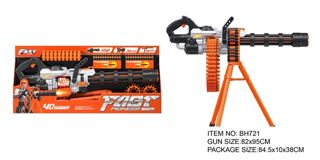
Where the catalog lists a material, use it. Where it does not — the Graffiti Mini Manual Soft Dart Blaster and the Belt-Feed Foam Dart Blaster — the answer is to ask, not to assume. Write 'varies by spec' on your internal sheet until the factory confirms.
Use Case | Material to Ask | Test to Request
| Apartment living room, daily use | ABS shell for the blaster, EVA for soft tips and bow limbs | Drop test on the assembled unit; tip-retention check after repeated firing |
|---|---|
| Electronic scoring target | Plastic or ABS housing as per the unit | Battery compartment screw-closure check, tool-access check, warning review, sound level reading |
| Light-up play | Plastic housing with sealed LED area | Button-cell or battery compartment check; switch durability; sound level reading |
| Quiet indoor bundle | EVA bow limbs, no motor, no light | Limb fatigue test; repeated-draw check on the string and nock |
| Gift and impulse channel | ABS, small format | Small-parts and age-grade review; packaging drop test; barcode quiet zone check |
| Soft flexible parts | Any flexible PVC component | Phthalate and REACH or toy-chemical check for the destination market, formulation and accessible parts confirmed |
Where Are These Bundles Usually Made?
China's toy supply base is clustered by material, and knowing the cluster saves a sourcing trip. Injection-moulded plastic blasters and targets concentrate in Chenghai, Shantou — the ABS and EVA units in this category sit there. Wooden toys cluster in Yunhe, Zhejiang. Plush sits in Yangzhou, Jiangsu. General merchandise and mixed gift assortments are a Yiwu, Zhejiang specialty.
That matters because a bundle can cross clusters. A plastic target plus an EVA bow plus a plush accessory is not one factory's natural output, and asking one supplier to be best at all three usually means you get the weakest link. If your assortment spans materials, expect to consolidate at a trading layer and inspect each component against its own golden sample.
It also affects your Incoterms conversation. Write the Incoterms version and the named place as actually booked — Shantou or Shenzhen, whichever ports the shipment. FOB without a named place has started freight arguments that outlasted production.
What Belongs in the Purchase Order Before You Commit
Put four things in writing and the second lot starts to behave. First, a sealed golden sample held on the QC shelf, compared against bulk for colour, fit, flash, and function. Photos do not end a colour dispute; the physical piece does. Second, a revision card — tool number and revision labelled on the sample table. A Canton Fair booth sample is often a hero unit, and fair lighting lies.
Third, the inspection plan. Do not accept an AQL number quoted in a catalog sentence or a blog. The defect classes and the release rule belong on the PO. Fourth, document the retest decision after any change that can affect safety or compliance, even when the SKU and product name stay the same.
One more item that catches private-label buyers: keep certificate scope mapped to the market, the lot, and the specific test. A UKCA file and a VOC report on an electrical unit are different papers covering different questions. If the paperwork does not match the lot, it is not paperwork. Get the file that covers the test you actually need.
How We Picked These Options
We scored only what the catalog and the factory record actually state. No FPS, no range, no dart counts beyond the numbers in the product names, no certificate numbers, no invented MOQs. Where a field was missing, the entry says 'varies by spec' instead of guessing.
The selection frame was the play loop, in this order: does the bundle remove the target-reset task, does it shorten projectile recovery, does it stay within an apartment's sound and light limits, and does the pack support tidy-up. Bundles that fail the first two were kept in the table only because they are useful as components of a larger assortment, and the text says so.
We deliberately did not rank these as a consumer top five. A ranking would reward power and looks, which are the exact attributes that make an indoor bundle worse. The table is a spec comparison for a purchase decision, and the decision is which bundle to stock for small homes.
FAQ
Is an electronic scoring target worth the extra component risk for an apartment bundle?
Yes, if your channel sells repeat purchases to families and you are prepared to manage the battery compartment and sound questions up front. An electronic scoring target removes the manual reset step, which is the most common reason indoor play stops. If your channel is gift and impulse with a low tolerance for returns, anchor on a mechanical bow or a manual blaster instead and keep the electronics out of the first order.
What MOQ should I expect for a target bundle, and can I mix blasters and targets in one order?
MOQ is set per SKU, not per bundle, so a mixed order means meeting each line's minimum. In the supplied catalog, per-unit MOQs range from 50 to 480 depending on the item and material, so a small apartment bundle built from two or three SKUs can add up quickly. Confirm the MOQ per line in writing and check whether your supplier will consolidate lines into one shipment before you plan the assortment.
Which certification documents do I need for an electronic target sold in the UK or EU?
You need the file that covers the specific test for the specific market and lot — a UKCA document and a VOC report are different papers answering different questions, and one does not substitute for the other. Ask the factory to map market, lot, and test to each document. If the paperwork does not match the lot you are shipping, treat it as missing and request the correct file before production.
How do I stop colour and function drift between the first and second production lot?
Hold a sealed golden sample on the QC shelf and compare bulk against it for colour, fit, flash, and function. Approving from a photo is the standard way buyers pay for a colour dispute on the second lot. Also require a revision card showing tool number and revision, and refuse to treat a trade-fair sample photo as the production standard. After any compliance-relevant change, document the retest decision even if the SKU name stays the same.
What should I ask about battery compartments on light-up or electronic units?
Ask three specific questions: does the compartment close with a screw, does opening it require a tool, and is the required warning on the retail pack. These checks come before any discussion of the toy function. A unit that can be opened with fingernails will not ship into markets with button-cell rules, regardless of how well the light feature sells.
Can I publish dart counts, FPS, or range in my Amazon listing?
Only figures that appear in the approved spec sheet. In this catalog the only dart figures available are those in the product names, such as 12-Dart and 48-Dart. Publishing FPS, range, or dart counts that the factory has not confirmed creates a listing-accuracy risk and a returns problem. If you want those numbers, request them in writing and get them into the spec before the listing goes live.
Sources
Spec Your Indoor Bundle Before You Book Production
If you are shortlisting apartment-friendly target bundles for a 2026 range, start with the two target-anchored options and put the loop questions on the RFQ: reset method, sound level, dart count as named, and pack tidy-up. Send your destination market and channel, and the spec, sample, and paperwork items can be mapped before the PO is placed.