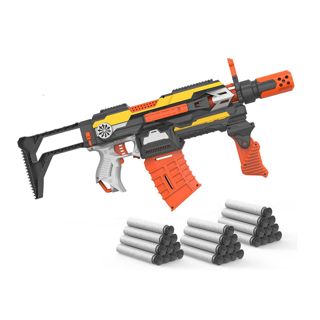
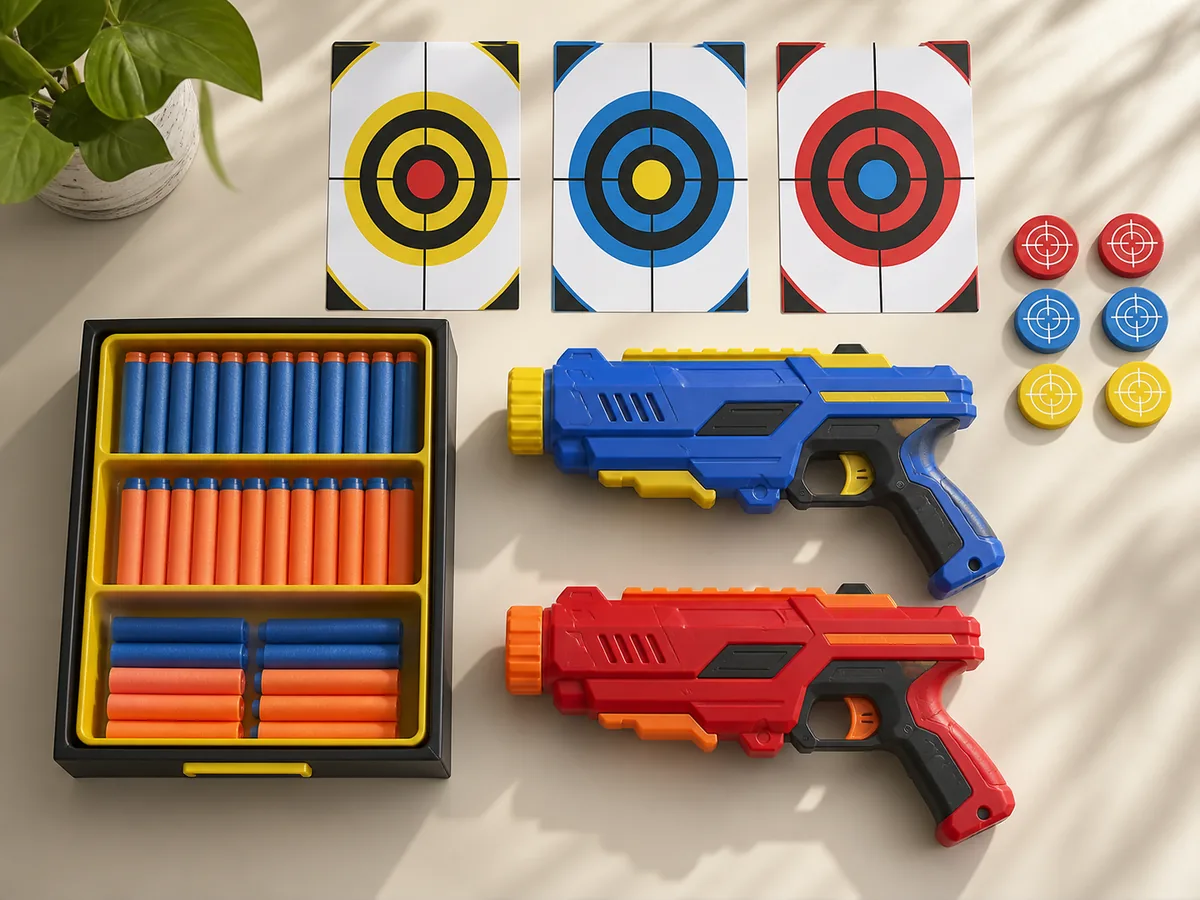
Toy-like visual design in tactical categories is a gate on which channels will accept the SKU — not a styling choice. A buyer sends an RFQ for a foam dart blaster in a bright orange-and-teal colorway, asks for a box that shows a kid on the front, and wants it on Amazon by October. That single RFQ can move the product into children's-toy compliance territory, and that decision has to be made before the tooling is cut, not after the container lands. Get the age grade and markings right at selection and you keep both the toy aisle and the collector shelf open. Get them wrong and you either lose the listing or pay for rework, re-testing and re-printing.
Decide the destination market, the intended user and the package imagery first, then lock colorway and markings. Review the current consolidated text of the applicable rules, market and product scope before publishing any compliance statement, and tie every statement to a specific SKU, report, responsible party and document version.
Key Takeaways
- A product designed, manufactured or marketed as a plaything for children under 14 falls inside the toy definition used by CPSC guidance, and ASTM F963 is mandatory for children's toys under 16 C.F.R. part 1250.
- Third-party testing at a CPSC-accepted laboratory and a Children's Product Certificate (CPC) apply to products intended primarily for children 12 or younger — 13+ positioning may still sit inside ASTM F963 but does not require a CPC.
- Toy, look-alike and imitation firearms must carry permanent bright coloration markings that survive use-and-abuse testing, so colorway is a compliance field, not a marketing afterthought.
- Package imagery, warnings and product markings are controlled fields tied to the SKU and destination market; warnings must be intelligible, legible and visible and cannot contradict foreseeable use.
- From July 8, 2026, importers of most regulated consumer products must electronically file certificates of compliance with U.S. Customs and Border Protection via a Partner Government Agency Message Set.
- Build market-specific appearance review into early selection: map each candidate SKU to destination, age grade and applicable rule set before approving artwork.
Seasonal trend matrix: what changes this window and what it means for sourcing
| Design intent | Trend: toy-like, bright colorways and character-style packaging | Why visible now: buyers are chasing gift and kidult demand with softer, more colorful styling | Sourcing implication: decide intended user before tooling, because marketing and design drive toy classification | Source note: CPSC toy guidance (undated page, current at time of writing) |
|---|---|
| Imitation and look-alike firearms | Trend: permanent bright coloration and marking requirements stay central to tactical foam products | Why visible now: retailers and marketplaces scrutinize realistic shapes and package imagery | Sourcing implication: specify marking location, permanence and the use-and-abuse test evidence with the sample | Source note: CPSC toy guidance |
| Age grading | Trend: 3+ labels are treated as product-specific decisions | Why visible now: the same mould can be sold as a toy or a 13+ collector item depending on marketing | Sourcing implication: a 3+ label does not remove the need to evaluate foreseeable younger-child access when design or marketing reaches that audience | Source note: verified fact on age grading |
| Testing and certification | Trend: CPC and English-language test reports remain the gate for children's products | Why visible now: marketplace and customs checks are document-driven | Sourcing implication: request the CPC and supporting English test reports, and match them to the exact SKU and colorway | Source note: CPSC Children's Product Certificate page |
| Import filing | Trend: electronic certificate filing with CBP via PGA Message Set | Why visible now: applies from July 8, 2026 to importers of most regulated consumer products | Sourcing implication: build filing data capture into the PO and shipping workflow, not the arrival week | Source note: CPSC Children's Product Certificate page |
| EU labeling | Trend: warnings must be intelligible, legible and visible, and cannot contradict foreseeable use | Why visible now: language and visibility rules differ by destination market | Sourcing implication: treat packaging wording and product markings as controlled fields that can change with the SKU | Source note: verified fact on warnings and languages |
| Document retention | Trend: technical documentation is typically retained for 10 years after each product is placed on the market | Why visible now: Great Britain guidance frames retention as a long-tail record duty | Sourcing implication: agree file custody and version control with the supplier before first shipment | Source note: verified fact on UK records |
Why does a bright colorway change the compliance path?
Because the toy definition turns on how the product is designed, manufactured or marketed — not on what the box says at the top. CPSC guidance defines a toy as any object designed, manufactured or marketed as a plaything for children under 14. A neon shell plus a cartoon character on the front panel is marketing evidence, and marketing evidence is what pulls a blaster into the children's toy rule set.
Testing and certification requirements under CPSC rules apply to products designed or intended primarily for children 12 or younger. Toys aimed at a 13+ audience might still be subject to ASTM F963 requirements, but would not need third-party testing at a CPSC-accepted laboratory and would not need a CPC. That gap is where a lot of sourcing decisions actually get made — and it is a decision about intended user, packaging and channel, made months before a PO.
Which markings must survive use-and-abuse testing?
Toy, look-alike and imitation firearms must have permanent bright coloration markings that survive use-and-abuse testing. Practically, that means the marking is a specified, tested attribute of the part — not a decal the factory adds at packing. Write the marking location, color reference and permanence expectation into the sample approval sheet so the golden sample carries the evidence.
Projectile toys face their own performance requirements. Under ASTM F963, certain toys that can fire projectiles must ensure projectiles are not small parts and cannot exert excessive force when impacting a surface, and stored-energy projectile toys must also prevent the use of improvised projectiles. Sling shots and sharp-pointed darts are excluded from the CPSC toy definition — an exclusion from the toy definition, not a free pass from all regulation.
What should package imagery show — and what should it avoid?
Package imagery is the fastest way to create a compliance mismatch. If the box shows a five-year-old, you have positioned the SKU for a younger user than a 13+ certificate supports. If the box shows a collector shelf, keep the copy, age callout and warnings consistent with that audience. Warnings must be intelligible, legible and visible under the destination market's rules and cannot contradict foreseeable use.
Age grading and small-part risk are connected and must be assessed for the actual product configuration — and assemblies, detachable accessories and packaging components need the same review discipline. That includes the dart tips, the stock attachment, and anything in the blister that a younger sibling can reach.
What changes for EU and UK-bound shipments?
The EU path runs through the Toy Safety Directive 2009/48/EC and, separately, the General Product Safety Regulation 2023/988 — two distinct legal instruments, so do not treat GPSR language as a substitute for the toy conformity file. CE marking and an EU Declaration of Conformity belong to the conformity process and must be matched to the product scope.
Chemical properties are a distinct EU toy-safety requirement; a material list alone does not replace a market-specific chemical assessment. On recordkeeping, Great Britain guidance says technical documentation is typically retained for 10 years after each individual product is placed on the market, subject to product-specific rules. For private-label programmes, decide early who holds the technical file, the declaration and the artwork versions — it is usually cleaner for the importer to own the file and the supplier to supply the evidence.
How does private-label identity interact with appearance rules?
Private label shifts the responsible party. Importer, manufacturer and product-identification information should be mapped to the relevant market role before publication, so the artwork must name the correct entity for the destination market. A private-label box that still carries the factory's details, or omits the importer, is a common and avoidable hold-up.
Version control is the quiet risk. Packaging wording and product markings are controlled fields that can change with the SKU, so a colorway change, a new dart tip or a new age callout is a new artwork version — and often a new test scope. Keep one artwork register per SKU with the responsible party, the rule set cited and the test report edition.
What does realistic-shape review look like at sample stage?
Run the review as a checklist against the physical sample, not the render. Photograph the marking under the same lighting as the product page, measure the marking against the specified color reference, and confirm it is part of the moulded part rather than a label. Then compare the silhouette against channel expectations — realistic shapes and package imagery are exactly what marketplaces and retailers ask about first.
Keep the review tied to a document trail: a test report should identify the product configuration, age grade and standard edition, and the applicable edition should be read from the current regulation before a report is quoted. A report must match the product, age grade, material and test edition. A CPC is product-specific and should not be described as a blanket factory certificate — it is based on testing results and identifies the applicable rules and responsible parties.
OEM-relevant examples for this season
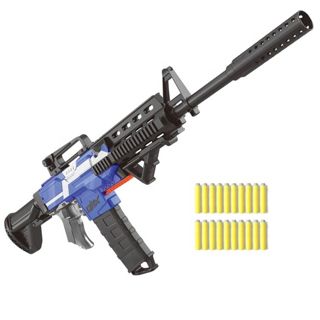
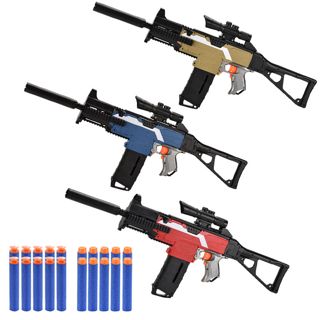
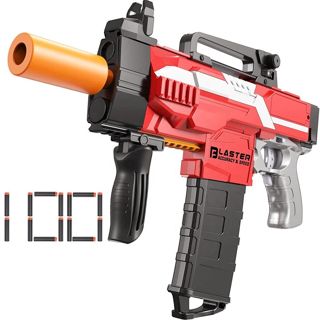
If you are building a tactical foam range for gift and kidult channels this season, two catalogue items are useful as OEM reference points for how appearance and configuration get specified: the battery-operated tactical foam dart rifle and the UMP-style electric EVA foam dart rifle. Treat them as sample-stage references for colourway, marking placement and package artwork decisions — not as certified products, and not as substitutes for the destination-market review described above.
FAQ
Is a bright, toy-like foam blaster automatically a children's toy under US rules?
No — the toy definition turns on whether the product is designed, manufactured or marketed as a plaything for children under 14, and bright coloration alone does not decide it. But a neon colorway plus kid-facing package imagery is marketing evidence, so treat appearance as part of the classification review and document the intended user.
Does every toy-like tactical product need a Children's Product Certificate?
No. Third-party testing at a CPSC-accepted laboratory and a CPC apply to products designed or intended primarily for children 12 or younger that are subject to a CPSC-enforced rule. Items aimed at 13+ may still fall under ASTM F963 but do not require third-party testing or a CPC — confirm the intended user and applicable rules per SKU.
What must a CPC contain for a colorway variant?
A CPC must identify the product specifically enough to match the certificate to the exact SKU or variant, cite each applicable CPSC children's product safety rule, name the domestic manufacturer or importer, give a records contact, state date and place of manufacture and testing, and identify the CPSC-accepted laboratory. It and the supporting test reports must be in English.
When should an importer start the appearance review for a 2026 programme?
Before tooling and before artwork sign-off — ideally at sample stage, since colourway, marking permanence, package imagery and age callout all have to be consistent. From July 8, 2026, importers of most regulated consumer products must electronically file certificates of compliance with CBP via a Partner Government Agency Message Set, so filing data capture belongs in the PO workflow, not the arrival week.
What is different for EU-bound tactical foam products?
The Toy Safety Directive 2009/48/EC and the General Product Safety Regulation 2023/988 are separate instruments, so a GPSR statement does not replace the toy conformity file. CE marking and an EU Declaration of Conformity must be matched to the product scope, warnings must be intelligible, legible and visible and cannot contradict foreseeable use, and chemical properties need a market-specific assessment rather than a material list.
How long must technical documentation be kept?
Great Britain guidance says technical documentation is typically retained for 10 years after each individual product is placed on the market, subject to product-specific rules. Agree file custody and version control with the supplier before the first shipment so artwork and test records stay retrievable.
Sources
- How to Create a Collectible Plush Line for Your Brand
- Plush dolls and toys a visual communication tool in brand marketing
- Shelf-Ready Play How Toy Stores Can Borrow Easter’s Cute-Character Strategy to Boost Impulse Sales
- The 5 Design Decisions That Made Jellycat Squishmallows and Steiff Into Global Obsessions
Request a Quote
Send us the destination market, intended age grade and the package imagery direction, and we will map the colourway, marking and artwork questions to the right rule set before you commit to tooling. Bring us the RFQ at sample stage — appearance review is cheapest before the mould is cut.