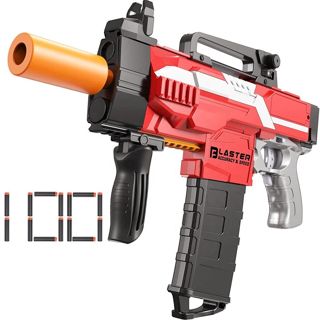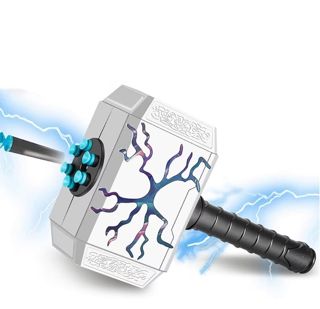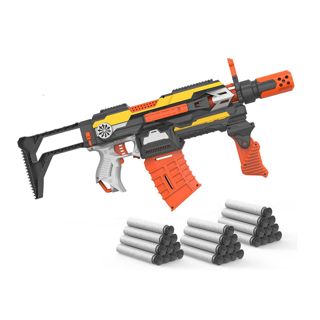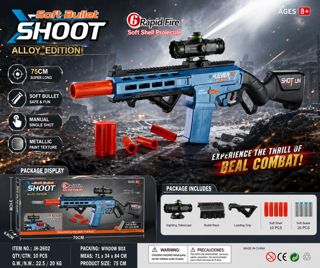
Within 48 hours of the show, every promising foam blaster sample gets the same eight-field RFQ file, or it does not get quoted. A pump-action foam dart shotgun that feels great in-hand, a business card, and a verbal price will not survive contact with a real purchase order. Trade-show momentum becomes sourcing value only after verbal claims are normalized and documented into the same written RFQ structure — sample coding, supplier identity, mechanism notes, included parts, requested changes, quote template, and evidence follow-up. Without that normalization, you are comparing booth charm, not wholesale offers.
Key Takeaways
- Document every foam blaster sample within 48 hours of the show; follow-up speed directly affects conversion, and delayed documentation loses the detail needed for comparable quotes.
- Assign each sample a unique code tied to its catalog SKU and supplier name — verbal descriptions like 'the blue rifle' are not a sourcing specification.
- Record the mechanism type (motorized vs. pump-action), included parts, and requested changes in writing before requesting pricing; a quote is only comparable if it references the same spec.
- Treat a REACH declaration or any compliance statement as a claim, not proof; ask for supporting material evidence and item-specific certificates before bulk orders.
- Use one quote template for all suppliers so FOB prices, MOQs, and lead times sit in the same fields — otherwise you are comparing apples to verbal oranges.
What actually took effect
No new regulation took effect this week that changes how you follow up on trade-show foam blaster samples. What is in effect is the commercial reality that physical toy manufacturing is a low-margin, tariff-exposed business, and the window for converting a booth conversation into a committed order is short. Industry guidance consistently points to a 24-to-72-hour follow-up window for new leads, and that clock starts when you handle the sample, not when you get back to the office.
The relevant obligations are the ones you already carry as an importer: confirming the supplier's identity, verifying that the product carries the right market evidence (CE, CPC, UKCA, or ASTM F963 depending on destination), and documenting specs before you commit. A verbal FOB quote at a booth does not certify the toy and does not replace market compliance evidence. What changed is not a rule — it is the margin pressure that makes a sloppy follow-up more expensive than it used to be.
Who is responsible
Responsibility splits across four roles, and importers are not the only party that can verify compliance. The manufacturer is responsible for producing to the agreed spec and for supplying the material evidence behind compliance declarations — a REACH declaration, for instance, is a compliance statement, but it does not automatically prove the absence of every restricted substance without supporting material evidence. The authorized representative, where one is appointed for the EU market, holds the technical file and is the point of contact for market surveillance authorities.
The importer puts the product on the market under its own name and is the party that market authorities will typically contact first; the importer's job is to hold the evidence trail, not to generate it. The distributor, further down the chain, must be able to identify the product's origin and pass along the documentation. For a foam blaster bought at a trade show, your verification step is simple: ask the supplier which role they play for the destination market and request the corresponding evidence — a factory that only manufactures for export may not hold an EU authorized representative file.
What the procurement process must change
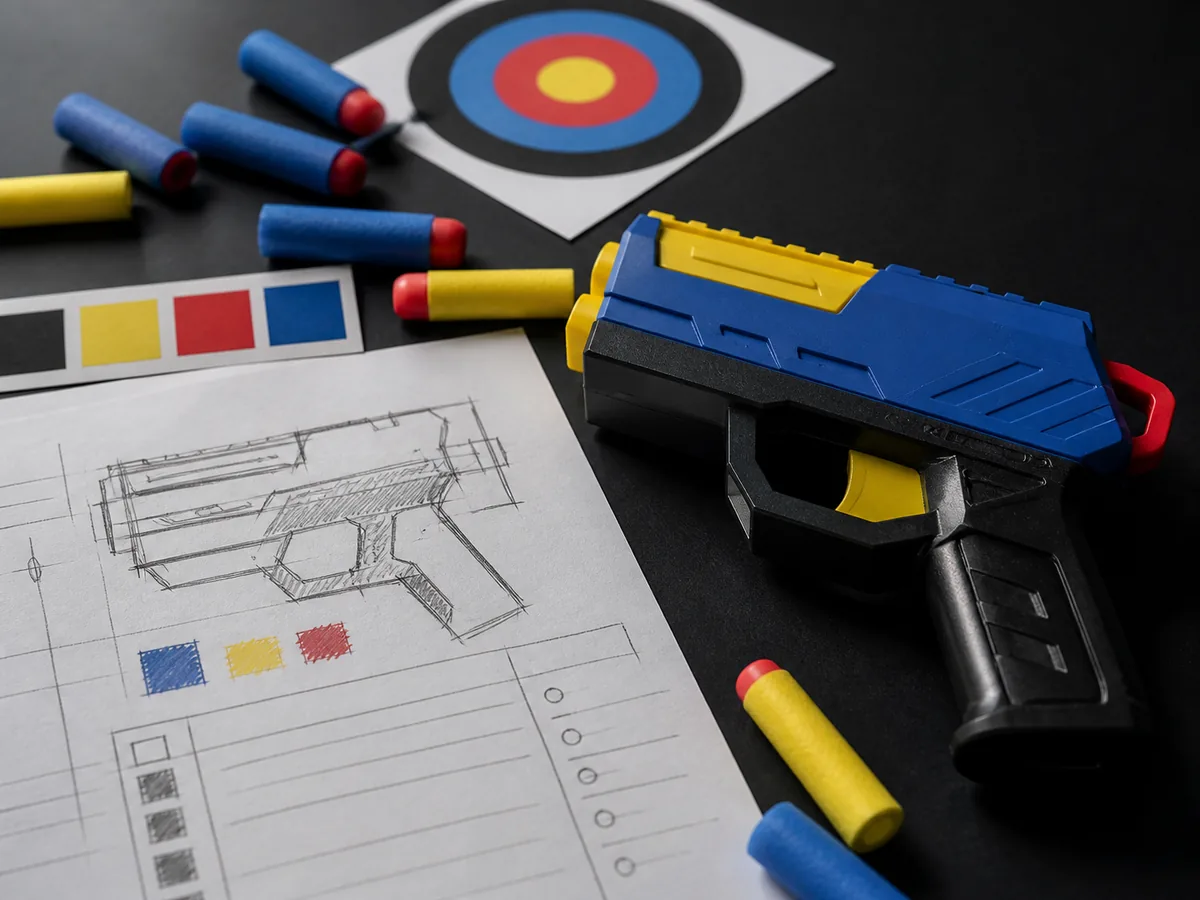
Five operational changes turn booth samples into comparable RFQs. First, create a sample coding system on the show floor: each blaster gets a code like 'PBS-001' cross-referenced to the catalog SKU or golden sample, the supplier name, and the booth number. Second, photograph the sample against a ruler with the catalog page visible — a photo without scale is decoration, not documentation. Third, record mechanism notes while the sample is in hand: motorized or pump-action, magazine type, and how the trigger feels, because those notes become the spec you ask suppliers to confirm.
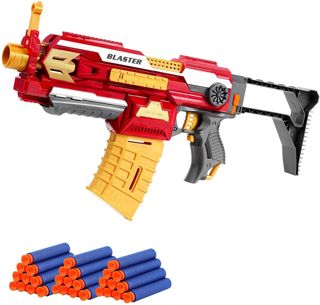
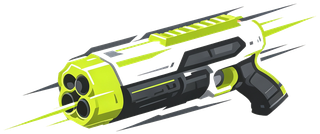
Fourth, list included parts explicitly. A foam dart blaster that ships with 6 darts and a target is a different SKU from the same blaster sold bare, and the difference shows up in the MOQ and price. The tactical 6-dart blaster at 2.28 USD and the pump-action shotgun at 3.55 USD are not comparable offers unless the included-parts list matches. Fifth, write requested changes down at the booth — color change, packaging, logo — and put them in the RFQ as 'change requests' rather than assuming the supplier remembers the conversation. When you request a color change, note that color matching should use the same resin grade, surface finish, lighting condition, and approved master sample, because appearance changes with all four variables.
What remains uncertain
What remains uncertain is anything the booth conversation did not put in writing. The verbal FOB price is unknown until it appears on a written quote. The MOQ is unknown until the supplier confirms it for the exact SKU you coded — the motorized foam dart rifle blaster at 0.55 USD with a 120-unit MOQ is a different commitment than the pump-action shotgun at 3.55 USD with a 54-unit MOQ. The lead time is unknown until the supplier commits to it in writing, and the certification status is unknown until you see item-specific certificates, not a generic compliance statement.
The timeline for any regulatory change affecting foam blasters is not confirmed from official text unless you have the specific regulation in hand. Do not assume a declaration covers every component — ask for the material evidence. Where the supplier cannot provide supporting documentation, that uncertainty is a reason to request a golden-sample check before committing to bulk.
Obligation checklist
| Supplier identity | Confirm the legal entity name, factory address, and booth card match the catalog. Unknown: whether the entity is the manufacturer or a trading company — ask directly. |
|---|---|
| Sample coding | Assign each blaster a unique code linked to the catalog SKU or golden sample. Unknown: whether the supplier uses the same SKU system — confirm in the RFQ. |
| Mechanism notes | Record motorized vs. pump-action, magazine type, and trigger feel while the sample is in hand. Unknown: internal mechanism specs — request an exploded view or spec sheet. |
| Included parts | List every item in the box: blaster, darts, target, batteries, packaging. Unknown: whether the price includes all parts — state 'price must include' in the RFQ. |
| Compliance evidence | Request item-specific certificates (CE, CPC, UKCA, ASTM F963) and material evidence behind any REACH declaration. Unknown: whether the supplier holds the technical file — confirm the role they play. |
| Quote template | Use one template so FOB price, MOQ, lead time, and packaging sit in the same fields across all suppliers. Unknown: final pricing — only a written quote confirms it. |
FAQ
How quickly should I follow up on foam blaster samples after a trade show?
Within 24 to 72 hours. Industry guidance indicates that following up within 24 hours makes businesses 60% more likely to close a deal, and the 48-hour mark is cited as the window for keeping lead recall high. Faster follow-up also signals to the supplier that you are a serious buyer.
What fields should my RFQ template include for foam blasters?
Include supplier legal name and factory address, your sample code and catalog SKU, mechanism type (motorized or pump-action), included parts list, requested changes (color, packaging, logo), target market and certifications needed, quantity, and requested FOB price and MOQ. Put these in the same order across all suppliers so quotes are directly comparable.
How do I verify a foam blaster's compliance claims from a trade-show supplier?
A REACH declaration or any compliance statement is a claim, not proof. Ask for item-specific certificates (CE, CPC, UKCA, ASTM F963 depending on your destination market) and supporting material evidence. Confirm whether the supplier is the manufacturer, importer, or distributor, because each role carries different documentation obligations.
What is the difference between a motorized and pump-action foam blaster RFQ?
The mechanism changes the spec sheet, the included parts, and often the MOQ and price. A motorized foam dart rifle blaster at 0.55 USD with a 120-unit MOQ is a different commitment than a pump-action foam dart shotgun blaster at 3.55 USD with a 54-unit MOQ. Record the mechanism type in your sample notes so your RFQ references the exact model.
Why do my two foam blaster quotes differ so much in price?
The difference is usually in the included parts, mechanism, or MOQ — not the supplier's margin. The tactical 6-dart blaster at 2.28 USD and the pump-action shotgun at 3.55 USD are not comparable unless the included-parts list and mechanism match. Use your sample code and included-parts list to force quotes onto the same spec.
How do I request a color change on a foam blaster sample?
Put the color change in writing as a 'change request' in the RFQ, and note that color matching should use the same resin grade, surface finish, lighting condition, and approved master sample — appearance changes with all four variables. Ask for a golden-sample check before bulk production.
Sources
Request a Quote
You have the samples coded and the RFQ template ready. If you need a supplier that can match your golden-sample spec with written confirmation of MOQ, lead time, and certification evidence, send us your sample code list and we will quote against it. Foam blaster sourcing works when both sides reference the same document — make that document yours.