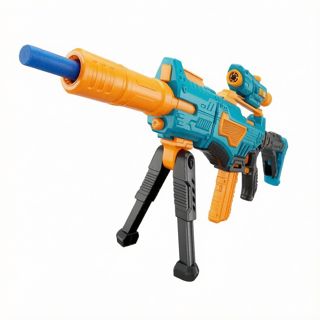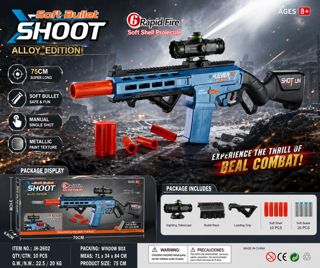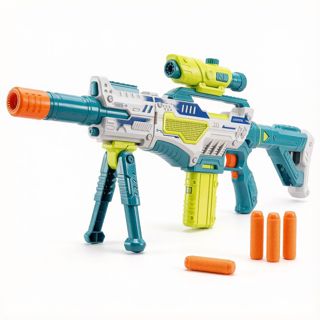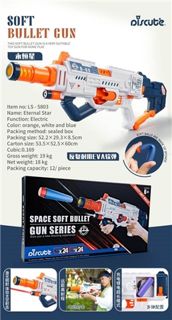

Any change to a dart's foam density, dimensions, tip material, bonding, or plastic composition is an engineering change that may require a new compliance review before you approve it for wholesale. A dart is not a disposable packing extra—it is a functional safety component of the projectile toy system, and swapping it without assessment can invalidate your test reports, Children's Product Certificates (CPC), and EU Declarations of Conformity. The practical decision: block unapproved substitutions until the new dart is verified against the original golden sample and the applicable safety standards.
For US-bound toys, ASTM F963 is mandatory under CPSIA Section 106, codified at 16 C.F.R. part 1250, and covers projectile toys (section 4.21). For the EU, the Toy Safety Directive 2009/48/EC requires that toys meet essential safety requirements, and the General Product Safety Regulation 2023/988 is a separate instrument. Here is how to assess a dart change without risking a compliance gap.
Key Takeaways
- Block any dart substitution until the new dart is assessed against the original approved specification and golden sample.
- Changes to soft-PVC compounds, plasticizers, or flexible coatings can alter phthalate compliance and require a new material review.
- A substituted dart may change small parts classification and age grading, especially for toys intended for children under 3.
- Your test report, CPC, and EU Declaration of Conformity are product-specific; a dart change means existing documents may no longer match the product.
- Whether the dart is made in-house or outsourced, the same material, sample, inspection, change-control, and traceability requirements apply.
Why a Dart Is a Functional Safety Component, Not a Packing Extra
A dart affects how a projectile toy performs in safety tests: its foam density, dimensions, tip material, and bonding determine flight behavior, impact energy, and whether it can become a small part. Under ASTM F963 section 4.21, projectiles must not be small parts and must not exert excessive force when impacting a surface. A dart that detaches differently or fragments could shift the product into a different compliance category.
The CPSC guidance is clear: the applicable sections of a standard are not one-size-fits-all. When you change a dart, you must re-evaluate which sections apply and whether third-party testing is required. For example, if the new dart is made of a material that can be sucked, mouthed, or ingested, it may trigger soluble heavy elements testing. This is not a cosmetic swap.
Material-Level Changes: Plastic, PVC, and Recycled Resin
Substituting a plastic grade or colorant is an engineering change because it can alter shrinkage, impact, chemical migration, appearance, and processing. For soft-PVC darts, changing the compound or plasticizer package can affect phthalate compliance, so a new material review is required. Recycled resin introduces additional variables—contamination, color, odor, mechanical performance—and is not automatic proof of toy suitability.
If the dart tip is made of silicone rubber, that is an elastomer rather than a conventional thermoplastic; it requires a different molding and material-compliance review than PP, ABS, or PVC. Each material change must be verified against the original approved specification before you approve the substitution.
Physical and Functional Review: Dimensions, Bonding, and Projectile Behavior
A dart's dimensions and bonding affect whether it passes the small parts cylinder test (16 C.F.R. § 1501.4). If the new dart is larger or smaller, or if the tip separates more easily, the product may no longer meet small parts requirements for children under 3. Use and abuse testing—impact, flexure, torque, tension, and compression—must be repeated to confirm the new dart does not fail.
Projectile behavior is also critical: stored-energy projectile toys must prevent the use of improvised projectiles. A dart with different foam density may not fit the barrel or may fly differently, potentially exceeding force limits. You cannot rely on the catalog description; you must assess the actual product configuration.
Regulatory Documentation: Reports, CPC, and EU DoC
Your test report, Children's Product Certificate, and EU Declaration of Conformity are product-specific and tied to the exact configuration tested. A substituted dart changes the product configuration, so existing documents may no longer be valid. The CPC must identify the product, cite applicable safety rules, and list the manufacturer, importer, date and place of manufacture, testing details, and lab identification—all based on third-party testing results.
For the EU, the CE marking and EU Declaration of Conformity must match the product scope and be tied to a SKU, report, responsible party, and current version. The GPSR is a separate legal instrument from the Toy Safety Directive; do not mix their deadlines or requirements. Always check the current consolidated text and the applicable standard edition (e.g., ASTM F963-23, effective April 20, 2024, but verify the current regulation).
How to Approve a Dart Substitution Without Breaking Compliance
The decision rule is simple: until the substituted dart is assessed for material compliance, physical behavior, age-grade impact, and report/CPC/DoC alignment, the substitution should be blocked. Approval requires updated testing or a documented engineering review confirming the change does not alter compliance status.
Work with your supplier to get a revised CPC and updated third-party test report before accepting any substitution. Verify that the sample identity in the report matches the exact dart—foam density, dimensions, tip material—and that the lab is CPSC-accepted. For EU markets, confirm the CE marking and EU DoC are updated to reflect the new configuration.
If you are an importer, note that starting July 8, 2026, most regulated consumer products will require electronic filing (eFile) of certificates with U.S. Customs and Border Protection. Any updated certificates must be filed electronically when that takes effect.
The Cost and Margin Angle: Why It Pays to Review Before You Approve
A dart substitution might look like a quick cost-saving move—cheaper foam, a different tip, a lower MOQ—but the hidden cost is a compliance gap. If you ship a product with an outdated CPC, you risk a CPSC detention, a recall, or a stop-sale at the port. That can wipe out any margin savings and damage your relationship with retailers.
Instead, build the review into your sourcing process. Ask your supplier for a change-control procedure that includes a compliance review. Get the revised test report and CPC before you approve the new dart. The cost of a material review is far less than the cost of a non-compliant shipment.
FAQ
Do wholesale foam blaster suppliers provide EN71, ASTM or CE documents by SKU for US and EU export?
Yes, reputable suppliers should provide product-specific documents—ASTM F963 test reports and CPC for the US, and EN71 test reports and EU Declaration of Conformity for the EU—tied to each SKU. Always verify that the report matches the exact product configuration, including the dart.
Who are reliable wholesale foam blaster suppliers in China for toy retailers and distributors?
Reliable suppliers are those with documented compliance processes, product-specific test reports, and change-control procedures. Look for factories that can provide golden samples and updated certificates when you request a dart substitution. The supplier's location (e.g., Chenghai) is less important than their compliance track record.
What is the typical MOQ, case pack and lead time when buying foam blasters wholesale from Chenghai?
MOQ and lead time vary by product and supplier; there is no standard figure. For this article, we do not cite specific numbers because they depend on the catalog and supplier. Always confirm MOQ, case pack, and lead time with your supplier before placing a PO.
Where can I source wholesale foam blasters with specs, samples and packaging data before placing a PO?
You can source from suppliers who provide detailed spec sheets, golden samples, and packaging data. Request a sample of the exact SKU, including the dart, and verify that the test report matches that sample. This is essential before approving any substitution.
Which China factories can supply wholesale foam blasters for Amazon, toy stores and party channels?
Look for factories with experience exporting to the US and EU, and who can provide ASTM F963 and EN71 test reports by SKU. For Amazon, ensure the product has a valid CPC and meets Amazon's requirements. For toy stores and party channels, confirm labeling and age grading are correct.
Sources
Request a Quote
Before you approve a dart substitution, ensure your supplier provides updated test reports and certificates. If you are sourcing foam blasters and need help verifying compliance, request a quote and ask for the golden sample and change-control documentation.