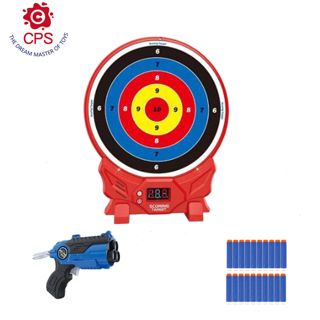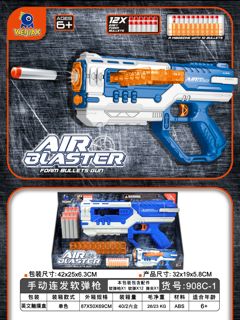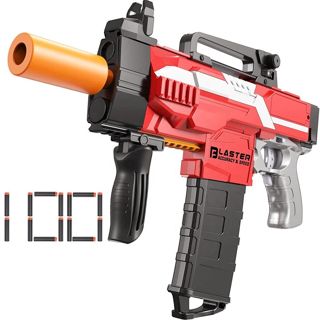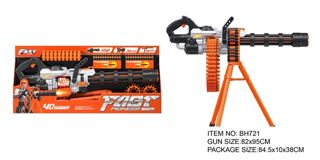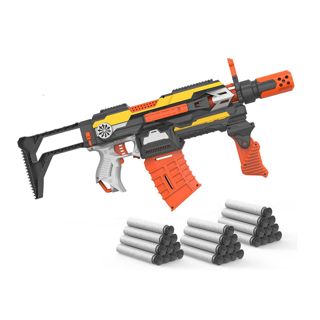
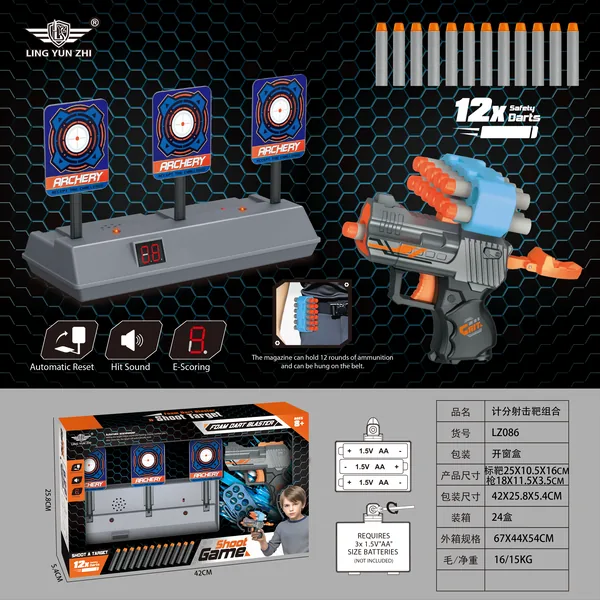
Run the manual target pilot first. A simpler first product isolates market demand from technology support risk, and that is the whole reason a manual target belongs ahead of an electronic scoring version in a first foam blaster program. The practical decision for an importer, Amazon seller, toy store or party channel is not "manual or electronic" as a permanent choice — it is which one goes into the first purchase order. Electronics add sensors, batteries, button-cell compartments, sound and volume assessment scope, and a support burden that a manual reset target simply does not carry. If the channel cannot sell a manual target, no electronic scoreboard will rescue it. If the channel can sell the manual target, you have earned the right to test the electronic upgrade with real sell-through data instead of a trade-show pitch.
Key takeaways for buyers
- A manual target validates whether the channel actually sells target play; electronic scoring validates whether the buyer can support electronics. Those are two different questions and should not ride on one PO.
- Electronic toys typically need IEC 62115 (often adopted as EN IEC 62115) in addition to EN 71 / ASTM F963 mechanical and chemical tests, so an electronic target expands the certification file, not just the BOM.
- Refill sales, not the launcher, decide the repeat-order economics of a target program; a manual target keeps the refill conversation simple while the channel is still unproven.
- Package footprint and reset design are pilot-stage decisions. Both are cheaper to fix before tooling than after, which is why DFM feedback belongs before tool cutting.
- Upgrade to electronic scoring only when the manual pilot shows repeat orders and the buyer has a documented plan for battery compartments, warnings, and after-sales support.
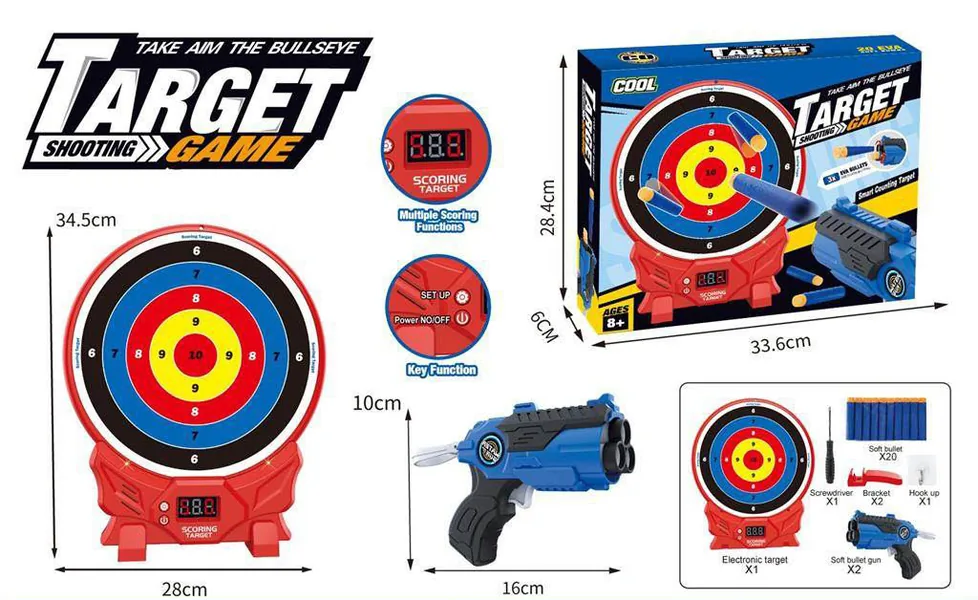
What does the channel actually need from a target product?
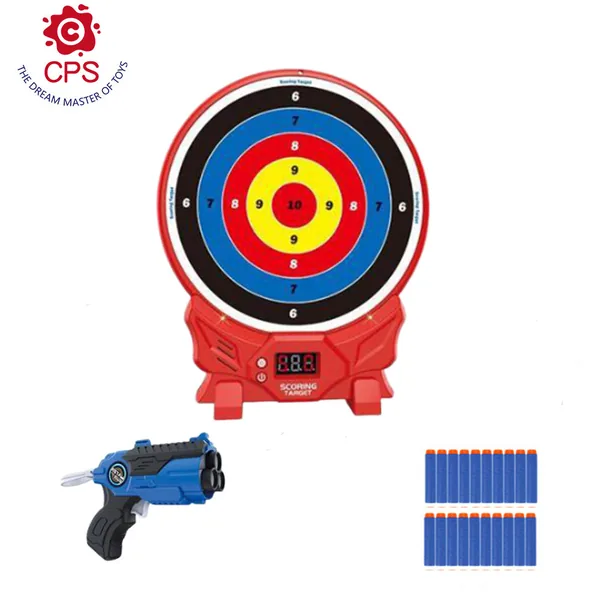
Channel need comes before technology. A supermarket buyer, a gift distributor and an Amazon seller are not buying scoring accuracy — they are buying a product that survives shelf, shipping and returns. The manual target answers that question with the fewest moving parts. There is no battery compartment to open with fingernails, no sound test scope, no sensor calibration, and no support line for a scoreboard that will not power on.
This is the contrarian part. Most suppliers pitch electronics as the premium upgrade and treat manual as the cheap version. In a first order, that framing is backwards. Manual is not the downgrade; it is the control group. You are testing whether kids and parents respond to target play at all, in your specific retail environment, at your specific price point.
Electronic scoring in sport shooting moved from acoustic detection to laser and piezoelectric systems, and the ISSF verifies performance through photogrammetry — a calibrated paper target, three cameras, a grid comparison against the electronic score. That level of verification exists because wrong scores at a major event are unacceptable. A toy target does not inherit that infrastructure. When a wholesale buyer adds electronic scoring to a toy, the buyer, not the factory, ends up owning the accuracy and support promise.
What support constraints does an electronic target add?
Electric toys sit in a different regulatory and support lane. IEC 62115 covers the safety of electric toys, and electronic toys typically need it alongside EN 71 / ASTM F963 mechanical and chemical testing. Toys designed to emit sound need an assessment of the applicable sound and volume requirements, and not every electronic toy has the same sound test scope — so the test plan has to match what the product actually does, not just its category name.
Button-cell powered toys are a compartment and warning problem before they are a toy problem. Screw closure, tool access and the warning are checked before anyone discusses the toy function. A cute electronic that opens with fingernails does not ship. That single design constraint can change the housing, the tool, the packaging, and the warning artwork — all of which cost far more after tooling than before.
Water contact makes it worse. Water-contact toys with electronics need an ingress or splash assessment that matches the intended use; a dry electrical bench test is not enough. Outdoor party-channel targets get rained on. If the manual version is the pilot, none of this is in scope yet, and the pilot still produces usable sell-through data.
How should the manual reset design and package footprint be tested?
Reset design is the pilot's real engineering question. A manual target that resets slowly, jams, or needs an adult to re-stand it will generate returns no matter how good the foam blaster is. Test the reset cycle the way the end user will use it: repeated shots, one-handed reset if the claim is one-handed, and knock-down recovery after the target falls.
Package footprint follows the reset design. A target that folds flat, nests, or ships as a compact blister keeps freight and shelf density workable for a first order. Design-for-manufacturability feedback before tool cutting can identify draft, wall, gate, undercut and ejection risks while changes are still inexpensive — and reset geometry is exactly the kind of feature that looks fine on a rendering and fails on a mold.
A booth sample is often a hero unit. Tool number and revision should be labeled on the table, and a fair photo should never be accepted as the production standard. Fair lighting lies; the revision card does not. For a pilot, ask for the revision that will actually be molded, and check the reset mechanism on that revision.
What should pilot feedback and refill sales tell you?
Pilot feedback should answer three questions, and none of them are about scoring accuracy. Did the target sell at the planned price? Did it come back as a return or complaint? Did the buyer reorder refills or the target itself?
Refill sales are the honest signal. A launcher or target that sells once and never pulls refills is a one-off purchase, and one-off purchases are a hard business to repeat. A manual target keeps the refill conversation clean because there is no battery replacement, no sensor replacement, and no electronic warranty claim mixed into the reorder. If the pilot shows refill pull-through, the program has a repeat-order engine. If it does not, adding electronics makes the unit margin worse without fixing the underlying demand problem.
Keep the feedback record specific: SKU, lot, defect class, and the agreed inspection plan on the PO. Do not accept an AQL number from a catalog sentence. On the floor, a failed lot is isolated, the defect class is recorded, and release happens only after rework. Buyers who want a number get it from the inspection plan they agreed to, not from marketing copy.
When is an electronic scoring upgrade justified?
Move to electronic scoring when three conditions are met together, not one at a time. First, the manual target has repeat orders in the destination channel. Second, the buyer has a workable plan for battery compartments, warnings, and after-sales support — because the electronic version transfers that burden to the buyer. Third, the certification file can be extended to cover IEC 62115 and the applicable sound and volume assessment without invalidating the existing EN 71 / ASTM F963 documentation.
If any one condition is missing, stay manual and keep selling. A phased rollout is normal: electronic scoring systems in sport shooting expanded discipline by discipline, from 10m to 25m targets, after early test events exposed score-evaluation problems. Toy channels should expect the same phased logic. The first electronic order is a pilot too, and it deserves the same documentation discipline as the manual one.
One paperwork rule that saves real money: UKCA and a VOC file on an electric bubble machine are different papers. A buyer once tried to use one certificate for both. Map the market, the lot, and which file covers which test. Paperwork that does not match the lot is not paperwork.
Manual pilot vs electronic scoring target: wholesale comparison
| Manual UV Soft-Bullet Gun — specialty / MOQ / price | Manual foam blaster, ABS/EVA, MOQ 360, USD 1.91 |
|---|---|
| Mini Manual Soft Bullet Gun — specialty / MOQ / price | Manual foam blaster, ABS/EVA, MOQ 576, USD 0.90 |
| Manual Bolt-Action EVA Soft Bullet Gun — specialty / MOQ / price | Manual foam blaster, ABS/EVA, MOQ 72, USD 4.48 |
| Electronic Scoring Target Foam Dart Set — specialty / MOQ / price | Electronic scoring target set, plastic, MOQ 120, USD 5.56 |
| Electronic Scoring Target and Foam Dart Blaster Set — specialty / MOQ / price | Electronic scoring target set, ABS/EVA, MOQ 72, USD 4.20 |
| Origin | Chenghai / Shantou, Guangdong (China) |
| OEM/ODM | varies by spec — confirm with the factory |
| Certifications | Electric toys typically need IEC 62115 in addition to EN 71 / ASTM F963; exact file set varies by market and spec |
Which China factories can supply wholesale foam blasters for Amazon, toy stores and party channels?
Chenghai, a district of Shantou in Guangdong, is the practical starting point for foam blaster and target sourcing because the region's supplier base concentrates plastic injection, tooling, and toy assembly in one geography. That matters for a pilot: mold changes, reset redesign, and packaging revisions can be walked between suppliers in days rather than shipped across provinces.
Shantou and the wider Guangdong cluster cover the plastic and electronics supply chain; Yiwu, in Zhejiang, is a general merchandise and small-commodity export hub that suits gift and party assortments but is not the tooling center for an injection-molded target. For a target product with a reset mechanism and a possible electronic upgrade, Chenghai/Shantou is the better origin. For a gift-box assortment that mixes targets with unrelated party items, Yiwu is the better consolidation point.
The origin does not guarantee quality. It guarantees access to tooling and component suppliers, which shortens the pilot cycle. That is the objective supply-chain advantage — not a claim about any single factory.
How do you verify a Chinese supplier before the first PO?
Verify the supplier on the product you are actually buying, not on the company profile. Start with the golden sample: the exact revision, tool number, and material spec that will be molded. Photograph it, label it, and keep it as the reference for the inspection plan. If the factory cannot state the tool number and revision in writing, the pilot will not be repeatable.
Second, ask for the certification file that matches the market and the lot. For a manual target, that is the mechanical and chemical test set. For an electronic version, add IEC 62115 and the applicable sound and volume assessment, and check that the report names the product variant and the production lot. A certificate that does not match the lot is not a certificate for your order.
Third, agree the inspection plan on the PO. Do not accept a generic AQL number from a catalog or a blog. Specify defect classes, sample size, and the disposition rule for a failed lot. A supplier that isolates failed lots, records the defect class, and releases only after rework is a supplier you can scale with.
Fourth, audit the factory floor for the specific risk in your product. For a manual target, watch the reset mechanism assembly and the mold condition. For an electronic upgrade, watch the button-cell compartment, the screw closure, and the warning artwork. These are the points where a pilot either becomes a repeat order or becomes a return.
FAQ
Should I order a manual target or an electronic scoring target first?
Order the manual target first. It isolates whether your channel sells target play from whether you can support electronics, and it keeps the first PO's certification, battery, sound and after-sales scope out of the picture until demand is proven.
What MOQ should I expect for a manual target versus an electronic scoring target?
From the available catalog data, manual foam blaster SKUs sit from MOQ 72 to 576, while the electronic scoring target sets sit at MOQ 72 to 120. MOQ varies by SKU and customization, so confirm the exact figure on the quotation for the revision you intend to order.
What certifications does an electronic scoring target need that a manual one does not?
Electronic toys typically need IEC 62115 (often adopted as EN IEC 62115) in addition to EN 71 / ASTM F963 mechanical and chemical tests. Toys designed to emit sound also need an assessment of the applicable sound and volume requirements, and the scope differs by product.
How do I check a factory's reset design and package footprint before tooling?
Ask for design-for-manufacturability feedback before tool cutting, then test the reset cycle on the exact revision intended for production. Package footprint follows the reset geometry, so both should be signed off on the same golden sample before the mold is cut.
When does it make sense to upgrade the pilot to electronic scoring?
Upgrade when the manual target shows repeat orders, you have a workable plan for battery compartments, warnings and after-sales support, and the certification file can be extended without invalidating the existing EN 71 / ASTM F963 documentation. If any one is missing, stay manual.
How do refill sales decide whether the target program works?
Refill pull-through is the signal that the product has repeat-purchase economics rather than one-off sales. A manual target keeps refill reorders simple because no battery or sensor replacement is mixed into the reorder, so the pilot data is cleaner.
Sources
Request a quote or a factory audit
If you are planning a foam blaster or target program, start with the manual pilot and the documentation that makes it repeatable. Send your target market, channel, and packaging requirements, and request a quotation on the manual target SKUs plus the sample and inspection plan for the exact revision. If you are weighing the electronic upgrade, ask for the certification file map — IEC 62115, EN 71 / ASTM F963, and the applicable sound and volume assessment — before you commit to tooling. You can also request a factory audit covering reset mechanism assembly, button-cell compartment design, and lot-release discipline.